
Tag: Risk Management

14 Jun 2024

AG MARKET UPDATE: MAY 31 – JUNE 14

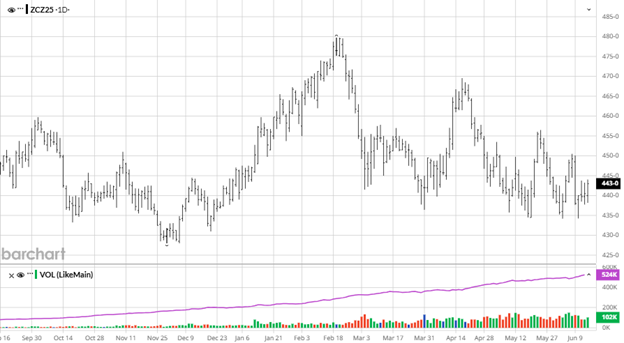
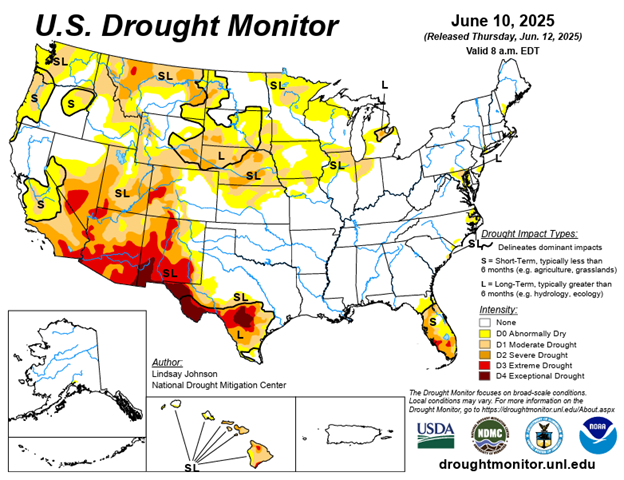
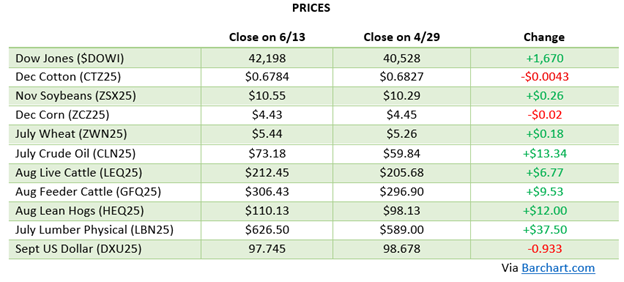
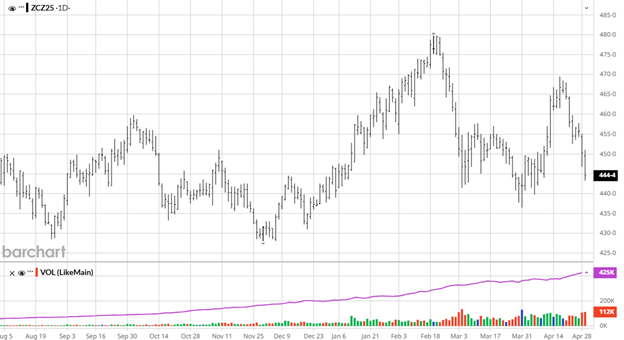
Corn’s small 18 cent rally off recent lows for new crop corn has been very welcome after 6 down days in a 7-day period to end May and start June. This week’s USDA Report was a non-event with the USDA making no changes to South Americas production from last month despite the trade expecting production well below the USDA’s estimate of 175 mmt (171.82 estimated). CONAB released their estimates on Thursday, increasing their estimates for Brazil’s corn crop but still 310 million bushels below what the USDA is saying. The heat over the next couple of weeks is not expected to be a major problem but if this level of heat with a lack of rain goes into July the markets would take notice and begin to worry a bit.

Via Barchart

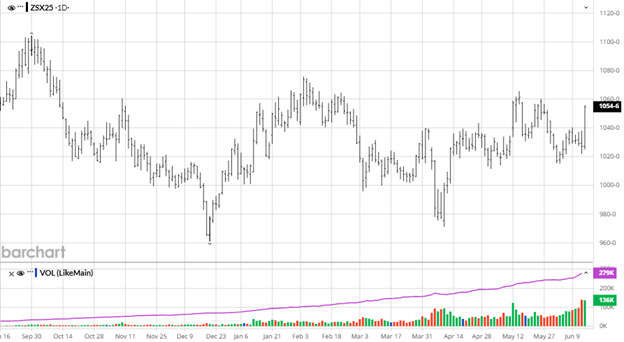
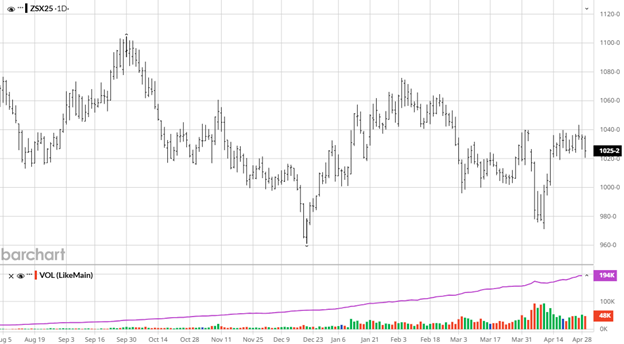
Beans are lower over the last 2 weeks with them settling into a flat trade this week. The USDA report was uneventful despite the USDA cutting another 1 mmt from Brazil’s bean crop. US exports were revised lower and ending stocks rose as the slow pace of exports continued. With no major surprises and no major weather/production issues yet there is not much bullish news outside of CONAB’s Brazil production estimate which is 207 million bushels below this week’s USDA update.

Via Barchart

Equity Markets

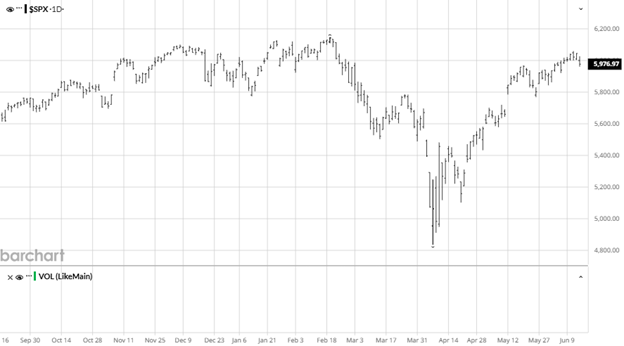
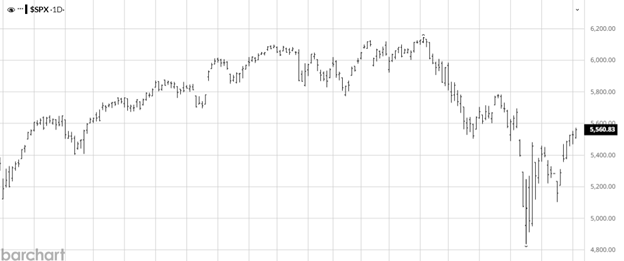
The S&P 500 and NASQDAQ continue to move higher setting new all-time highs as several large tech companies beat on earnings. The AI movement is continuing its dominance, but some other areas are starting to find strength as funds are forced to reposition.

Via Barchart

Other News

  • The cotton market continues lower as there is nothing bullish in the news cycle for it other than the potential for up to 25 named hurricanes this year.
  • Wheat’s roller coaster ride continues with potential for lower Black Sea production still a possibility after the $1.50+ rally follows by a $1 fall with 10 down days in a row.

Drought Monitor

Via Barchart.com

Contact an Ag Specialist Today

Whether you’re a producer, end-user, commercial operator, RCM AG Services helps protect revenues and control costs through its suite of hedging tools and network of buyers/sellers — Contact Ag Specialist Brady Lawrence today at 312-858-4049 or blawrence@rcmam.com.


20 May 2024

LEONARD LUMBER REPORT: IT WAS A TOUGH WEEK FOR CASH AND FUTURES

Recap:

It was a tough week for cash and futures as the quiet market pushed prices lower. Before we sound the alarm, the market is $22 off its high and $18 off the low. After 20 sessions, the market sits in the middle. At this time of year, the market tends to put in a seasonal low. This battle with a $35 range is mildly friendly. This marketplace is not heading for the exits. The industry and speculators are firmly committed to the long side, while the funds are firmly committed to the short side. If you are long waiting for the funds to react, it will be a long 30 days. Last year, we saw the same dynamics of less traffic, falling builders’ sentiment, and less construction than projected. What happened was a grind higher market. I want to make a call for the same, but this year, we are just now confirming more negatives and fewer positives. More brown shoots don’t necessarily equal sharply lower prices. It will just be a continued drag on this market. I would be mildly friendly to the market if it weren’t for the fact that the industry is long-future and cash-playing Texas Holdem with a Texas hedge. Those long cash should be selling the pops in futures.

Technical:

The tech read hasn’t been effective this year due to the tight range between swings. Today, there is a mildly friendly candlestick. The market is building a new value area about $20 higher than last year at this time. I’m looking for a lower RSI up here to confirm.

Daily Bulletin:

https://www.cmegroup.com/daily_bulletin/current/Section23_Lumber_Options.pdf

The Commitment of Traders:

https://www.cftc.gov/dea/futures/other_lf.htm

About the Leonard Report:

The Leonard Lumber Report is a column that focuses on the lumber futures market’s highs and lows and everything else in between. Our very own, Brian Leonard, risk analyst, will provide weekly commentary on the industry’s wood product sectors.


Brian Leonard

bleonard@rcmam.com

312-761-2636

15 Apr 2024

LEONARD LUMBER REPORT: The futures market got crushed last week

Recap:

The futures market got crushed last week. The lack of a cash market increased the negative momentum. It was, as one trader put it, a “strange change in dynamics.” On almost every break in the last 16 months, the mantra was to buy it lower. We did that dance under $520 and again under $500 numerous times. Last week, the majority were preaching to sell a bounce. That is a definite change. That said, let’s wait to sell the farm.

The starts and permits report come out on Tuesday. They are looking for a number around 1.5. I struggle to see how, with the current reduced production, there can be an abundance of wood. We do generate abundance with every buy, but that is drained over time. This last buy round was more aggressive than usual. Traders became more confident and added purchases showed this. Today, we are living in the glow of that abundance. It will get cleaned up.

Economic:

We talked for months, going on years, about the probability of something breaking in the system. I’m worried the Fed can upset the marketplace with continued bad decisions. They want to cut interest rates while still carrying a large balance sheet. Continuing to push money into the system and cutting rates in an inflationary environment will choke off the market. And just to be clear, we are the first to feel the choke. I am worried we are seeing it in the multifamily sector already. Disrupt the apple cart, causing unemployment to rise, and we get the single-family sector to start to feel that choke.

Our last rally was a needed fill-in that was better than expected. This current downturn is the clearing out of those extras. Once done, another fill-in will be needed.

Technical:

The downside move last week was violent, to say the least. This pushed the RSI down to 11.80%. The selling is computer-related, driving markets well beyond the norm. Lumber futures went from $1250 to $1700 purely on computer buying. My point is that computers can move markets. Now that said, here it comes: the futures market has been following the cash market lower. The move in futures has been as much fundamentally driven as it has been computer driven.

This RSI extreme will correct itself.


Daily Bulletin:

https://www.cmegroup.com/daily_bulletin/current/Section23_Lumber_Options.pdf

The Commitment of Traders:

https://www.cftc.gov/dea/futures/other_lf.htm

About the Leonard Report:

The Leonard Lumber Report is a column that focuses on the lumber futures market’s highs and lows and everything else in between. Our very own, Brian Leonard, risk analyst, will provide weekly commentary on the industry’s wood product sectors.


Brian Leonard

bleonard@rcmam.com

312-761-2636

08 Apr 2024

AG MARKET UPDATE: MARCH 8 – APRIL 8

Corn has traded in about a 20 cent range the last month spending much of its time in July corn between $4.40 and $4.60. The USDA acreage intention report gave the markets an initial bullish reaction but struggled to follow through past the report as prices have fallen back from the post report highs. Corn acreage for 2024 came in at 90.036 million acres (91.776 estimate) which was a surprise to the market. The trade appears to believe that the acreage number is likely higher as it has given some of the gains back quickly. While lower prices and high input costs are likely to affect farmer’s decisions, if the weather this April and May is friendly to planting it will be hard for farmers to leave acreage on the table. South America harvest in Brazil and Argentina is in line or slightly behind average.

Via Barchart

Soybeans have fallen from their recent highs as the USDA Report did not provide the market with any actionable news. The USDA came in at 86.510 million acres (86.530 estimate), because the acres were so close to the estimate the report was not a big mover for the bean market. The market has slowly traded lower since the report as the next market mover will be the April USDA and April CONAB Reports this week. The more information we can get on South America’s harvest the clearer the picture will become as the discrepancies between the USDA and CONAB still have the markets confused.

Via Barchart

Equity Markets

The equity markets have pulled back from recent highs with the pullback in some tech names but the market and economy are still strong as inflation remains sticky and the Fed trying to decide when, or if, to cut rates this year.

Via Barchart


Other News

  • US wheat acres will be lower than last year. Winter wheat plantings shrunk from the estimate in January, but spring wheat will be slightly higher than last year.
  • The transmission of bird flu in cattle in several states this week drove cattle prices lower and is a development to keep an eye on.

Drought Monitor

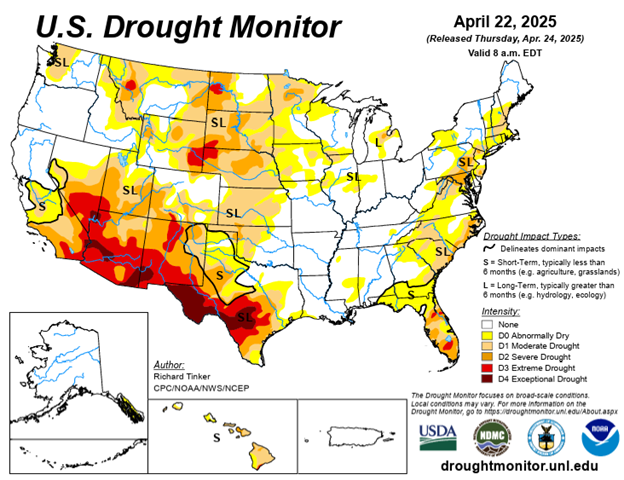
Here is the current drought monitor as we head toward planting with subsoil moisture a focus.

Via Barchart.com

Contact an Ag Specialist Today

Whether you’re a producer, end-user, commercial operator, RCM AG Services helps protect revenues and control costs through its suite of hedging tools and network of buyers/sellers — Contact Ag Specialist Brady Lawrence today at 312-858-4049 or blawrence@rcmam.com.

18 Mar 2024

LEONARD LUMBER REPORT: Last week, the futures market saw a healthy correction

Recap:

Last week, the futures market saw a healthy correction, dropping $22 in 4 sessions. March expired at 560, which was right in line with expectations. What was different was that most expected it to carry a premium, not a discount. My point is that this cash run has been far more significant than most expected. That leads to the question of how much was bought and whether it is enough. The cash side has hit the pause button to get a read of where they are. This is typical in any run but also leads to a quieter cash market and a futures correction. That sums up the week. Now what?

The industry focus is always on the micro. Today, wood continues to go out the door at a good pace. It has been a fluid trade for 18 months so that that feature will remain. The mills do have a tighter grip on certain items. This is related to logs and production. Most items are still under and over-produced within the typical timeframe. Timing that imbalance has always been a challenge. What remains in place is that a cash market run will not continue with some items tight and others abundant. The focus for this upcoming week will be on items liquidity. A sharply lower trade in May futures on Monday will give an immediate answer.

The macro picture has to be looked at. We can see the data on fewer shipments, log issues, fires, and the “worm.” What we can’t measure today is the potential headwinds of a slowing economy, rates that are higher for longer and affordability. All that is slowly creeping into the multifamily side of the business. That we can measure. The question is if a slowing multifamily sector takes the energy out of the starts number going into the fall. If it happens, we can expect a flat trading range that mirrors 2023.

The industry has to look to futures to lock in a profit or to mitigate risk. Playing supply spikes isn’t the best strategy.

Technically, this market has strong support all the way down from here. The key points are the 38% at 598.80, the 50% at 590.70, and the 61% at 582.60. A close over $620 indicates the funds are back in charge. 


Daily Bulletin:

https://www.cmegroup.com/daily_bulletin/current/Section23_Lumber_Options.pdf

The Commitment of Traders:

https://www.cftc.gov/dea/futures/other_lf.htm

About the Leonard Report:

The Leonard Lumber Report is a column that focuses on the lumber futures market’s highs and lows and everything else in between. Our very own, Brian Leonard, risk analyst, will provide weekly commentary on the industry’s wood product sectors.


Brian Leonard

bleonard@rcmam.com

312-761-2636

16 Jan 2024

USDA Final 2023 Yield and Stocks Overview

USDA Final 2023 Yield and Stocks

Overview

January 12, 2024

First Glance:

Corn        

USDA Yield:   177.3 BPA (174.9 Estimate – 174.9 Nov)

Total Crop: 15.342 BBU (15.226 Estimate – 15.234 Nov)

Harvested Area:  86.513 MA (87.036 Estimate – 87.096 Nov)

23/24 US Ending Stocks: 2.162 BBU (2.111 Estimate – 2.131 Nov)

23/24 World Stocks: 325.2 MMT (312.9 Estimate – 315.2 Nov)

Brazil/ARG Crop: 182 MMT (180 Estimate – 184 Nov)

Beans      

USDA Yield:   50.6 BPA (49.9 Estimate – 49.9 Nov)

Total Crop: 4.165 BBU (4.134 Estimate – 4.129 Nov)

Harvested Area:  82.356 (82.757 Estimate – 82.791 Nov)

23/24 US Ending Stocks:  280 MBU (245 Estimate – 245 Nov)

23/24 World Stocks: 114.6 MMT (111.9 Estimate – 114.2 Nov)

Brazil/ARG Crop: 212.0 MMT (204.9 Estimate – 209 Nov)

Wheat     

23/24 US Ending Stocks:  648 MBU (659 Estimate – 659 Nov)

Winter Wheat Seedings: 34.425 MA (35.786 Estimate – 36.699 LY)

23/24 World Stocks: 260.0 MMT (258.3 Estimate – 258.2 Nov)


The USDA found larger than expected totals in almost every category, increasing corn yield 2.4 bpa over the November estimate to 177.3 bpa. This is both a record yield and record total crop of 15.342 billion bushels. Bean yield was also raised .7 bpa to 50.6 and a total crop of 4.165 bbu. Both corn and bean harvested acres were slightly trimmed, the only bullish news in the report.

Higher yields were pushed through to higher ending stocks with US corn carryover raised to 2.162 bbu (+31 mbu from Nov) and 803 mbu above last year’s stocks. Beans had a similar fate with stocks set at 280 mbu, up 35 mbu from November but only 16 mbu above last year. Wheat stocks were slightly smaller than expected at 648 mbu but still up 78 mbu from 22/23.

Despite the rough start to Brazil’s growing season in their northern regions, Brazil’s bean and corn crops were not cut as much as expected. The weather has improved hurting the bullish narrative of a bad year for Brazil but the expanded acreage will also help offset any damage done earlier in the year.

There has not been any good news lately and prices reflect that. In June there was concern over the US crop with corn a $6.25 and beans at $14, now today has made new contract and multi-year lows in corn, soybeans and wheat.

08 Jan 2024

Leonard Lumber Report: The futures trade last week looked flat

Recap:

On the surface, the futures trade last week looked flat. The net change for the week was up $2. In fact, the last seven sessions have seen closes within a $4 range. A digestion phase after the run-up? Underneath the surface, things are changing. We have shifted the fund shorts over to the industry. Wood is now hedged. We have also shifted some of the industry longs over to new fund longs. The makeup of the futures market today is friendly. It is not a signal to buy, but it could generate higher prices on its own.

The futures market is closed on Monday the 15th, so January expires on Friday. The current open interest is normal for five sessions to go. With the growing industry’s short number, we may see some upward pressure again. We could see a shift to expirations now having an upward bias.

As far as the cash market goes, it remains fluid. That has been the case for months now. It has the feel of the covid slowdown that never occurred. This time, we spent a year expecting a recession and higher unemployment. What we found was steady business.

With mills coming back online and wholesalers owning wood, it could be sloppy for a while. The funds are the key.

This recent sideways trade is nearing an end…….

Daily Bulletin:

https://www.cmegroup.com/daily_bulletin/current/Section23_Lumber_Options.pdf

The Commitment of Traders:

https://www.cftc.gov/dea/futures/other_lf.htm

About the Leonard Report:

The Leonard Lumber Report is a column that focuses on the lumber futures market’s highs and lows and everything else in between. Our very own, Brian Leonard, risk analyst, will provide weekly commentary on the industry’s wood product sectors.


Brian Leonard

bleonard@rcmam.com

312-761-2636

11 Dec 2023

LEONARD LUMBER REPORT: “THE SEASON OF CONTENTMENT”

Recap:

“The season of contentment.” Most have closed up shop for the rest of the year. There is minimal volume in either the futures or cash. The futures trade is a liquidation of all sides. The outlook is also fuzzy. As the daily traders look for a crack at the mills the long-term traders wonder if that was enough of a buy. In 2023, there have been three good buy rounds, each at a lower cash price and futures bounce. Does the trend continue? I will say this: most of the industry does not want lower cash prices. That tells me it could be more of the same, dragging the market lower until the next round.

It’s been over a year of complacency, confusion, and a content market. The data shows a loss of 20% from the retail sector side versus a drop in supply of roughly 20%. You can be more balanced. Historically, this industry doesn’t come out of that phase quietly. With less production, less Euro, and a construction needle that doesn’t move, the volatility will be on the upside. The futures market is quietly indicating that with the support we are seeing. It’s going to take more time.

Technical:

The lower objectives of 518.50 and 510.50 are still in play. These are corrective objectives. If you look at the wedge pattern that formed in 2023, the bands are 568.80 and 495.30. Today, lower mill prices will not stimulate buying. With an RSI of 49.40%, those bands look a mile away.

Daily Bulletin:

https://www.cmegroup.com/daily_bulletin/current/Section23_Lumber_Options.pdf

The Commitment of Traders:

https://www.cftc.gov/dea/futures/other_lf.htm

About the Leonard Report:

The Leonard Lumber Report is a column that focuses on the lumber futures market’s highs and lows and everything else in between. Our very own, Brian Leonard, risk analyst, will provide weekly commentary on the industry’s wood product sectors.


Brian Leonard

bleonard@rcmam.com

312-761-2636

21 Nov 2023

Merucci- Milk, Feed, Cattle market update

As we head into end of year, take time to make sure you have minimized your risk and kept yourself open for better prices if they may occur.  It has been a difficult stretch for milk prices which is evident by clients that have had consistent coverage in place are shaping up to get DRP indemnities for their 6th quarter in a row!  Don’t get caught thinking that you know where prices are heading next year.  Here are good ways to protect negative outcomes and still be positioned for better prices in milk, feed and cattle.


Milk-  This part is simple, DRP has worked as advertised over the last few years.  There have been both good and bad prices.  DRP has paid out nicely in the low price times and still allowed for availability to participate in some of the highest milk checks on record.  I strongly recommend having at minimum 25% of milk protected in both Q2 and Q3.  Utilizing the 1.5 factor, this will protect 33% and still leave plenty of room to add coverage if prices improve.  Looking at the historical comparisons, milk prices are pretty good and with the subsidy provided for DRP purchase, the cost is well worth the investment in price security.


Corn and Meal-  Now the attention is south of the equator.  Don’t put yourself in a position of guessing weather outcomes and China demand, which we will be hearing a lot about in the next few months.  There are plenty of technical and fundamental cases being made for higher or lower prices for corn and meal.  It is unnecessary to take this risk.  Buy May calls in meal; buy calls or risk reversals in corn.  Calls in May meal will give protection against a disastrous crop in Argentina and Brazil.  For corn, whichever timeframe you are concerned about March through December, add an option strategy that best fits your needs.


Cattle-  Cattle prices, not to mention DRP,  have been a savior to many dairies.  Now that the straight climb up has seemingly ended, we now will be experiencing some volatility and up and down markets.  With the emergence of beef/dairy, I’m an advocate of LRP for all dairies.  Beef prices affect dairy revenue, why not have subsidized coverage to protect that revenue stream?  Look to add LRP on upticks in feeders or live cattle and be open to trading futures and options vs. LRP policies.


Looking back to the beginning of this year and the newsletters that charge subscription fees and “predict” market direction, not very many, if any, predicted this market.  Don’t get caught thinking you know what is ahead.  Your business won’t have a bad year because your invested in downside protection, but it could have a bad year if you don’t.


I look forward to hearing from you and discussing individualized risk management plans that best fit your business.  Have a wonderful Thanksgiving weekend.


Mike Merucci

312.893.5546

mmerucci@rcmam.com

17 Nov 2023

Hedging: Futures and Options 101

Futures trading has been around for hundreds of years with the first exchange, Dojima Rice Exchange, starting in Japan in 1730.

The United States got its first official commodity trading exchange in 1848 when the Chicago Board of Trade (CBOT) was created. Chicago was the ideal location for the exchange with rail lines and proximity to the heartland of American agriculture and an already booming metropolis. As one would expect, corn, soybeans, and wheat were among the first futures contracts traded with corn leading the way.

Eventually the CBOT merged with the CME (Chicago Mercantile Exchange) to form the CME Group that exists today as the world’s largest financial derivatives exchange. While futures and options are used to trade several asset classes through the CME, we will focus on the agriculture sector and the uses there.

What are Futures and Options?

Futures and options are tools that traders use to both speculate and hedge. A futures contract is a legally binding financial instrument that allows someone to buy or sell a standardized asset for delivery at a set future time for a set price. Futures are different from forward contracts because of the standardized contracts, and they are traded on exchanges. While a forward may be customized with the point of delivery the contracts traded on exchange have defined contract amounts (see chart below).

An options contract is the right but NOT the obligation between two parties to make a potential transaction of an underlying security at a preset price before or on the expiration date.

As we go through all the uses and potential ways futures and options can be used here are some questions you should be able to answer at the end.

  • What are the basic uses of futures and options?
  • What advantages and disadvantages does using futures and options have?
  • How can I use these as risk management tools?
  • How to calculate the profit or loss from a trade?

Hedging with Futures

Hedging in the futures world can best be thought of as a type of insurance. It is used to manage the risk that prices could move adversely to your interests. Hedging is used in all markets to manage positions and reduce exposure to various risks including but not limited to dramatic increases or decrease in price.

Hedging is used in the production agriculture industry to help protect downward price movements and for buyers/ end users to lock in prices for goods that will be sold/bought in the future. Whether you are a farmer selling your crop or an end user buying the grain there are hedge strategies that are available for your operation.

While futures are the most straight forward method of hedging, options are also very popular as they provide some flexibility. Let’s look at a couple examples:

Ex. You are a producer and want to hedge the risk of prices moving lower:

A farmer believes the basis, currently -$0.20, will improve over the next couple months but is happy with a $6.50 futures price. They sell $6.50 March futures while storing the grain. They were right and basis is flat come February, but the price fell to $6.40. This would result in a final price of $6.50 for the farmer minus fees and commissions ($0.10 trade profit + $0.00 basis + $6.40 cash price – fees and commissions). If they had just made the sale at the time when basis was -$0.20 they would have only received a price of $6.30.

On the other side if prices had gone up to $7.00 and basis had remained at -$0.20 the farmer would receive that $6.30 price minus fees and commissions ($7.00 price at time of sale to elevator -$0.50 loss from trade – $0.20 basis – fees and commissions = $6.30). If they were right about basis and it did improve to $0.00, then the price they would receive is $6.50 minus fees and commissions ($7.00 price from elevator – $0.50 loss from trade + $0.00 basis – fees and commissions)

*Fees and commissions vary by broker

Ex. You are an end user that buys grain to feed cattle.

The feeder is comfortable paying current prices because they believe they can make a profit locking in part of the input costs at current levels but is worried prices will move higher. They buy 25,000 bushels for a future month (let’s use July) for $6.00. If prices go up to $6.50 when it is time to buy the corn in July, basis remains the same, they will save themselves $.50 cents a bushel or a total of $12,500 – minus any fees and commissions* ($6.50 x 25,000 = $162,500; $6.00 x 25,000 = $150,000). In this scenario they were right and were able to protect against adverse price movements and save themselves money.

If they had been wrong and prices moved lower by 50 cents, then they would have cost themselves $12,500. The payoff of hedging comes with knowing you have certain prices locked in and help set ceilings and floors to help you budget and manage risk.

While these are some straightforward ways in which futures can be used to hedge, there are other strategies that traders employ that may be specific to the customer. For more information on hedging grains check out the education courses on the CME Group website.

Hedging with Options

Being long an options contract is the right, but not the obligation, to buy or sell the underlying futures contract at a predetermined price on or before a given date in the future. Many customers like these because they require less capital up front, but that does not eliminate risk. Below the charts show the difference in movement.


Via Schwab

Via StackExchange

Options can be used to reduce uncertainty and limit loss without significantly reducing the potential returns from the other side. There are put and call options that each have different uses and strategies around. Here is an example with each.

Ex. You are a farmer looking to limit downside risk.

1 Dec corn put option is bought for 20 cents per bushel with a strike of $6.50 expiring in Nov. The 1 contract represents 5,000 bushels. The farmer is risking the $1,000 + commissions and fees he paid up front (5,000 bu x $0.20) to protect a move lower. If the price when the option approaches maturity of Dec corn is $6.00 then the farmer successfully protected that $6.50 price while risking the $0.20 (the option would cost around $0.50 then and you would sell it to get out of it or exercise it and get assigned a short position from $6.50).  The total profit on the trade would be $0.30 less commissions (Option strike price of $6.50 – Market settlement $6.00 – cost of the option $0.20).

If the price had moved higher to $7.00 you would benefit from the higher price to make your sale but the $0.20 you paid for the option would be worth close to $0.00, making your actual price $6.80.

            Ex. You are an end user looking to limit the upside price risk.

1 Dec corn call option is bought for 20 cents with a strike of $6.50 expiring in Nov. The end user is risking the $1,000 + commissions and fees he paid up front to protect against a move higher. If the price when the option approaches maturity of Dec corn is $7.00 then you are protected against that move while risking the $0.20. The option would be worth close to 50 cents ($2,500-commissions and fees – the cost of the option $1,000 for a total profit of $1,500 per contract).

If the price had moved lower to $6.00 then you would benefit from buying at a lower price but would lose the 20 cents with the price of the option being close to $0.00, making your real purchase price closer to $6.20.

There are advantages and disadvantages to using either hedging strategy, so it is important to think about what you are trying to accomplish when taking a position. The advantages include ease of pricing, liquidity, and price risk hedging. By actively hedging you can work to limit the price risk or lock in prices that you like or believe can lock in a profit margin for your business. The disadvantages are the risk of being wrong and adverse price movements against your position. As shown above, while these tools can be very helpful it is important to understand their limitations and risks.

Speculation

Futures and options are also used in the markets every day for speculative purposes allowing for additional volume and liquidity to support the hedging side of the market. That said, with additional volume comes increased volatility and price movement forcing all market participants (hedgers and speculators) to be highly focused on managing risk and profit margins.  Practically, the examples above work the same way for someone trading these contracts that do not deal with the physical side.

For more on how hedge funds are utilizing commodity markets, check out the RCM Alternatives Guide to Commodity Trend Following: https://info.rcmalternatives.com/trend-following-guide.

Margin

Futures initial margin is the amount of money that you must deposit in advance of entering a futures position with the FCM (Futures Clearing Merchant). Unlike the margin in a stock account, there is no money being borrowed or an interest rate to be paid for using house funds.  Rather, margin is cold / hard cash deposited by the customer in their account at the FCM that acts like a partial downpayment to hold the position.  If the market moves against the initial trade, traders can expect that additional funds will need to be deposited.

Similar to futures margin, option margins are an important factor when using options strategies. Margin is the cash an investor must have on deposit as collateral before purchasing (buying) or writing (selling) options. Often times, the initial margin requirement for an option is low; however, there are more factors to consider with option margin pricing – including but not limited to changes in volatility or the proximity to option expiration.

In the case of both futures and options, margin requirements are set by the exchanges and change from time to time at the sole discretion of either the exchange or FCM.

Maintenance margin is the minimum equity an investor must hold in the account after the purchase to continue to hold the position.

Expiration and Settlement

Expiration dates vary based on the derivative being traded but is the last day that derivatives contracts are valid. Most option contracts are closed or rolled before expiration to avoid assignment.

If the futures contract is held too long, then the customer could risk being assigned delivery. Over 95% of the derivatives are exited early but there are options to take delivery should that be desired.

A link to the expiration calendar can be found here.

Summary

In summary, futures and options trading offer a dynamic landscape for both hedging and speculative purposes. Whether you’re a farmer safeguarding against price fluctuations or a trader seeking to capitalize on market movements, understanding these financial instruments is crucial.

The advantages of ease of pricing and liquidity come hand in hand with the responsibility to manage risks diligently. As we’ve explored the intricacies of hedging with futures and options, delving into the significance of margin requirements and the nuances of expiration and settlement, it’s evident that these tools wield immense potential when managed properly.

RCM Ag Services

Farmers, producers and end users have special needs that our experienced hedging/ag trading team have been working through with clients for years. Improve your hedging strategy by making use of RCM’s market analysis and discussing hedge solutions with our local experienced agricultural advisors.  Contact us Here: https://rcmagservices.com/contact/


To dive even deeper into the world of futures and options, explore the education materials on the CME Group website here.

Happy trading!