

Tag: USDA report

17 Apr 2026

AG MARKET UPDATE: APRIL 2 – 17

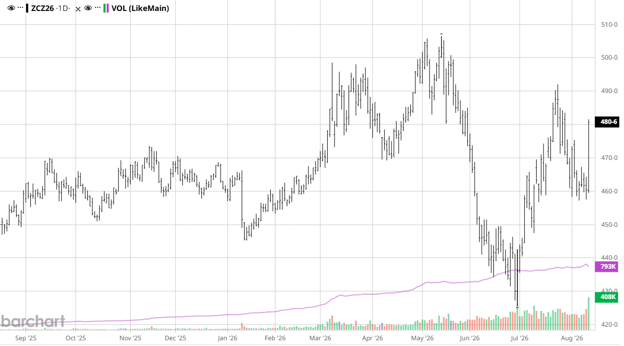
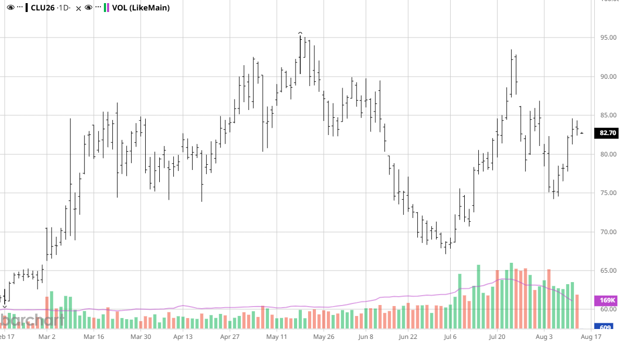
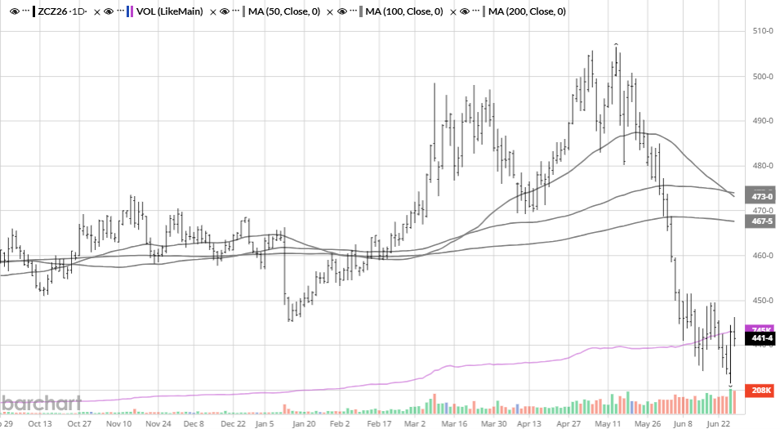
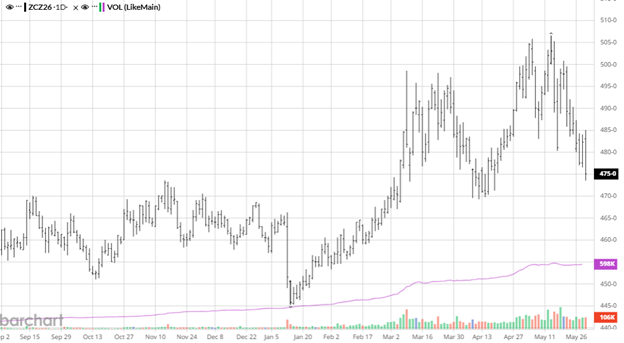
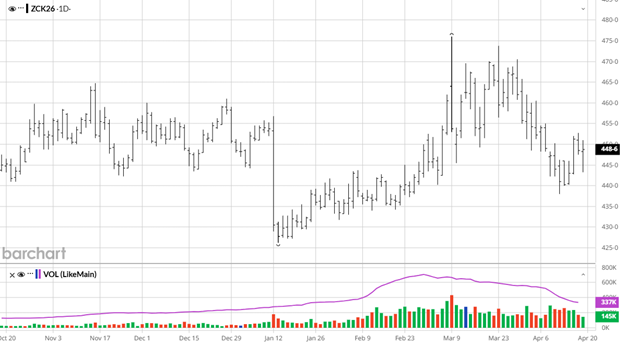
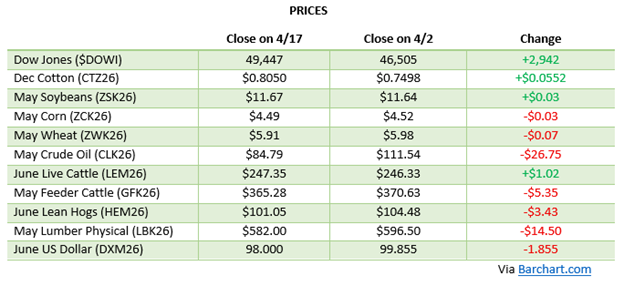
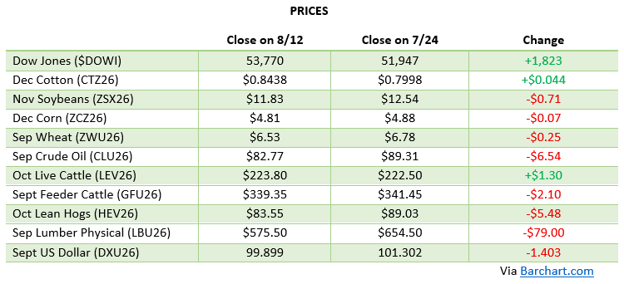
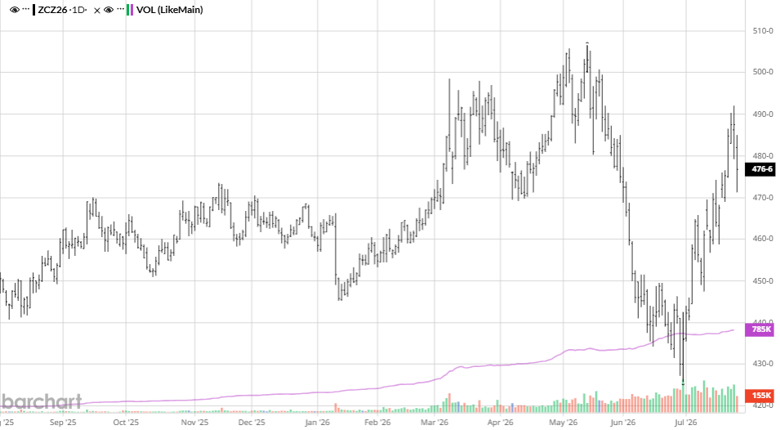
Corn spent the start of April grinding lower, posting a fourth consecutive weekly loss by April 10th as the April WASDE reinforced a burdensome supply narrative. The USDA left U.S. ending stocks essentially unchanged at 2.127 billion bushels, the highest in seven years, and global stocks came in above trade expectations at 294.81 million metric tons. A two week ceasefire between the U.S. and Iran, announced April 7th, removed much of the war premium that had propped up prices since March, as easing Strait of Hormuz concerns pulled crude oil sharply lower and dragged corn along with it. July futures slid to a fresh four-week low near $4.40, completing a nearly 62% retracement from the March 9th highs. The past week saw stabilization and a modest recovery. Faster than expected planting progress, U.S. corn planting reached 5% completion as of April 13th, slightly ahead of last year’s pace, combined with firming eastern Corn Belt basis and Mexico securing a large forward purchase of 12.4 million bushels helped steady sentiment. The old crop market remains locked in a congestion zone between $4.45 and $4.55 on May futures, with the 200-day moving average serving as key support. Speculators have been trimming their long positions aggressively, as shown in the latest CFTC Commitment of Traders reports, leaving the market less vulnerable to a large liquidation event but also with less upside fuel until a fresh catalyst emerges as money allocators reposition to the equity markets.

Via Barchart

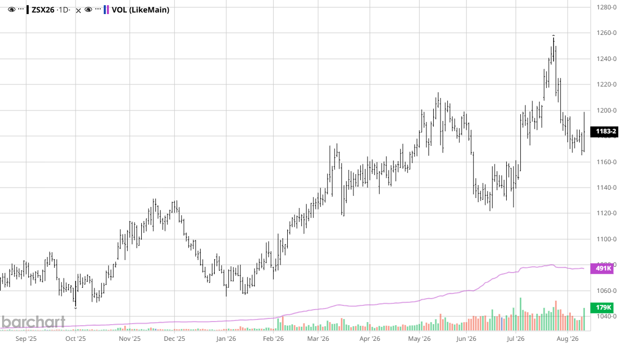
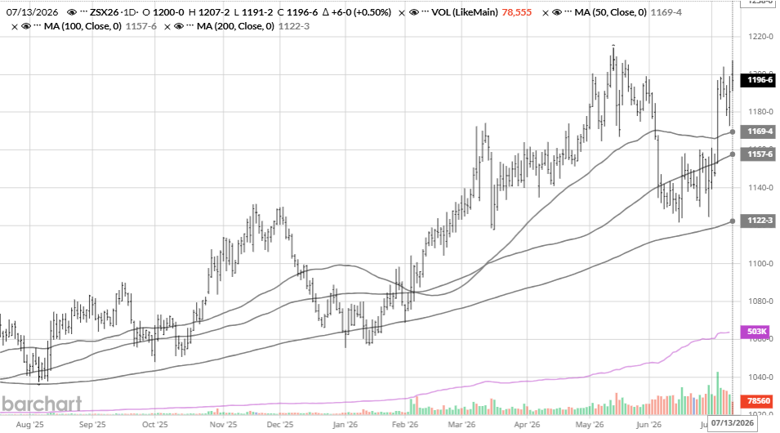
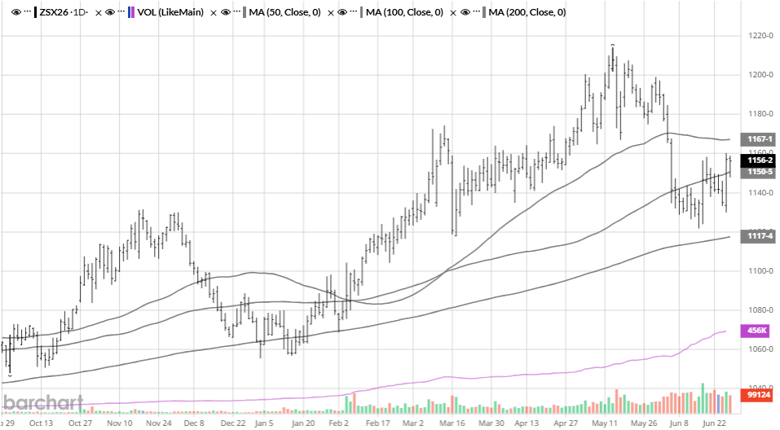
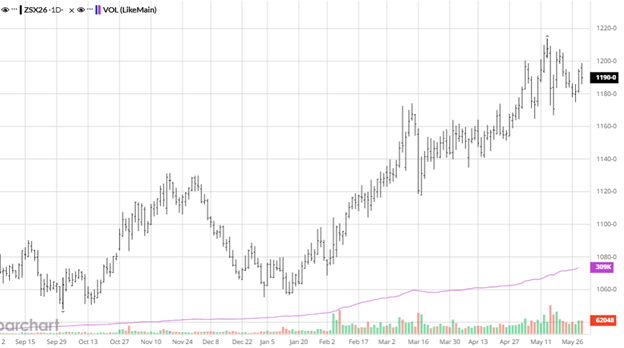
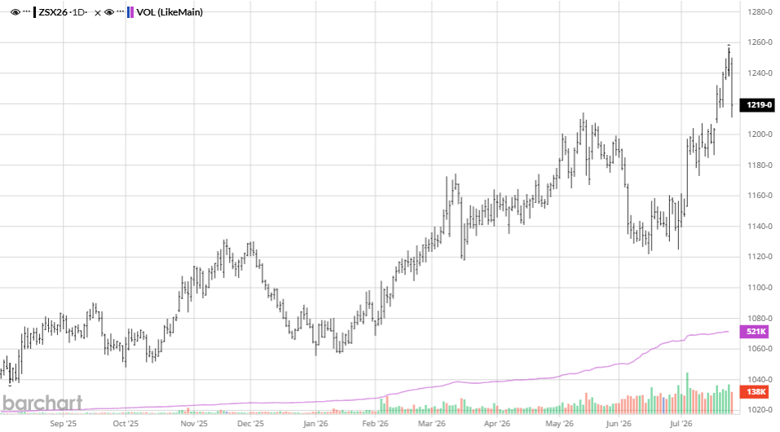
Soybeans have largely remained in a sideways grind, trading between $11.50 and $11.83 on July futures for most of the last 2 weeks. The April WASDE showed U.S. ending stocks unchanged at 350 million bushels with adjustments netting to zero, crush estimates raised while exports were trimmed by the same amount. The season-average price forecast was nudged 10 cents higher to $10.30 per bushel. Brazil’s CONAB raised its 2025/26 soybean production estimate again, this time to 6.582 billion bushels, keeping the global supply backdrop heavy and capping any sustained rallies. On the positive side, strong domestic crush margins, board crush pushing above $3 per bushel, have been the primary support story for the complex. NOPA March crush is expected to come in well above year-ago levels when reported. U.S. planting progress debuted at 6% complete as of April 13th, ahead of the 2% five-year average, with Mississippi and Tennessee leading at 39% and 36%, respectively. The market is waiting for a significant new headline to break out of the current range. Talks between President Trump and China’s President Xi, which were delayed amid the Iran conflict, remain a key watch item as any resumption of Chinese buying interest could quickly change the demand narrative for U.S. soybeans.

Via Barchart

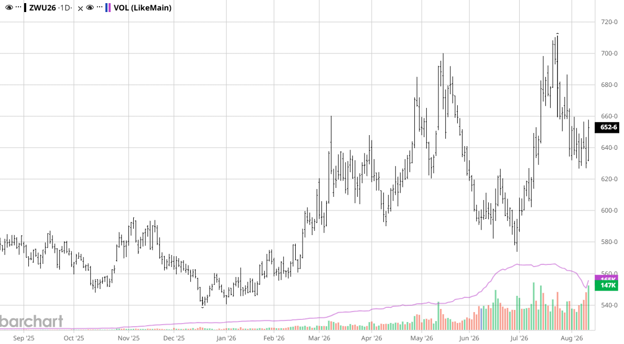
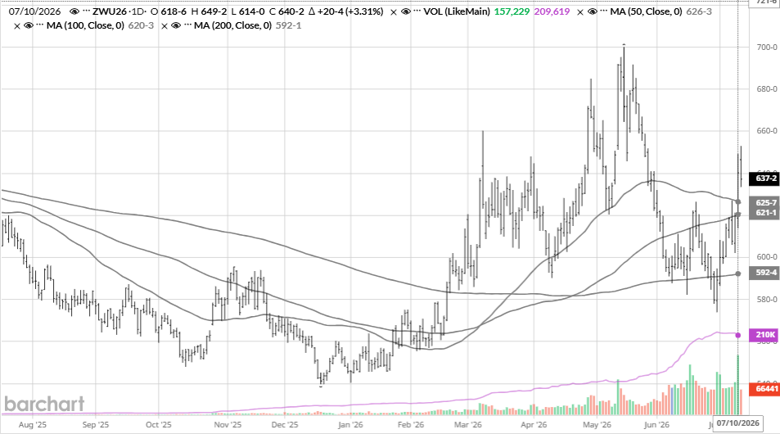
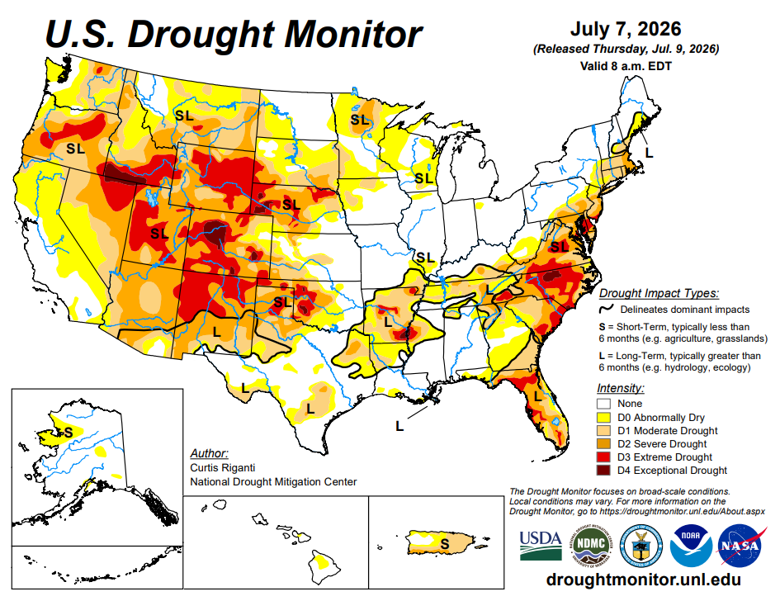
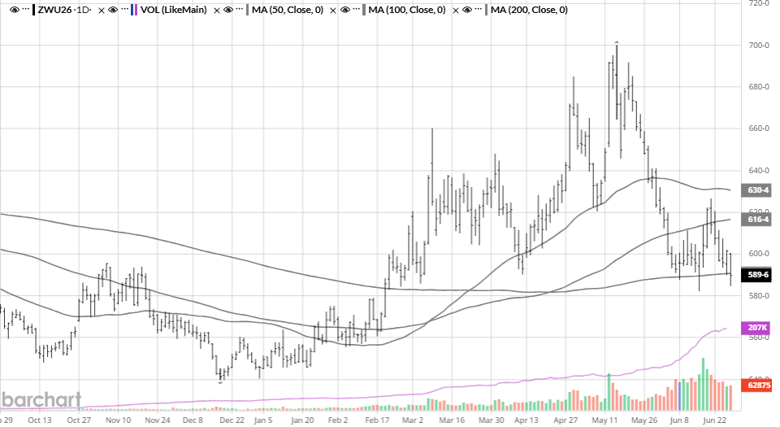
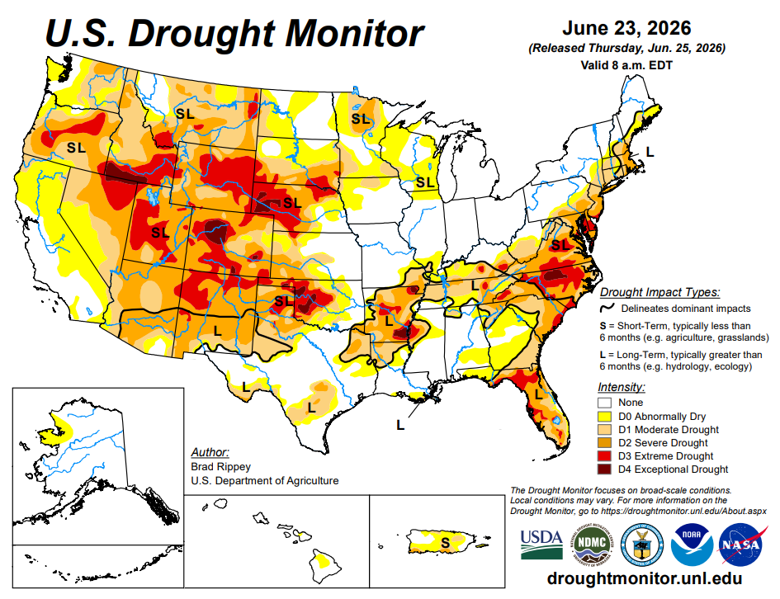
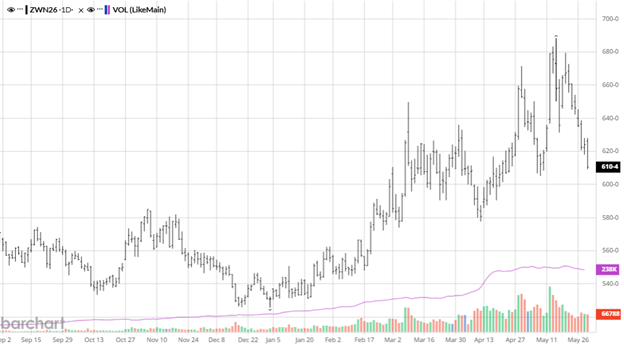
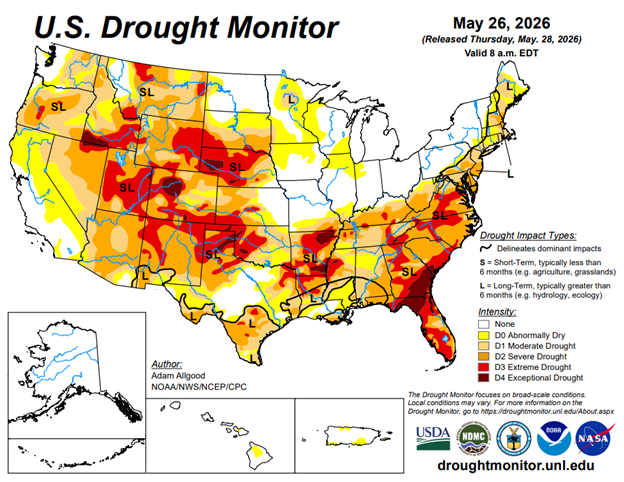
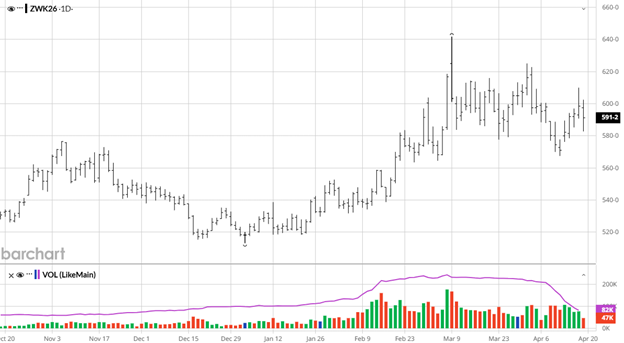
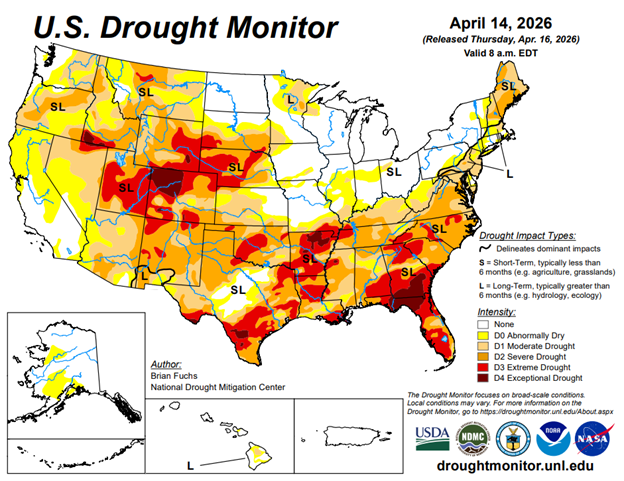
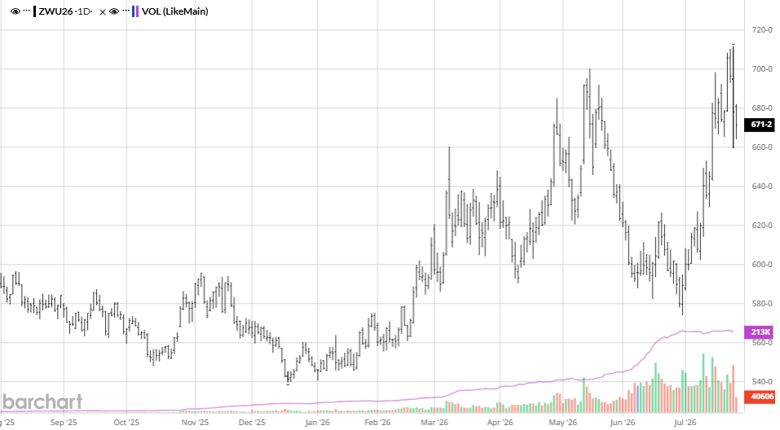
Wheat has done better the last couple of weeks, with Kansas City HRW futures rallying on the back of deteriorating U.S. crop conditions and persistent drought in the Southern Plains. USDA’s April 14th crop progress report showed just 34% of the winter wheat crop rated good-to-excellent, down a full 13 percentage points from a year ago, with 32% of the crop rated poor or very poor. Oklahoma and the Texas Panhandle remained in severe to extreme drought, and the recent widespread rain systems have largely missed the driest areas. Concerns about the long-term fertilizer supply disruptions caused by the Iran conflict have added a structural premium, with funds holding a record long position in spring wheat and a growing net long in Kansas City HRW. July HRW futures jumped nearly 20 cents on April 14th alone, reaching their highest settlement since March 31st at $6.36. Chicago SRW July futures also pushed above $6.00. The market sold off modestly to end the week but held the bulk of its gains. Longer-range forecasts suggest late April could bring more favorable moisture to parts of the Plains, which could temper upside. For now, weather, drought maps, and the weekly crop condition ratings are the primary price drivers.

Via Barchart

Equity Markets

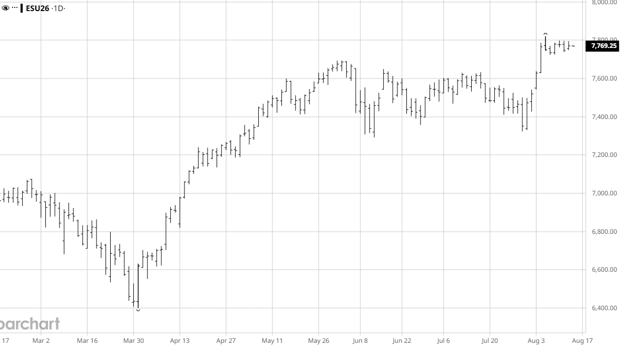
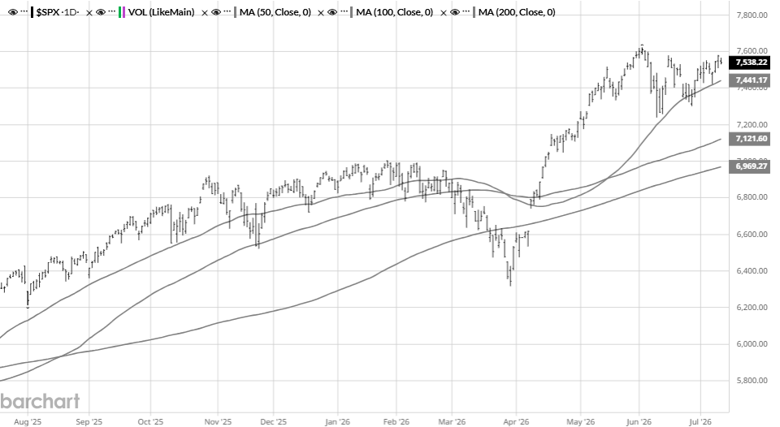
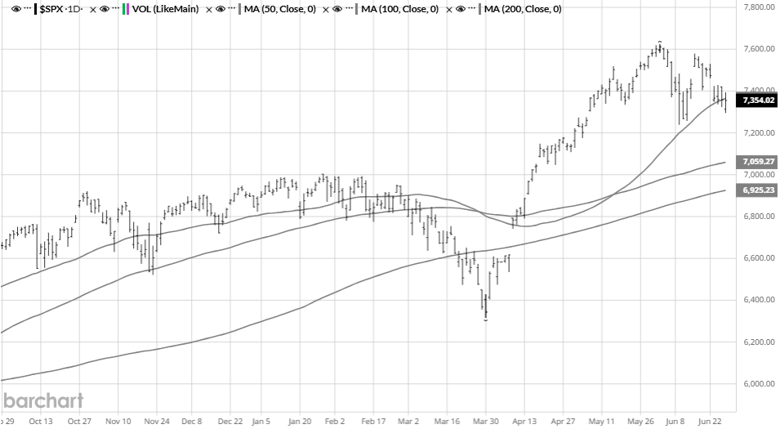
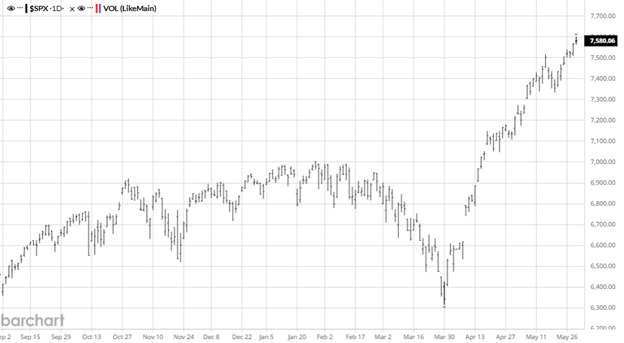
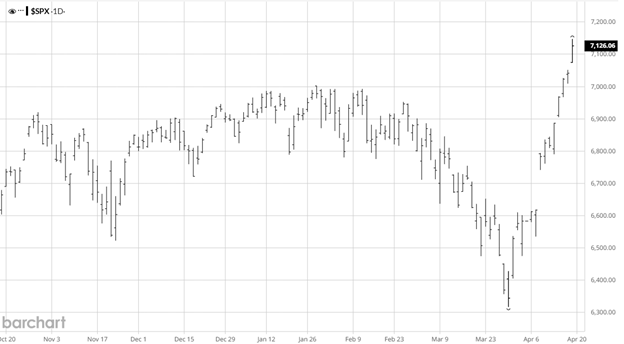
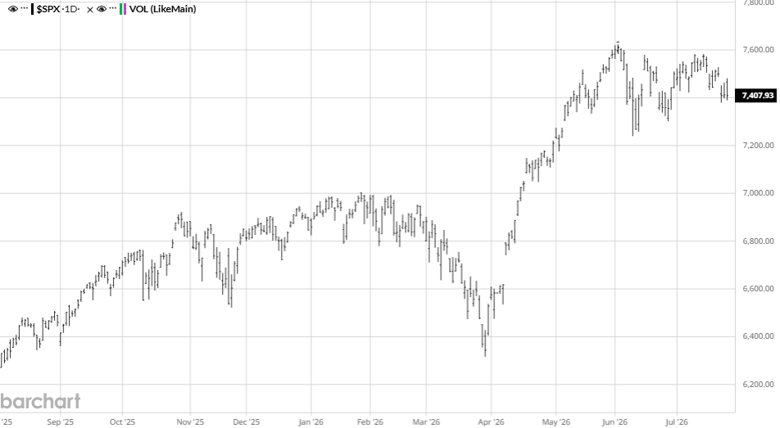
Equity markets have moved from deep stress to new record highs over this two-week stretch, tracking the Iran ceasefire developments closely. When Trump announced the two-week pause in operations on April 7th, the Dow Jones Industrial Average surged 1,325 points, its best single session since April 2025, while the S&P 500 gained 2.5% to 6,782. Through the balance of the period, stocks continued recovering as investors grew increasingly optimistic about a lasting peace deal, with the S&P 500 recouping all losses accumulated since the start of the conflict. The run to new highs has been impressive with the NASDAQ having a positive day for 14 straight days.

Via Barchart

Energy Markets

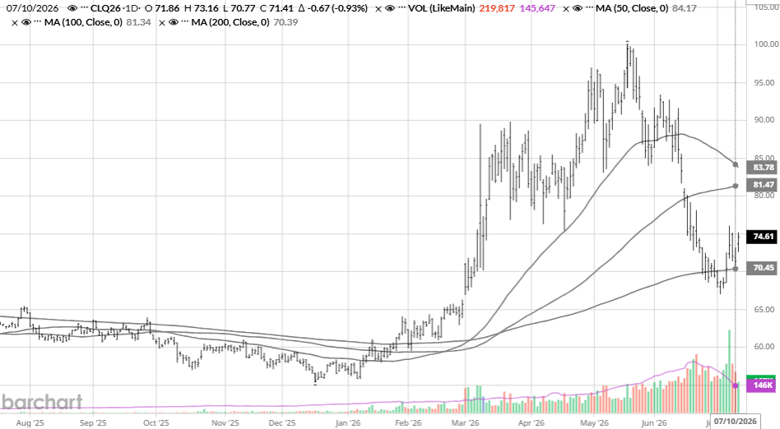
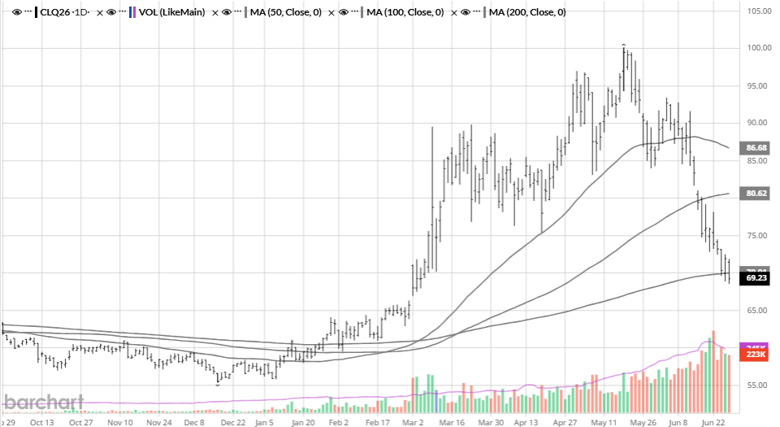
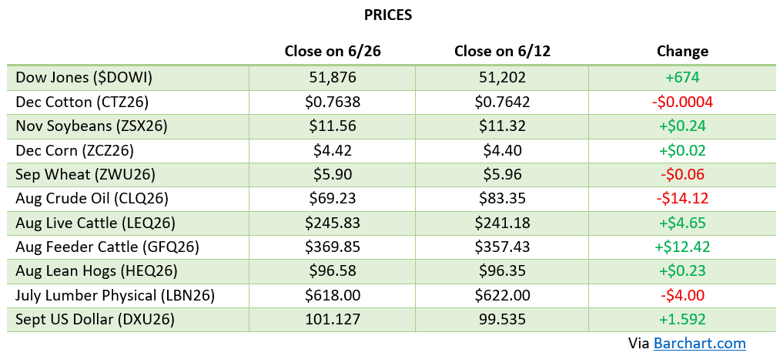
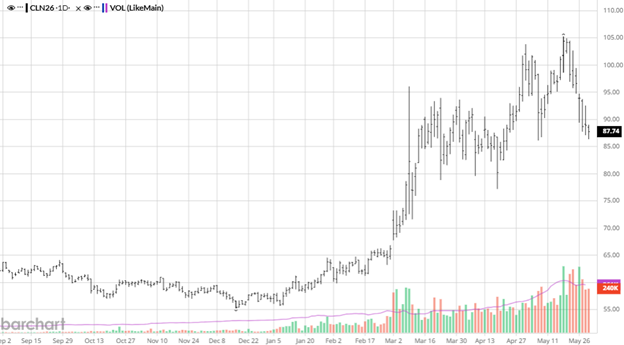
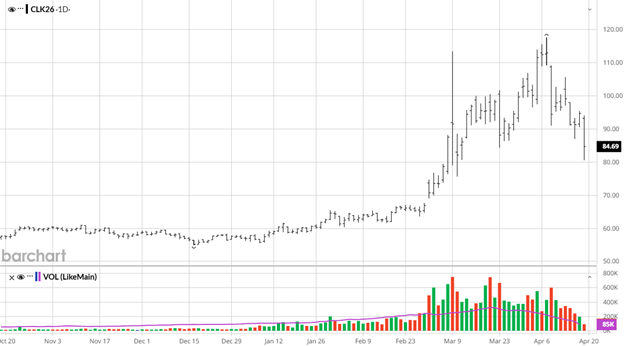
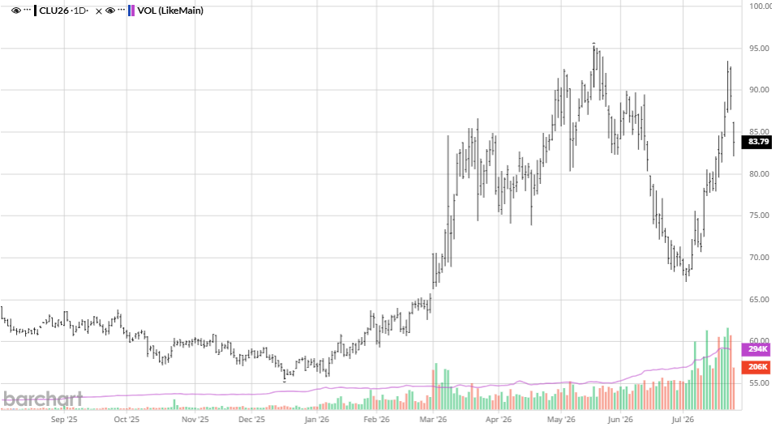
Energy markets have continued to be volatile over the past couple of weeks but the news of ceasefire and opening of the Strait of Hormuz. While the cease-fire does not mean the conflict is over, if good news continues to come out of Washington oil prices will fall. The ceasefire dynamics have already meaningfully reduced fertilizer cost fears and energy-linked inflation expectations.

Via Barchart

Other News

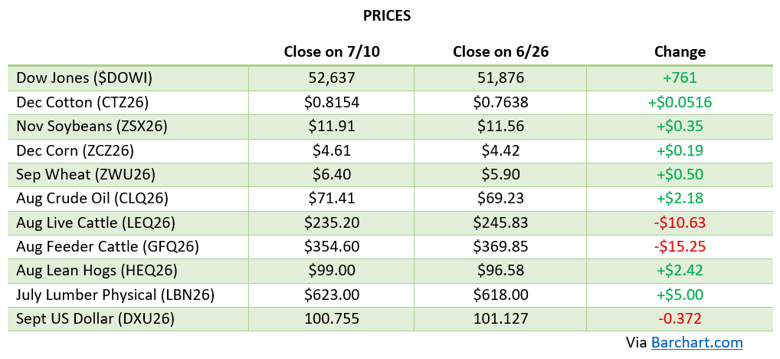
  • Cotton has been one of the most compelling commodity stories of the period, with July futures pushing to a nearly two-year high and new crop cotton reaching $0.80 in the Dec contract. The move has been supported by a combination of bullish factors: elevated crude oil prices increasing polyester production costs and driving synthetic fiber substitution back toward natural cotton, a weaker U.S. dollar, and persistent drought in key U.S. growing regions stretching from the Texas Panhandle westward. The USDA April WASDE raised global production by 900,000 bales while also lifting consumption by 560,000 bales, leaving the net balance slightly tightened.
  • USDA’s April WASDE raised the season-average farm price for wheat 5 cents to $5.00/bu, corn 5 cents to $4.15/bu, and soybeans 10 cents to $10.30/bu.
  • The Trump administration called out fertilizer giant Mosaic for idling two Brazilian plants, with Deputy Agriculture Secretary Stephen Vaden publicly questioning the timing as global fertilizer supplies face war-related disruptions.
  • A new survey found that only 60% of U.S. corn farmers have secured their nitrogen needs for the 2026 crop year, a reflection of the input cost uncertainty created by the Iran conflict.
  • Brazil’s CONAB raised its 2025/26 total corn crop estimate to 139.6 MMT (5.5 billion bushels), maintaining a heavy Southern Hemisphere supply backdrop.


Drought Monitor

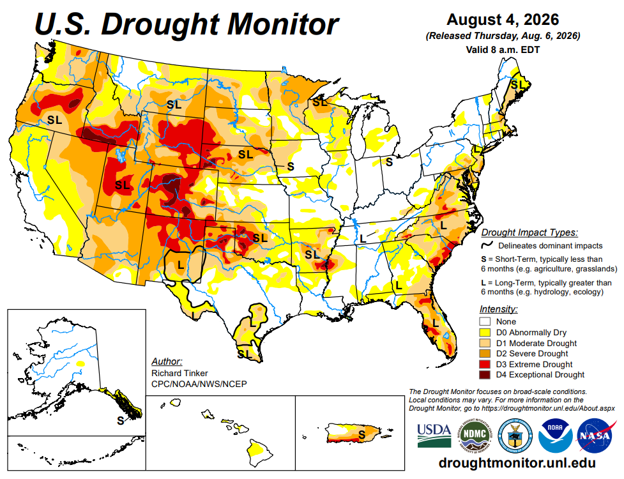
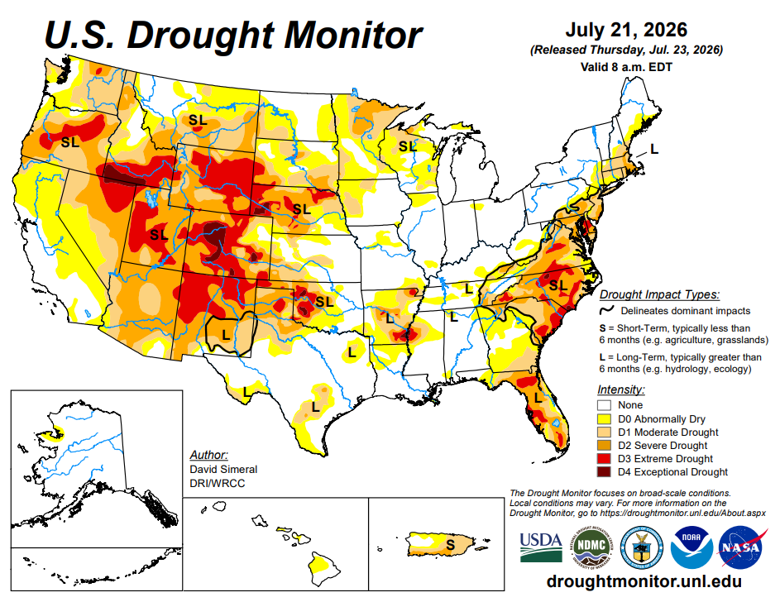
Here is the most recent drought monitor. With planting starting later this spring, we need rain in a lot of places in March.
Contact an Ag Specialist Today

Whether you’re a producer, end-user, commercial operator, RCM AG Services helps protect revenues and control costs through its suite of hedging tools and network of buyers/sellers — Contact Ag Specialist Brady Lawrence today at 312-858-4049 or blawrence@rcmam.com.

12 Jan 2026

AG MARKET UPDATE: POST JANUARY 12 USDA REPORT

Corn took a dive on today’s USDA report with 1.3 million more harvested acres and larger yield than expected coming in at 186.5 bu/ac. With this comes more production leading to larger ending stocks, brutal two-sided hit for the corn bulls. Corn had done a great job of climbing higher since early December, but today’s report gives all the momentum back to the bears with South America’s growing season off to a great start. Corn’s big move lower sent it below all technical support and unless we see a quick turnaround this week what was a support level could turn into overhead resistance as we are now at levels last seen in August.

Via Barchart

While the USDA report was not as bad for beans, it did suffer double digit losses with a slightly higher than expected national yield of 53 bu/ac. One important item was that US exports were revised lower due to more world competition. This is important as we still need China to buy US beans as we do not have another major market catalyst as the Trump administration has not been friendly for the implementation of SAF (sustainable aviation fuel). The month and half of +$11 beans we saw will be a struggle to get back to as South America continues to roll on with another record crop expected.

Via Barchart

Equity Markets

Equity markets roll on despite some days of volatility with headlines from the White House and drama surrounding the Fed. As you can see in the chart below since last April’s tariff scare the markets have been steadily moving higher.

Via Barchart

Other News

  • The precious metals trade continued its strong 2025 into the start of 2026 with new highs in gold and silver.
  • Wheat had ending stocks rose modestly and the price was dragged lower with corn.

Drought Monitor

Here is the most recent drought monitor.
Contact an Ag Specialist Today

Whether you’re a producer, end-user, commercial operator, RCM AG Services helps protect revenues and control costs through its suite of hedging tools and network of buyers/sellers — Contact Ag Specialist Brady Lawrence today at 312-858-4049 or blawrence@rcmam.com.

 

09 Dec 2025

AG MARKET UPDATE: NOVEMBER 14 – DECEMBER 9

Corn has been trading sideways since the end of October and nothing from today’s USDA Report gives it reason to change course. The main news for corn has been the lack of news. Corn did dip 20 cents in late November but bounced back to the middle of the range it has been in around $4.45. In today’s USDA report they kept US production the same while raising the export forecast by 125 million bushels, lowering US ending stocks to 2.029 billion bushels. The global stocks number was also revised lower with production cuts to other countries, including Ukraine. While the report was modestly bullish corn will need some more news to leg up to the $4.60 range as South America is off to a great start.

Via Barchart

Beans have tumbled off their recent highs as the rocket higher ran out of fuel and has been giving back those gains. The USDA left US production the same with an overall neutral report with no major surprises. Global stocks were slightly raised as Brazil, India and Russia offset tighter supplies elsewhere. With no news to turn this recent downtrend around the market needs positive China trade news desperately as that was the initial “news” to drive markets higher.

Via Barchart

Equity Markets

Equity markets have rallied from the November dip and are within a couple % of new all time highs. The markets are expecting another rate cut this week and would be surprised if there is not.

Via Barchart

Other News

  • The wheat numbers were mostly unchanged and did not have any major news to change the direction of trade but could turn around on global trade news.

Drought Monitor

Here is the most recent drought monitor.

Contact an Ag Specialist Today

Whether you’re a producer, end-user, commercial operator, RCM AG Services helps protect revenues and control costs through its suite of hedging tools and network of buyers/sellers — Contact Ag Specialist Brady Lawrence today at 312-858-4049 or blawrence@rcmam.com.
 

30 Sep 2025

AG MARKET UPDATE: SEPTEMBER 12 – 30

Corn had been trading in a range north of $4.20 the last couple weeks but dropped below there on the heels of the Sept 30th USDA Report. The USDA raised US ending stocks for corn from 1.325 billion bushels to 1.532 billion which pushed December corn prices to new 1-month lows. With plenty of supply and massive crops in both the US and South America the last 2 years, balance sheets have ample supply while demand for US corn remains strong outside of demand from China. With funds holding bearish positions, it will take a combination of them changing their tone and China showing up with purchases to give prices some news to rally on unless we get in the fields and the yield just isn’t there.

Via Barchart

Beans were lower post USDA report as well despite the report being neutral continuing their recent downtrend. The biggest hit to beans in the past couple weeks came when President Trump and President Xi had a call and no announcement of Ag purchases were made around it. Without China buying US beans there is no major upside currently, except for potentially lower yields. South America’s crop has been able to satisfy China’s needs as that trend will continue moving forward until they run out of supply.

Via Barchart

Equity Markets

Equity markets continue to trade at or near all time highs as a slowing job market could lead to more rate cuts after the Fed cut by 25 basis points this month. While GDP growth had a strong bounce back quarter and the stock market is still doing well, fueled by AI stocks, the overall economy is showing some warning signs but remains strong.

Via Barchart

Other News

  • Wheat continues to make new lows with a slightly bearish USDA report with larger US production.
  • Corn harvest is 18% complete and soybean harvest is 19% complete.
  • It seems more and more likely that there will be some extra government assistance to farmers this year with the depressed prices.

Drought Monitor

Here is the most recent drought monitor as harvest begins.

Contact an Ag Specialist Today

Whether you’re a producer, end-user, commercial operator, RCM AG Services helps protect revenues and control costs through its suite of hedging tools and network of buyers/sellers — Contact Ag Specialist Brady Lawrence today at 312-858-4049 or blawrence@rcmam.com.
Check it Out:

Convenience vs. Cost: Navigating Agricultural Markets, Convenience, and Consumer Spending

15 Sep 2025

AG MARKET UPDATE: AUGUST 29 – SEPTEMBER 12

Corn continued to move higher off last month’s lows following the September USDA Report. Most of the numbers came in along estimates but they increased planted acreage 1.4 million acres. This brings the US corn crop to 98.7 million acres, a new record. With about 90 million acres expected to be harvested, we will harvest 7 million more acres this year than in 2024, which equates to about 2 billion bushels larger crop than last year. Despite the added acreage corn bounced post report as weather issues, a dry finish, and disease pressure have caused speculation on the real size of this crop. As harvest gets rolling we will learn more about this crop.

Via Barchart

The USDA Report did not have any surprises for beans as most numbers were close to estimates, but the report could be viewed as slightly bearish. To get beans moving higher, China needs to show up as a buyer and trade talks with China need to make progress. China and the US are reportedly close to a deal over Tik Tok which can hopefully build some momentum for progress between the two countries. The size of the soybean crop, like corn, has been hurt by lack of rains down the home stretch but with the solid start the end result is still in question as harvest rolls.

Via Barchart

Equity Markets

Equity markets continue to make new highs with the Federal Reserve expected to start cuts this month. With the downward revision of 911,000 jobs from March ‘24 to March ’25 the labor market weakness gives the Fed some ammunition to lower rates with unemployment being one of their mandates.

Via Barchart

Other News

  • Secretary Rollins is in the process of looking into payments to farmers for this year with the low prices.
  • The wheat numbers were actually a bit supportive but lower world cash prices (Black Sea mainly) continue to plague prices. Wheat will remain an anchor for any potential corn rally as more wheat will be swapped in for corn in feed. Prices are back testing the 5 ½ year Covid lows.

Drought Monitor

Here is the most recent drought monitor as harvest begins.

Contact an Ag Specialist Today

Whether you’re a producer, end-user, commercial operator, RCM AG Services helps protect revenues and control costs through its suite of hedging tools and network of buyers/sellers — Contact Ag Specialist Brady Lawrence today at 312-858-4049 or blawrence@rcmam.com.
Check it Out:

Bulls, Bears, and Beef: Risk Management When Prices Run Hot

12 Aug 2025

AG MARKET UPDATE: AUG 4 – AUG 12 USDA REPORT

188.8 bu/acre… Hard to find a silver lining in the report for corn as the USDA ripped the band-aid off from the start instead of slow playing it. The average trade guess was 184-185 bu/ac which led to a big selloff seeing new contract lows. On top of the big yield number the USDA took the FSA planted acreage data and added 3 million acres in planted corn. The extra yield and acres could add nearly an extra 1 billion bushels of corn to the US and world ending stocks. The report did nothing to help the direction corn has been trading.

Via Barchart

The bean yield was also above pre-report estimates, coming in at 53.6 bu/acre. Prices were higher though following the 3 million acre planted acreage cut and total production cut by 90 million bushels. The market was caught off guard by the 3 million acre shift as evidenced in the opposite price reaction to the report numbers. The bean rally will give farmers a chance to catch up on sales but it will also motivate more acres to be planted in South America on stronger prices.

Via Barchart

Equity Markets

Equity markets continued to perform well as AI and tech companies are still the major movers. Nvidia and Microsoft are now a combined 15+% of the S&P 500 index, causing some to worry about concentration, but luckily they are performing well so right now a rising tide raises all boats (money in S&P ETFs).

Via Barchart

Other News

  • Wheat was in line with re-report estimates and had no major surprises. The weakness in corn will continue to weigh on wheat however.
  • Cotton saw a boost post report after the USDA lowered planted and harvested acres. Production was trimmed by 1.39 million bales to 13.21 million bales.

Drought Monitor

Here is the most recent drought monitor.

Contact an Ag Specialist Today

Whether you’re a producer, end-user, commercial operator, RCM AG Services helps protect revenues and control costs through its suite of hedging tools and network of buyers/sellers — Contact Ag Specialist Brady Lawrence today at 312-858-4049 or blawrence@rcmam.com.
 

04 Aug 2025

AG MARKET UPDATE: JULY 18 – AUGUST 4

Corn prices have drifted lower since Mid-July with no major weather issues and no major trade deal news. The corn crop ratings remain strong with about 73% of the US crop rated good/excellent and slking and dough formation ahead of average. Exports have slowed and funds have kept their short position about even last week. With the recent heat dissipating giving way to a cooler week, this crop has not been made yet but has not faced any prolonged growth challenges which continues to fuel the estimates into the 184-185 bu/acre. While this will be an impressive crop, from talking to growers across the country there are trouble spots due to disease and timing of rains which would help us get back to the low 180s which would give the market a bump. The market has been limping lower and will likely continue until something in the news cycle changes.

Via Barchart

Soybeans have struggled lately as there has not been any news to boost the market. Exports this week were better but until China shows up as a buyer the demand for US beans is struggling on the global market. South America had a strong crop giving China more supply to buy so China may not show up until they have to unless prices fall enough to make them step in. Crop ratings remain strong, but the next month of rain will be important for pod filling and to get the crop across the finish line.

Via Barchart

Equity Markets

Equity markets continued to reach new highs before a sizeable pullback to end last week with the news of Trump firing the head of the BLS. AI and tech names continue to lead the way. Magnificent 7 stocks have had mixed reactions to earnings but nobody is sounding the alarm yet about tariffs as guidance remains steady.

Via Barchart

Other News

  • Wheat has limped lower with corn and beans but saw good exports this week amid Ukraine’s sluggish exports.
  • The USD has strengthened in the last week but is still well below its year high. Historically this would have been supportive of agriculture exports but there are other factors in play this year.
  • The August WASDE report should provide some clarity and at least provide some new news for the market to digest and trade on for a bit.


Drought Monitor

Here is the most recent drought monitor.

Contact an Ag Specialist Today

Whether you’re a producer, end-user, commercial operator, RCM AG Services helps protect revenues and control costs through its suite of hedging tools and network of buyers/sellers — Contact Ag Specialist Brady Lawrence today at 312-858-4049 or blawrence@rcmam.com.
 

30 Jun 2025

AG MARKET UPDATE: JUNE 13 – 30

Last week was rough for commodities as corn dropped to make new contract lows in Dec ’25. The charts do not look good for corn and there is no good news to help either. There are no major weather concerns and South America is producing another record crop allowing for ample ending stocks in the world. The USDA June 30th Planted Acreage Report stated that corn has 95.203 million planted acres. This number is neutral to bearish as the market was expecting a slightly higher number but anything 95+ with the weather to this point in the year looks for a huge crop. The bears have the momentum right now but there are some trouble areas and a long summer ahead to bring the bulls some help.

Via Barchart

Soybeans gave back the recent gains as well last week before the report on June 30th. Beans will likely continue to trade in the range they have been until we receive news to direct the market either on the trade agreement side or weather. The Planted Acres report had 83.38 million acres, slightly below expectations. The tax bill going through congress right now may give beans some help by getting rid of a 45z tax credit loophole but until this thing passes everything is on the table to get cut from it. Weather is good for the next 2 weeks so the market needs positive news from a US and China trade deal to give it a boost.

Via Barchart

Equity Markets

Markets set new highs after another V shape recovery following the liberation day tariff dip. Several tech stocks have led the way outside of the Magnificent 7 as AI continues to dominate headlines with spending continuing and companies talking about how it can help improve their margins.

Via Barchart

Other News

  • Cotton acres came in higher than expected at 10.12 million acres. Cotton has been stuck below 70 cents/lb for a while and while the acreage number came in higher than expected we know there are issues with the crop and a lot of abandonment.
  • Wheat, like corn and beans, yawned at the report as the numbers were close to the average estimate with no major changes. After a mid June rally, the weakness to end the month was disappointing dropping 50 cents from the highs.
  • The weakness in the USD over the past few months will be something to keep an eye on as the year continues with it trading at levels we have not seen since early 2022.
  • Tensions in the Middle East continue despite a drawdown in aggression.

Drought Monitor

Here is the most recent drought monitor.

Contact an Ag Specialist Today

Whether you’re a producer, end-user, commercial operator, RCM AG Services helps protect revenues and control costs through its suite of hedging tools and network of buyers/sellers — Contact Ag Specialist Brady Lawrence today at 312-858-4049 or blawrence@rcmam.com.
 

13 Jun 2025

AG MARKET UPDATE: APRIL 29 – JUNE 13

Corn continues to struggle with any rallies as you can see in the chart below every recent high is lower than the previous. The June 12th USDA report was lackluster with no real changes and not enough good news to give the bulls help. With the crop planted, 75% good/excellent, and non-threatening growing weather ahead, the bulls need a weather issue and/or positive trade news to change the direction of the market. The next major report is the June 30th Stocks and Acreage Report that tends to cause some volatility.

Via Barchart

Soybeans received great news to end the week with better-than-expected biofuel mandates from the Trump administration. You can see how the news was received after a lackluster USDA report earlier in the week in the chart below. Beans will need to breakthrough recent highs or at least stay above the moving averages they broke through to keep some positive momentum as they are where they were back in February which is at least better than corn’s price movement. Planting should wrap up soon and good growing weather will move this crop along. Beans received one piece of good news in the biofuel mandates as they await news on any deal with China to help push higher.

Via Barchart

Equity Markets

Markets have settled down after another V shape recovery following the tariff driven dip at the beginning of April. The leveling off slightly below all-time highs shows that the market is hesitant in what to expect moving forward but acknowledges that the initial reaction to tariffs with negotiations ongoing were an overreaction. While the market could fail here and move lower with negative trade news the biggest domino the market is watching is China while also keeping an eye on developments in the Middle East.

Via Barchart

Other News

  • Israel and Iran’s conflict appears to be getting worse with more attacks while the US tries to position itself to lower tensions. Crude Oil prices will watch the news as a global economic slowdown vs lower production due to war would face off.
  • Cotton has been quiet with a lack of foreign demand with global economic uncertainty.


Drought Monitor

Here is the most recent drought monitor.

Contact an Ag Specialist Today

Whether you’re a producer, end-user, commercial operator, RCM AG Services helps protect revenues and control costs through its suite of hedging tools and network of buyers/sellers — Contact Ag Specialist Brady Lawrence today at 312-858-4049 or blawrence@rcmam.com.
 

29 Apr 2025

AG MARKET UPDATE: APRIL 14 – 29

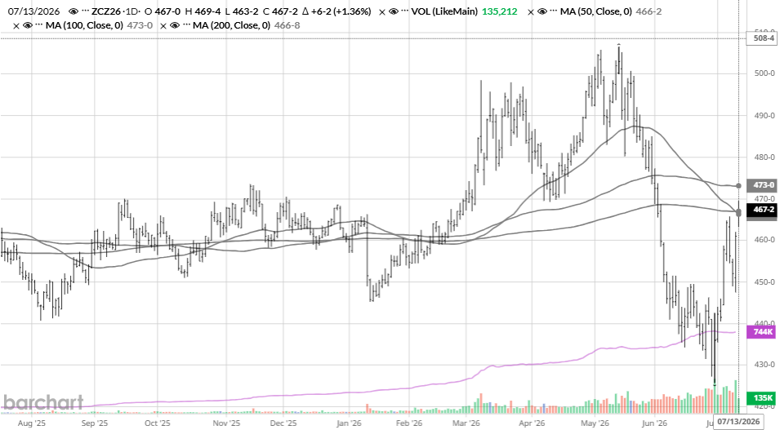
Over the past two weeks, corn futures have experienced significant volatility, primarily from trade policy developments and supply and demand dynamics. In early April, the market faced pressure as the U.S. implemented tariffs on imports from Canada, Mexico, and China, prompting retaliatory measures, including a 15% tariff on U.S. corn by China. This escalation raised concerns about reduced export demand, leading to a sell-off in corn futures. However, the market rebounded when President Trump announced a delay in the implementation of tariffs on Mexican goods, alleviating fears of diminished demand from Mexico, the largest importer of U.S. corn. The market has tight US and global supplies with the recent USDA revisions resulting in a stocks-to-use ratio of 9.6%, the lowest in 3 years. South American weather remains non-threatening and US planting continues to make progress with many areas ready to get rolling in May.
Via Barchart

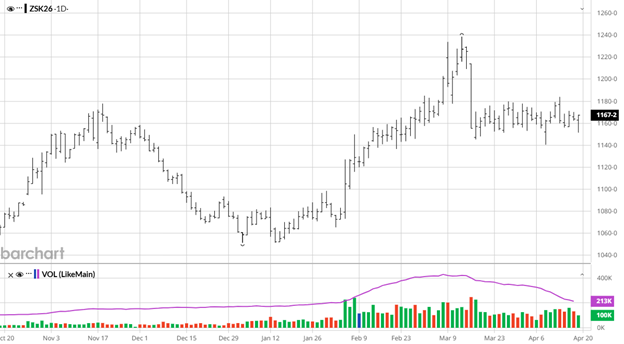
Soybeans have also faced sharp swings in the past two weeks, driven by global trade tensions, weather and repositioning. China’s retaliatory tariffs on US beans lead to a big drop in US exports, at the same time Brazil’s exports to China surged. Weather in some areas of Brazil has raised some concerns about a potential dip in yield but another record crop is still expected. Spec traders have started positioning a small long position after it has been beaten down so much they are hoping for a rally that could come with any US issues with planting or lower planted acres.

Via Barchart

Equity Markets

Markets have seen wild volatility this month but have calmed lately as the S&P 500 tries to hold above 5,500, a point many saw as resistance. While trade negotiations on tariffs continue with the world the market needs a stream of announcements that progress is being made as the 90-day delay will get here very quickly.

Via Barchart

Other News

  • Global wheat supplies face potential tightening through next year due to lower production in the Black Sea as the Russia Ukraine war continues on.
  • Cattle prices continue to record highs as the US headcount is the lowest level since 1951.

Drought Monitor

As planting approaches here is the most recent drought monitor.

Contact an Ag Specialist Today

Whether you’re a producer, end-user, commercial operator, RCM AG Services helps protect revenues and control costs through its suite of hedging tools and network of buyers/sellers — Contact Ag Specialist Brady Lawrence today at 312-858-4049 or blawrence@rcmam.com.