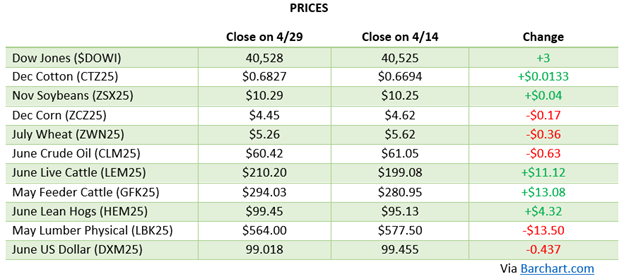

Recap:
Did it turn into a battle when it should have been a rout? The cash market is very active with less supply. Things are tight, and some mills are OTM for a day. We are where we expected to be except for the issue of $100 crude. No one could have projected it. Without the Iran issue futures would be $50 higher and blowing out the funds, but instead we have to scratch and claw for a few bucks. The question today is if we missed the acceleration move or not? We have the rally but now can we get the run?
Crude is becoming “more of the same.” It isn’t going back down, but the likelihood of larger crude restriction is lessening every day. In the same vein, the US has made clear that higher crude is a small price to pay. The end result, a long drawn out fight sending the spec longs in crude elsewhere. That begins more of the same.
So, what does the battle look like?
The Tight Market:
Companies large and small are using the same strategy of limiting Cap X to keep costs down in 2026. Inventory is the largest cost so cut it and you cut costs. Sound economics to me except for the fact that when your business is a commodity, you need that commodity to remain in business. What we saw last week was a push by many firms to at least fill in.
It is spring. We see a natural tightness to the market every year. Demand numbers are already set. It becomes a time to buy.
The Demand Struggle:
The housing data is weak. New and existing home sales have pulled back even with the multiplier. Months of inventories are up sharply. Even Canadian starts are projected to be off for the next few years.
There are two debates going of when the housing market became broken. The first was the obvious 2008. Many economists believe that by the mid-teens that problem was fixed. They believe that it again happened after 2018 when the housing market broke and never recovered. We are talking about the typical economic forces, not covid, etc. My point is that in either case we had an employment fear for the first time home buyer. Today, looking at the projection of a 30% unemployment rate for new graduates, I would say nothing has changed since 08. Employment and employment sentiment are the key drivers, not rates, not affordability, just employment.
Finally, open interest continues to erode. We are seeing a sharp drop in industry longs as the market rallies. COT showed a 898 decrease while the fund shorts exited 588. The industry is putting money in the back. The funds are forced to lighten up with large rallies. It is true textbook trading.
Technical:
I can’t say this very often, but the technicals are neutral at best when the fundamentals are strong. Another lower session will force a cross of a few oscillators to negative. This isn’t a sell signal as they tend to go back and forth before it becomes a sell signal.
The focus is on 618.50. The market needs a close over it. On Friday the high was 614.50. We are very close to gaining some momentum again. I believe it is going on for 5 weeks that 618.50 was the objective. The hitters are getting tired and the winds are blowing in. We need to get through it this week.
Daily Bulletin:
https://www.cmegroup.com/daily_bulletin/current/Section23_Lumber_Options.pdf
Southern Yellow Pine:
https://www.cmegroup.com/markets/agriculture/lumber-and-softs/southern-yellow-pine.volume.html
The Commitment of Traders:
https://www.cftc.gov/dea/futures/other_lf.htm
About the Leonard Report:
The Leonard Lumber Report is a column that focuses on the lumber futures market’s highs and lows and everything else in between. Our very own, Brian Leonard, risk analyst, will provide weekly commentary on the industry’s wood product sectors.
Brian Leonard
bleonard@rcmam.com
312-761-263


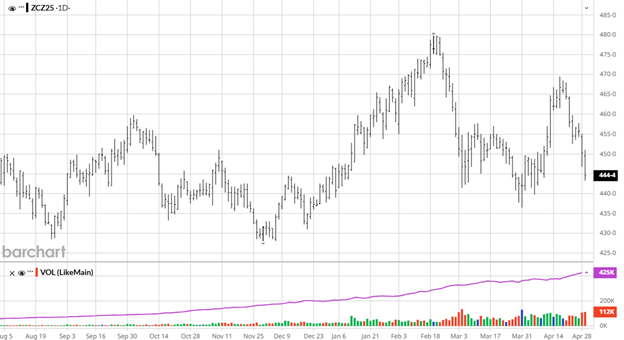
 Corn took a dive on today’s USDA report with 1.3 million more harvested acres and larger yield than expected coming in at 186.5 bu/ac. With this comes more production leading to larger ending stocks, brutal two-sided hit for the corn bulls. Corn had done a great job of climbing higher since early December, but today’s report gives all the momentum back to the bears with South America’s growing season off to a great start. Corn’s big move lower sent it below all technical support and unless we see a quick turnaround this week what was a support level could turn into overhead resistance as we are now at levels last seen in August.
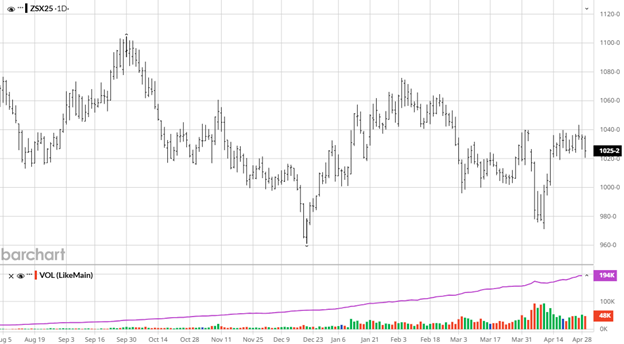
 While the USDA report was not as bad for beans, it did suffer double digit losses with a slightly higher than expected national yield of 53 bu/ac. One important item was that US exports were revised lower due to more world competition. This is important as we still need China to buy US beans as we do not have another major market catalyst as the Trump administration has not been friendly for the implementation of SAF (sustainable aviation fuel). The month and half of +$11 beans we saw will be a struggle to get back to as South America continues to roll on with another record crop expected.