
AG MARKET UPDATE: AUGUST 31 – SEPTEMBER 15

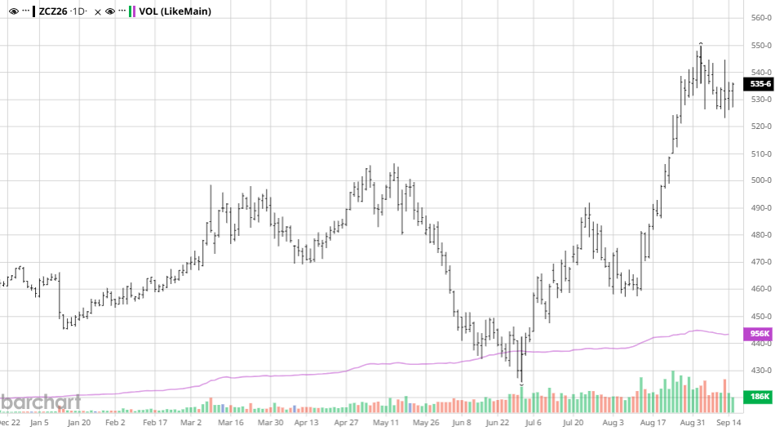
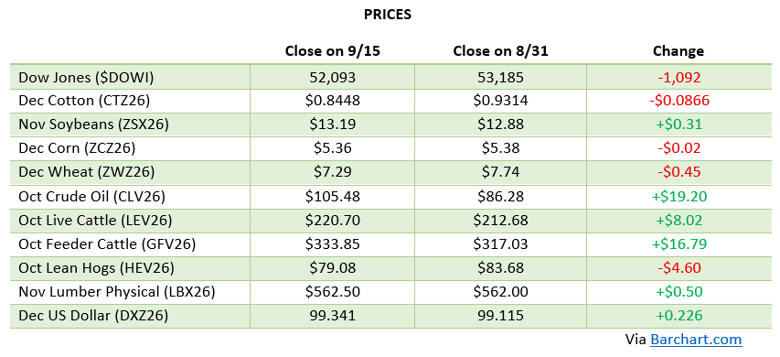
Corn spent the two weeks since August 31st grinding higher into last Friday’s USDA September Crop Production and WASDE report, with December futures pushing up toward the $5.30 area as the market priced in a tightening balance sheet. The report delivered on that theme without shocking anyone: USDA trimmed the 2026 national yield to 178.5 bushels per acre, essentially in line with pre-report estimates, while total production came in at 15.800 billion bushels. The bigger story was on the stocks side: 25/26 ending stocks were revised down to 1.922 billion bushels and the 26/27 figure came in at 1.567 billion bushels, keeping the stocks-to-use ratio tight enough that some analysts are now targeting the $5.80-$6.00 range on the board. Corn traded 1 to 2 cents lower in the immediate reaction, but the chart still looks constructive with a choppy, higher pattern intact. A modest reduction to harvested acres reflects some early silage cutting in the western Corn Belt trimming the acreage base, and with the new marketing year underway since September 1st, attention now turns to how much of this story gets revised when harvested-acreage data arrives in the October report.
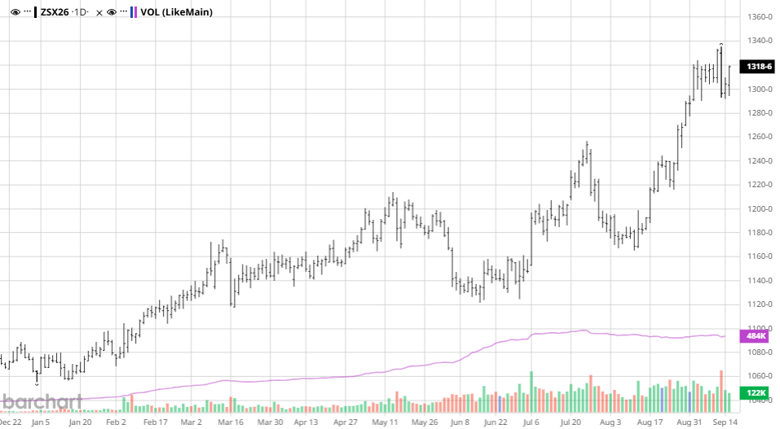
 Soybeans have been the standout of the row-crop complex, setting a new contract high on November futures in overnight trade ahead of Friday’s report before giving back a chunk of those gains into the close. Chinese demand has been the driver, buyers picked up another 136,000 tons ahead of Friday’s open, pushing the running total over the prior three sessions above 700,000 tons, all under the 2026/27 marketing year, with a formal purchase window reportedly set to open September 24th that should keep the buying headlines coming. The WASDE itself held few surprises: USDA nudged the 2026 yield up to 52.8 bushels per acre, raised production to 4.535 billion bushels, and, the one real surprise in the report, added roughly 12 million bushels to the 26/27 ending stocks estimate, bringing it to 310 million bushels. Beans traded 25 to 30 cents lower on the day as funds booked profits after the recent run, and the chart looks tired and toppy in the short term, though with China back in the market a break much below $13 on November futures would be a surprise.

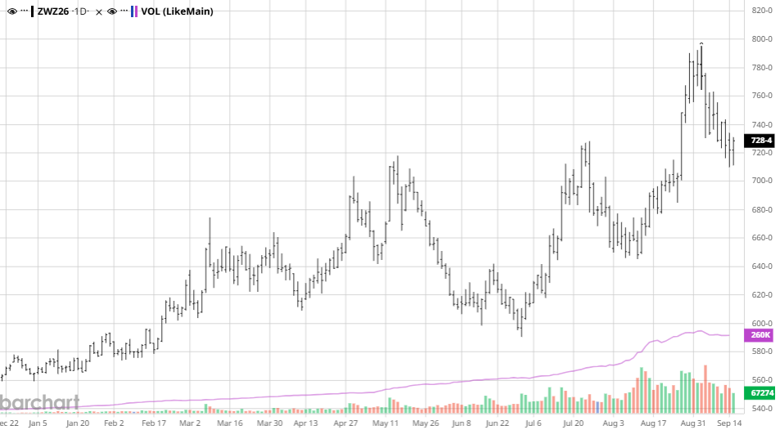
Wheat has been the laggard of the three since the last update, sliding into Friday’s report and losing another 13 to 15 cents on the day. The WASDE showed U.S. 2026/27 wheat stocks essentially steady at 717 million bushels, but a surprise increase of roughly 100 million bushels to the world stocks figure, now projected near 276.3 million metric tons, added pressure, compounded by unconfirmed chatter around progress in Black Sea negotiations. Ukrainian export logistics remain a persistent drag on the world balance sheet as well. With the domestic supply story unchanged and global stocks trending the wrong direction, wheat will likely need a fresh weather or geopolitical catalyst to turn the recent slide around.

Equity Markets
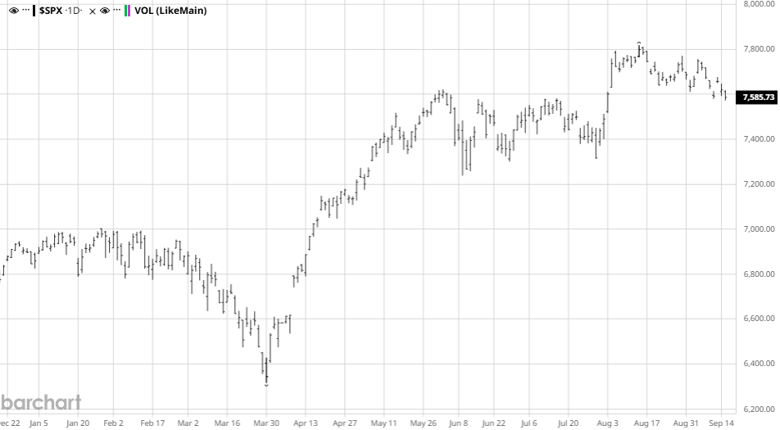
Equity markets have been choppy and headline-driven since the end of August. Stocks sold off sharply into month-end and again to start September, then whipsawed on the August jobs report, nonfarm payrolls came in at 162,000 versus the roughly 53,000 economists expected, reigniting debate over whether the Fed’s next move is a cut or a hike given the current 3.50%-3.75% target range. That debate has only intensified as crude oil has surged on renewed U.S.-Iran hostilities in the Strait of Hormuz, adding a fresh layer of inflation concern heading into the Fed’s September 15-16 meeting, the next major catalyst for the broader market. The market has priced in over a 90% chance of a 1/4 point hike this week.
Energy Markets
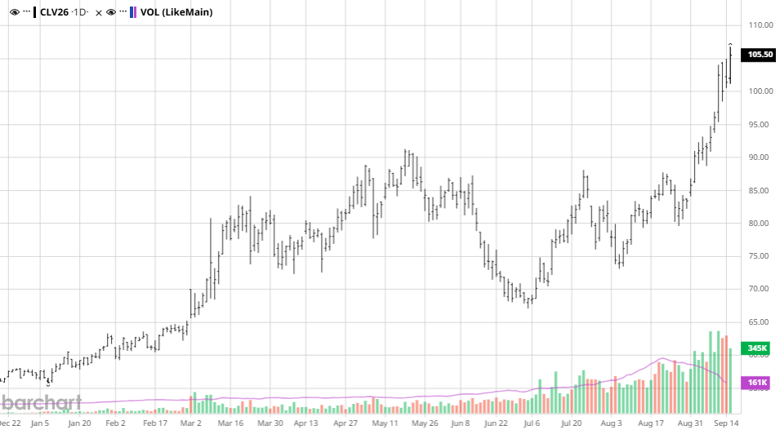
Energy markets took a sharp turn over the past week as the fragile calm around the Strait of Hormuz broke down. The U.S. and Iran exchanged direct strikes on shipping and naval assets, and strikes shutdown a major pipeline in Saudi Arabia, causing Brent crude to jumped back above $100 per barrel, with WTI trading near contract highs. Traffic through the Strait has reportedly collapsed to a small fraction of normal levels, and with several banks warning that disruptions could persist well into 2027, the renewed energy premium is worth watching closely for its knock-on effects on fertilizer and freight costs heading into fall applications and harvest.
Other News
– The new 2026/27 marketing year for corn, soybeans, and sorghum began September 1st; July soybean crush came in at 222 million bushels, up 4 million from June and 17 million from a year ago.
– China’s formal purchase window for new-crop soybeans is reportedly set to open September 24th: a date worth watching for confirmation of the recent pace of buying.
– Ukrainian wheat export logistics remain constrained, continuing to weigh on the world wheat balance sheet.
– The October Crop Production report will be the first to incorporate harvested-acreage data and is expected to be a significant mover for corn given the recent yield trend.
Drought Monitor
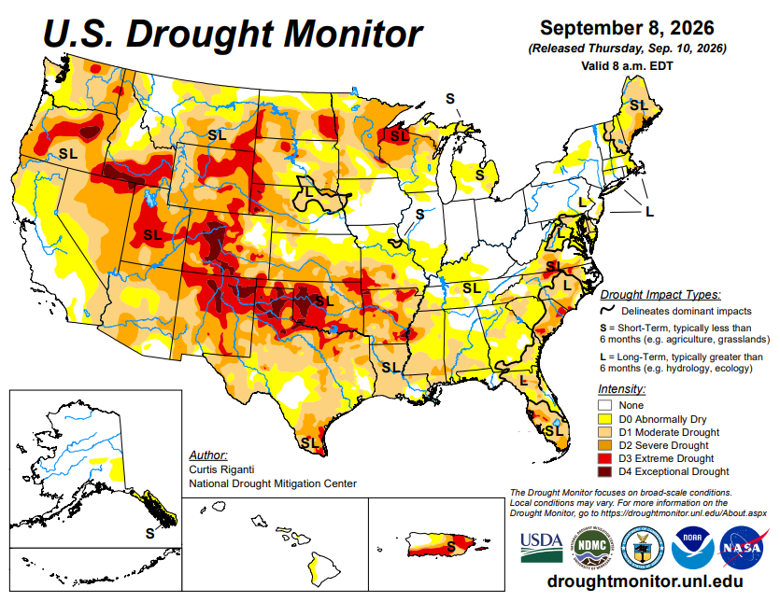
Here is the most recent drought monitor.
Contact an Ag Specialist Today
Whether you’re a producer, end-user, commercial operator, RCM AG Services helps protect revenues and control costs through its suite of hedging tools and network of buyers/sellers — Contact Ag Specialist Brady Lawrence today at 312-858-4049 or blawrence@rcmam.com.