

Tag: Grains

11 May 2026

LEONARD LUMBER REPORT: Housing data continues to lean neutral-to-slightly better

Weekly Recap:

Macro / Demand Housing data continues to lean neutral-to-slightly better, with 2026 new home numbers running modestly ahead of 2025. Currently we do not a recessionary setup—but a margin problem. Inflation-driven costs keep squeezing profitability across the chain, leaving builders and dealers operating day-to-day with little appetite for risk. Demand exists, but conviction doesn’t. The market is reverting to its mean where there are no more easy buys, replacement cost are higher, and resistance to paying up is building. Ironically, that reluctance could be what sets up higher prices later—higher prices, not demand destruction, may become the real pain point. Let’s note that the wood trading today is very cheap on a relative basis so the higher replacement is what it seems.

Industry Tone Everyone is still making money—but no one feels good about it. Big boxes are questioning SKU economics; homeowners are tapped out after years of upgrades, and low-rate mortgages are freezing mobility. It’s a functioning market, just not a comfortable one.

Futures / Structure The July contract continues to absorb the pressure from the roll, which is breaking away from the norm so far.  This appears less about excess inventory and more about real-time procurement replacing forward planning. Elevated replacement costs are forcing buyers to stay closer to the front month, sidelining second-month participation. Prior buying interest under May $570 suggests futures are being used efficiently when value shows up—signaling underlying need, not speculation. Any second month contract sub-$580 still screens as value, but patience is scarce. Like May, July increasingly looks like a delayed bear trap rather than true weakness. We continue to see the industry shorts liquidate telling us the key for basis, the sharp break possibility, is limited.

Bottom Line This remains a low-conviction, high-cost market. Structure—not demand collapse—is driving price behavior. Until margins stabilize or a catalyst hits, expect choppy trade, shallow dips, and value recognition as a timing tool, not a dollar.

Technical:

Since mid-2025, the market has produced four cycle-high rallies, each followed by a lower trend. Notably, the slope of each selloff has been flattening. The current weekly pattern—marked by a blowoff move lower followed by a marginally improved trade—could be signaling the start of a fifth cycle higher. This view is based on the May contract. With May expiring this week, timing makes the call difficult. The weekly trendline comes in near 554. If May can hold above that area, it would argue the next cycle is underway.

The technical read has only offered small portions of data and not much directional help recently. It looks as if there isn’t much offered in either cash or futures today.


Daily Bulletin:

https://www.cmegroup.com/daily_bulletin/current/Section23_Lumber_Options.pdf

Southern Yellow Pine:

https://www.cmegroup.com/markets/agriculture/lumber-and-softs/southern-yellow-pine.volume.html

The Commitment of Traders:

https://www.cftc.gov/dea/futures/other_lf.htm


About the Leonard Report:

The Leonard Lumber Report is a column that focuses on the lumber futures market’s highs and lows and everything else in between. Our very own, Brian Leonard, risk analyst, will provide weekly commentary on the industry’s wood product sectors.


Brian Leonard

bleonard@rcmam.com

312-761-263

08 May 2026

AG MARKET UPDATE: APRIL 17 – MAY 8

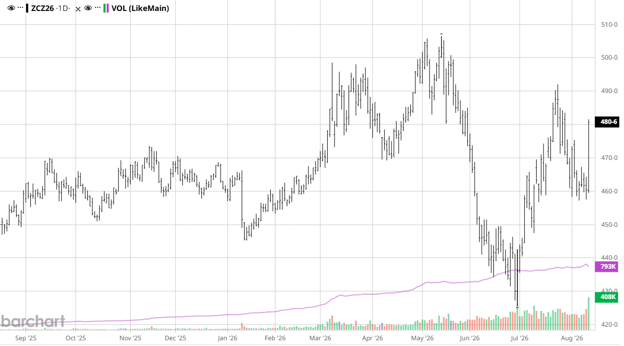
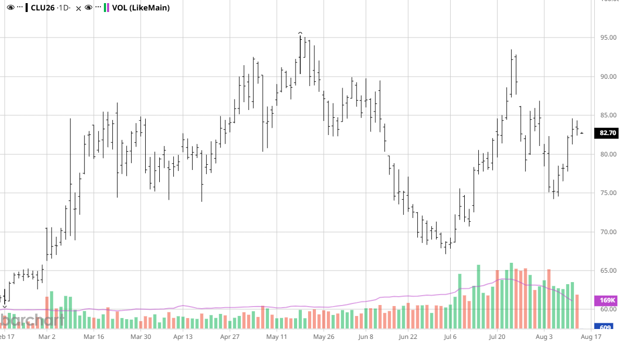
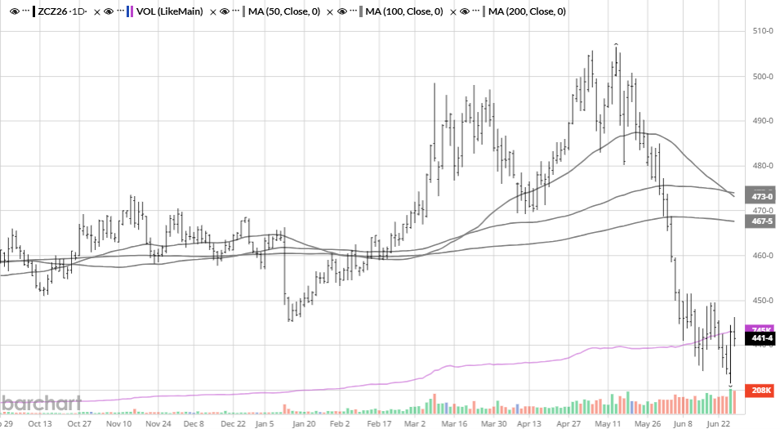
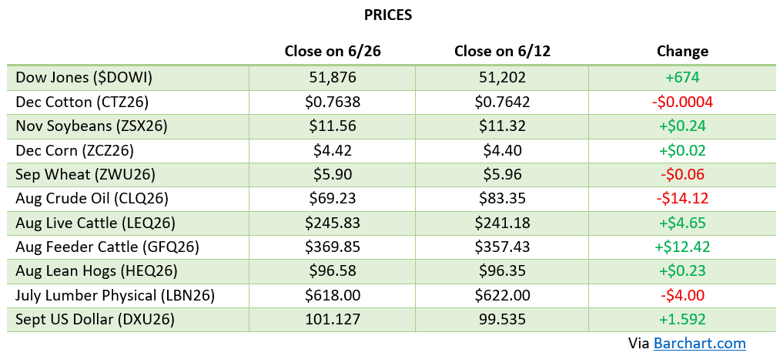
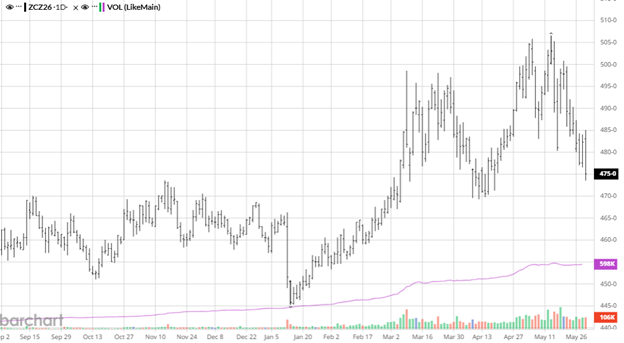
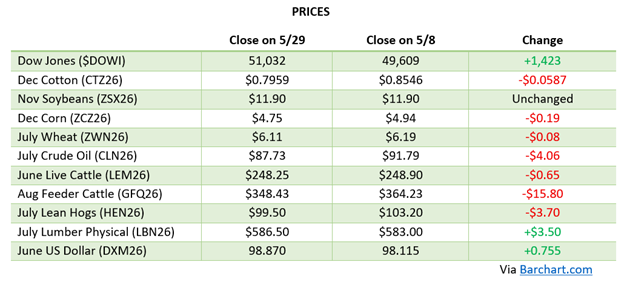
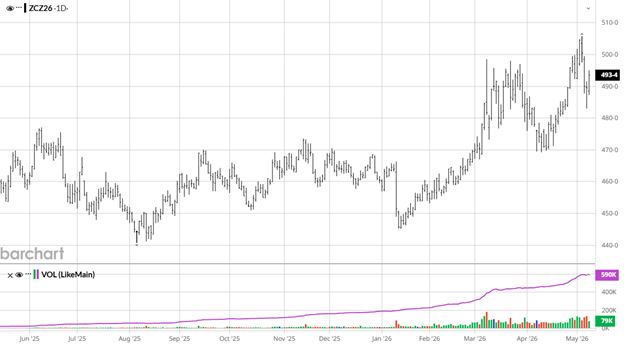
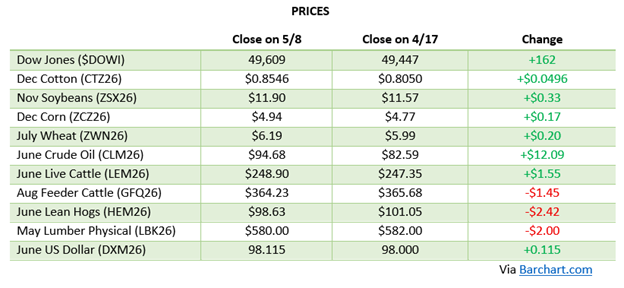
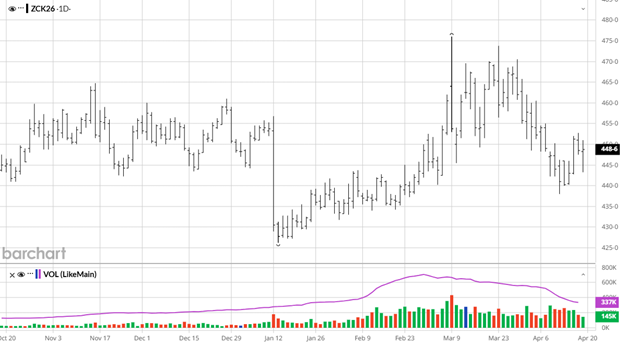
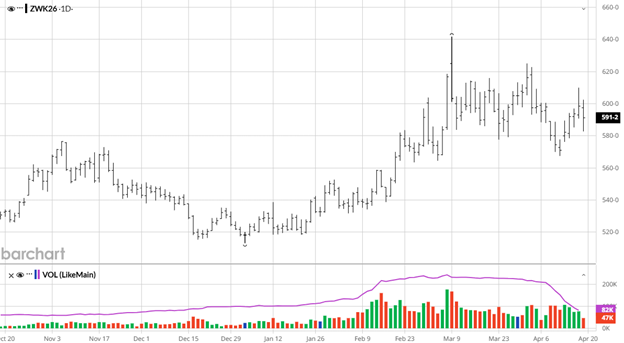
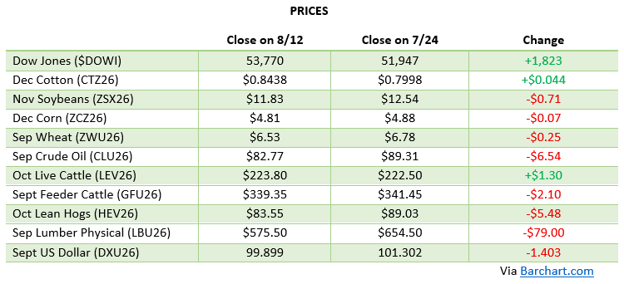
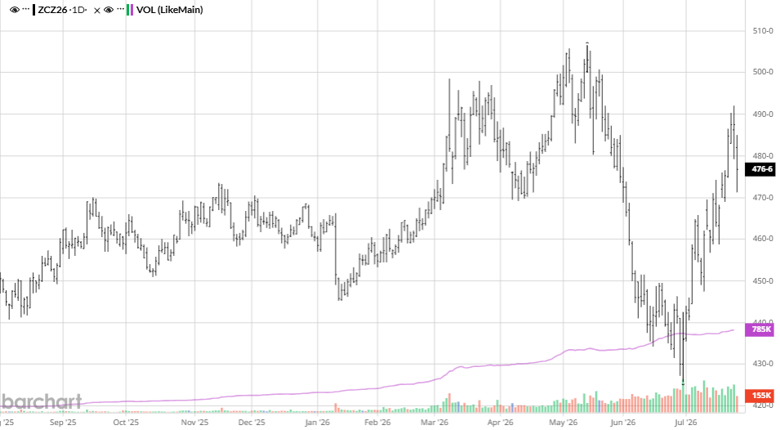
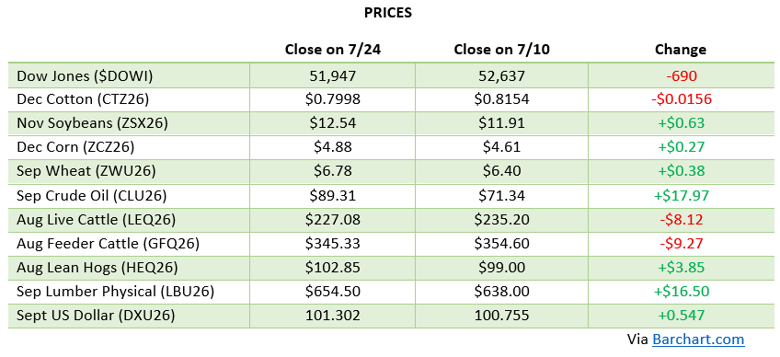
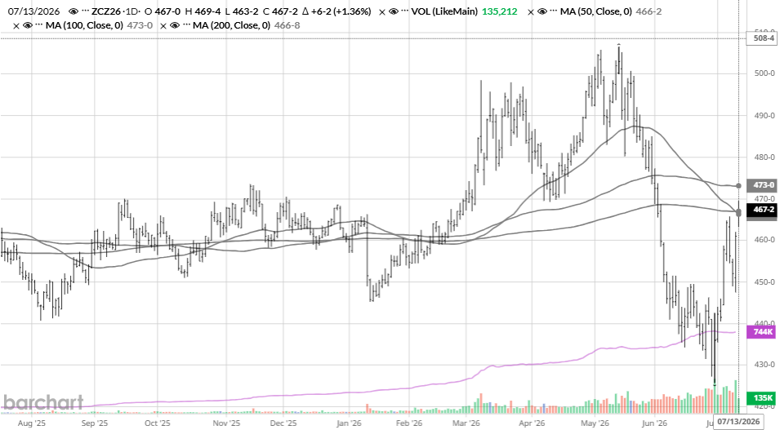
Corn has been a tale of two forces over the past three weeks. Coming off the euphoria of Iran’s Strait of Hormuz reopening announcement on April 17th, markets initially attempted to stabilize, but that news seemed short-lived as volatility in the middle east kept markets volatile. With the war premium in and out of the market, it has been trying to trade both geopolitical news and fundamentals, and those fundamentals remain heavy. U.S. ending stocks at 2.127 billion bushels, the highest in seven years, kept a ceiling on any sustained rally, and fast planting progress added some pressure. The USDA’s crop progress report showed nationwide corn plantings at 38% planted. Exports remain strong as the potential for a smaller US crop with higher fertilizer costs keep buyers in the market at these price levels. December corn popped above $5 for a couple days but quickly fell back as it fell with crude on peace talks. Geopolitical events are hard to predict, especially with this White House, so if you get the opportunity for profitable sales, it would be something worth considering because if crude drops back to $70-80/barrel and we have another record/near record crop it will be hard to hold these levels or move higher.

Via Barchart

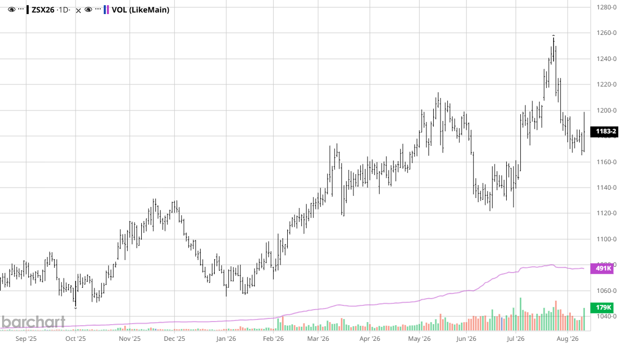
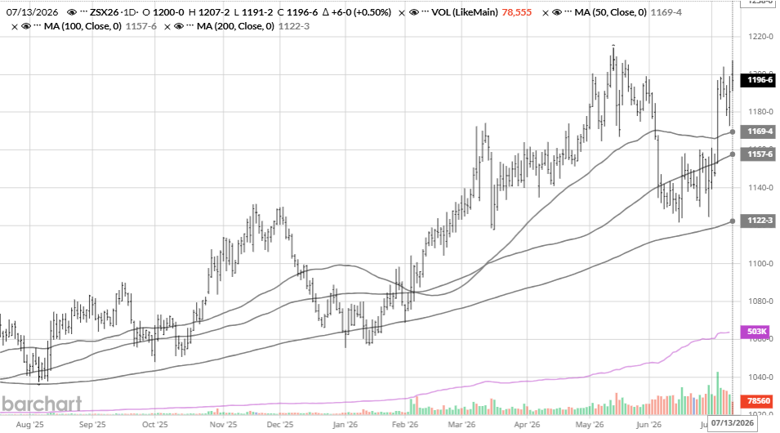
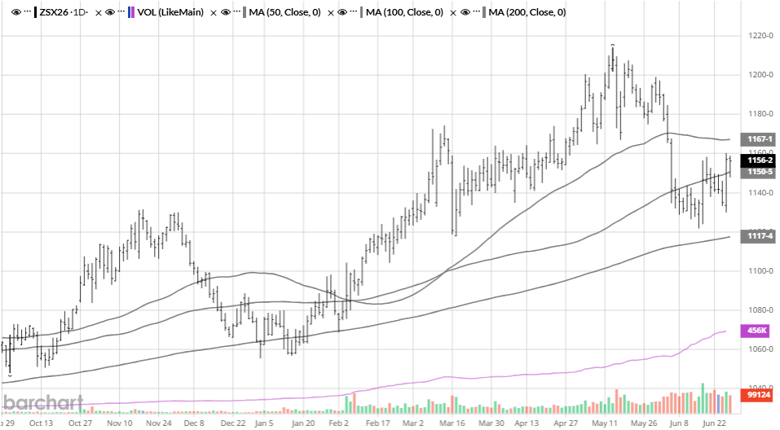
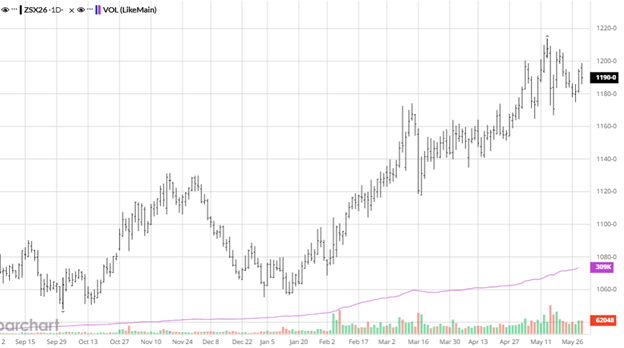
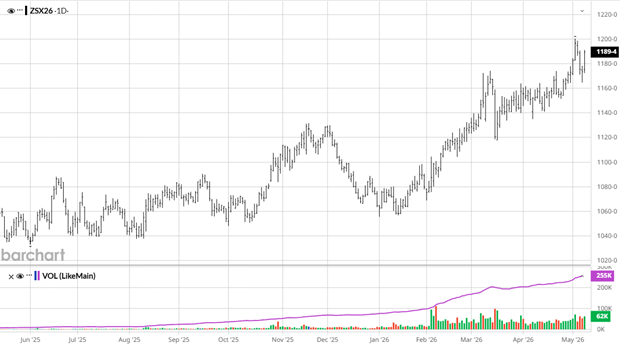
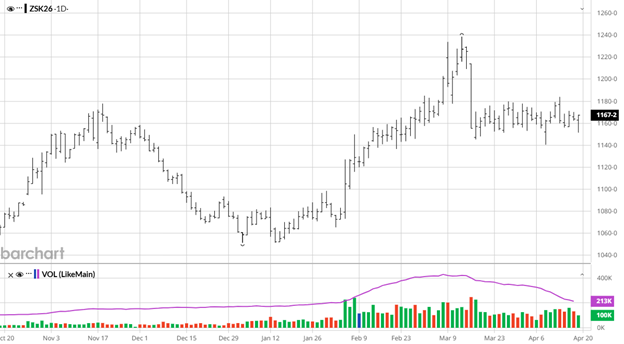
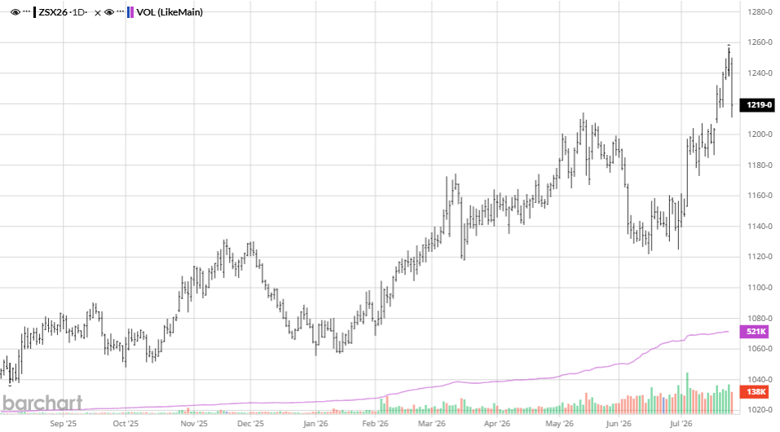
The market continues to wait for a fresh demand catalyst, and the one most closely watched, a potential resumption of Chinese buying linked to a Trump-Xi summit, has been repeatedly delayed amid ongoing Iran conflict negotiations, but appears to be on for this month. The bullish case for soybeans continues to rest on crush economics. Board crush margins holding above $3 per bushel are exceptional by historical standards and are supporting the nearby contracts. NOPA March crush are expected to far exceed year-ago levels, underscoring the strength of domestic demand for meal and oil. Brazil’s Conab raised its 2025/26 soybean production estimate once more to 6.582 billion bushels, and May shipment estimates from Brazil’s Anec were raised to 533.8 million bushels, peak export season for the world’s largest shipper. That supply overhang remains the key obstacle to a sustained rally with South America having such a large crop. Beans planted were at 33% for the week of May 4th, slightly lower than expected but still very strong for this time of year.

Via Barchart

Equity Markets

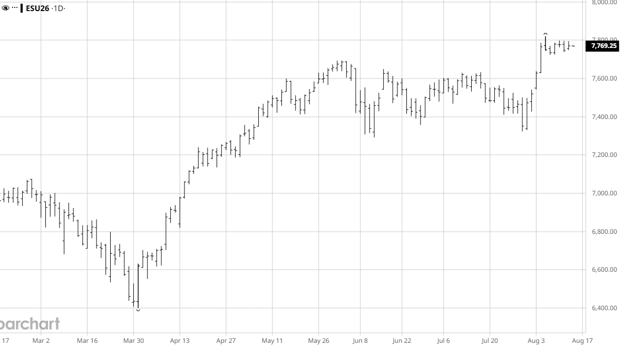
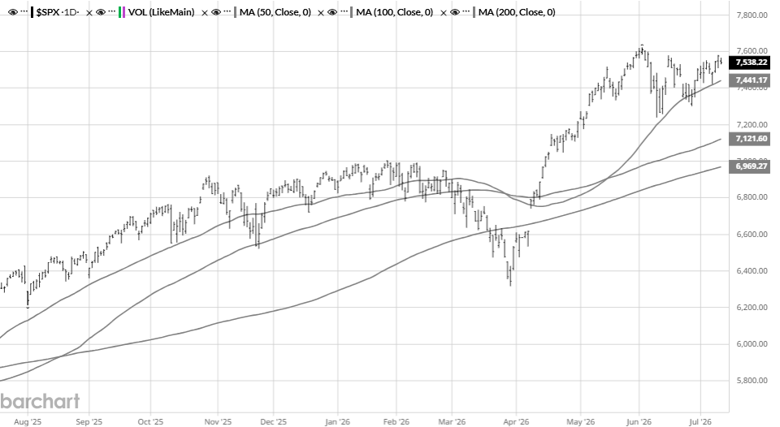
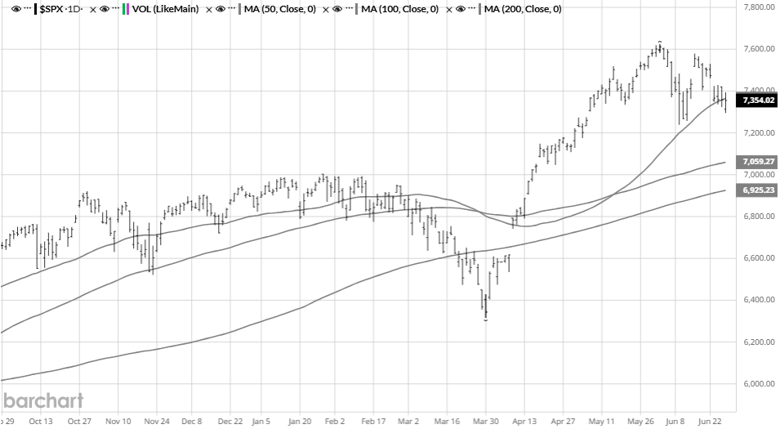
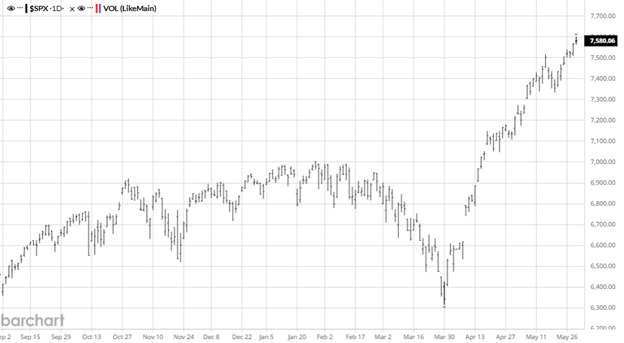
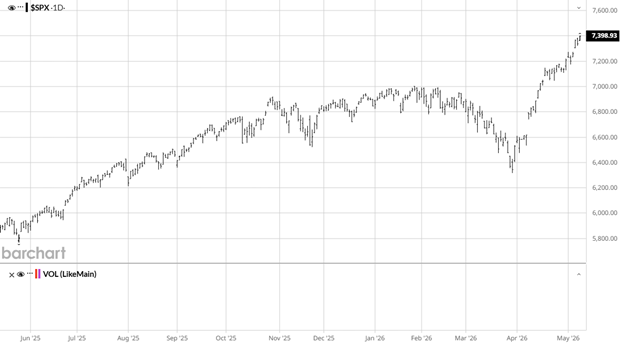
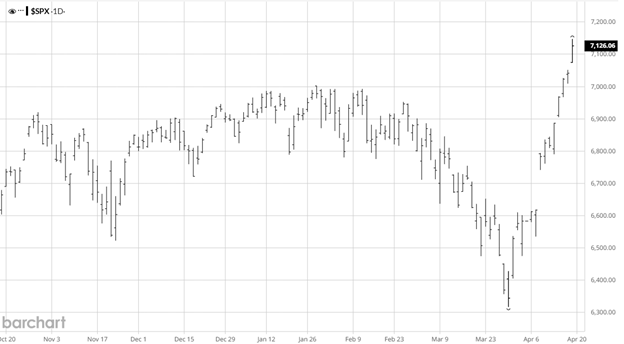
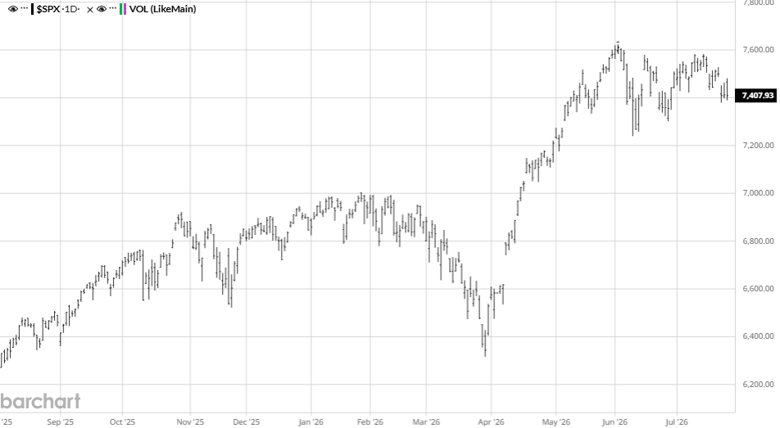
Equity markets continue to make new highs on the back of the AI trade with names like Micron, SanDisk and Western Digital screaming higher and other tech names having a very strong April with the NASDAQ Index up over 15% in the month. Big players such as Google, Meta, and Amazon reported in the last 2 weeks with mixed results but the markets moved higher.

Via Barchart

Energy Markets

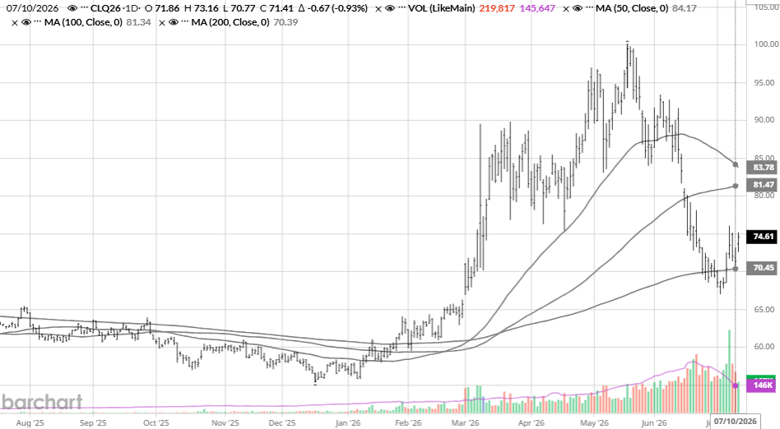
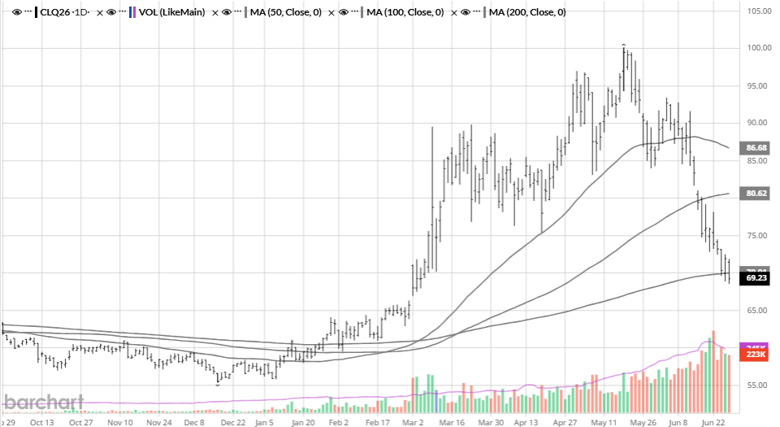
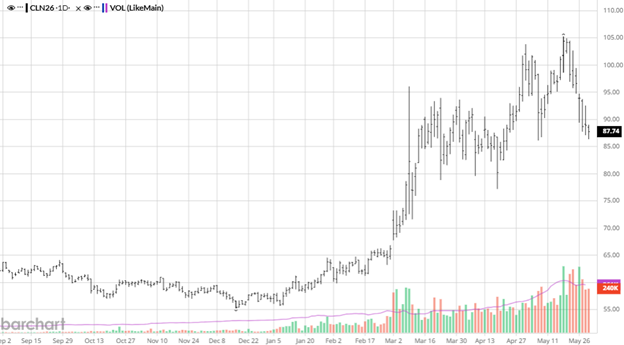
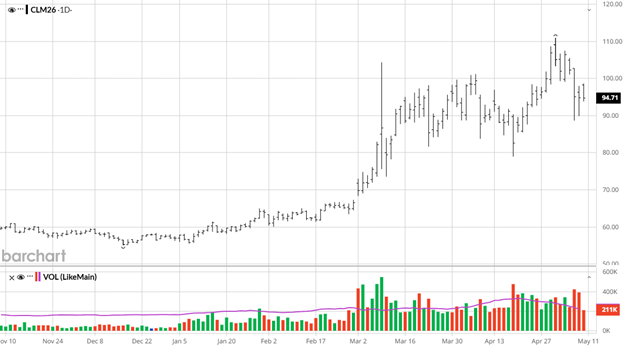
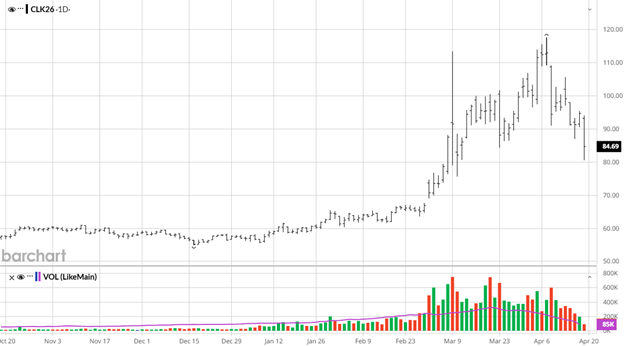
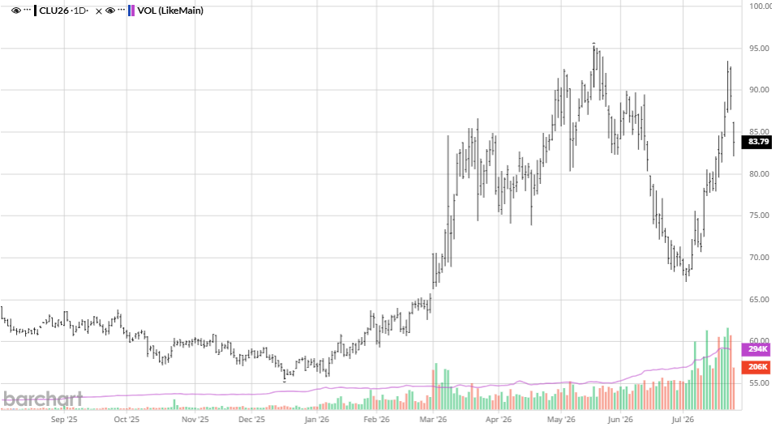
Energy has remained the dominant macro force across all commodity markets, though the price action has been far more volatile and two-directional compared to the one-way crude rally seen earlier in the spring. This push-pull between ceasefire hopes and renewed escalation threats has created a volatile and headline-driven energy market. For ag producers, the primary implication is that fertilizer cost relief remains partial and uncertain. Diesel costs have come down from peak levels but are not back to pre-war norms, and nitrogen prices, which spiked nearly 40% during the war, have only partially retreated.

Via Barchart

Other News

– Cotton has continued its run higher on demand from overseas buyers with alternative fibers such as polyester needing oil for production. Growers can be profitable at these levels so having a hedging strategy where you protect the downside but can still participate in any further upside is very important.

– EPA finalized 2026–2027 Renewable Fuel Standard volumes at record highs, a development that could meaningfully increase ethanol demand and provide a long-term supportive floor under corn prices.

– Iran is reportedly evaluating a U.S. peace proposal that includes a full reopening of the Strait of Hormuz by both sides. Markets expect Iran’s formal response in coming days, making this the single most important macro event in the near-term commodity outlook.

– The May 12th USDA WASDE report will include the first official 2026/27 production forecasts for all major crops. Given the wheat situation in the Plains and uncertainty around corn acres, this report has the potential to be a significant market mover across the complex.


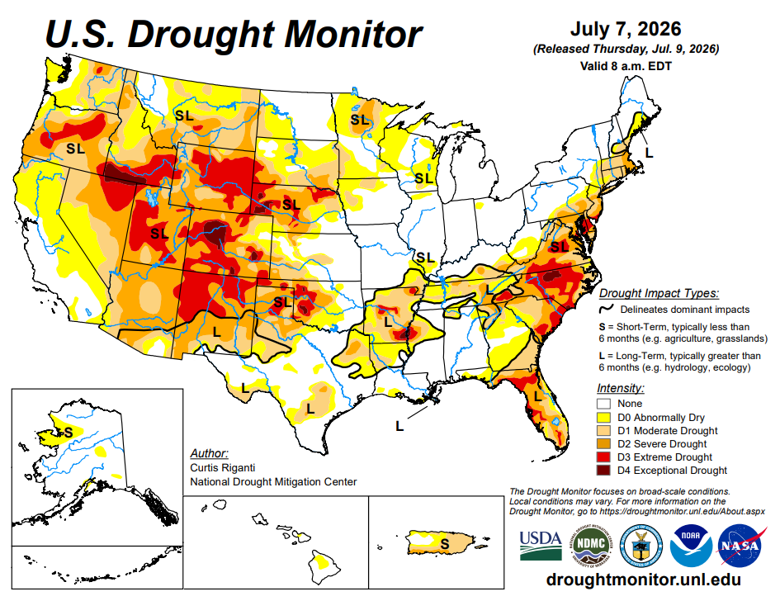
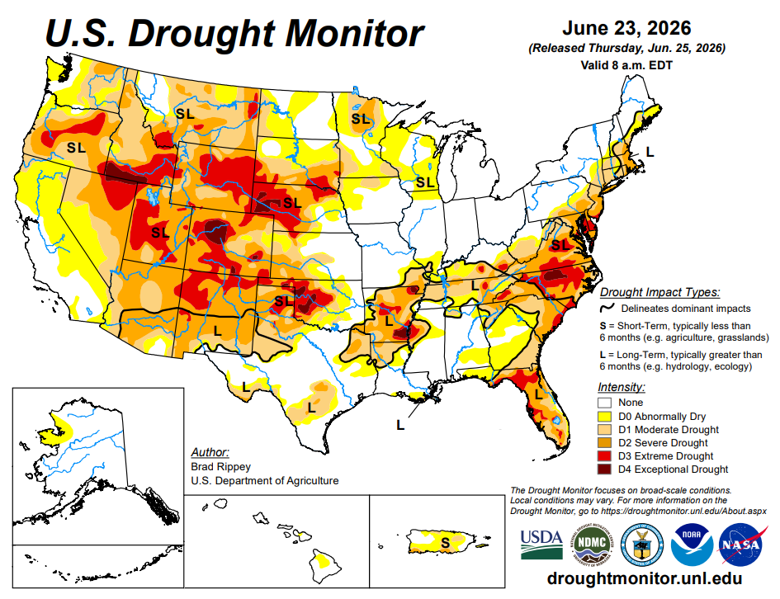
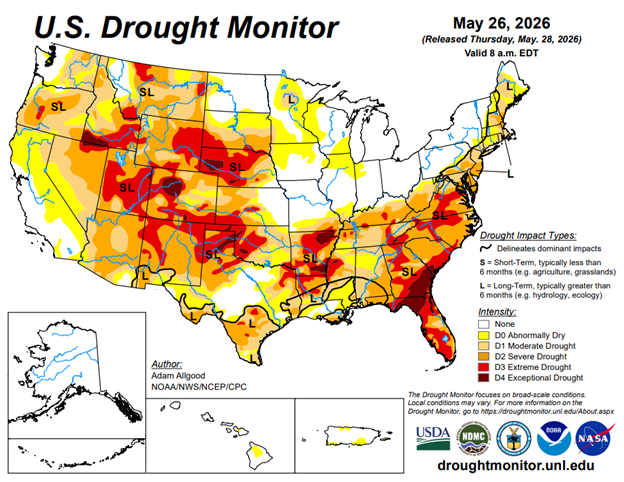
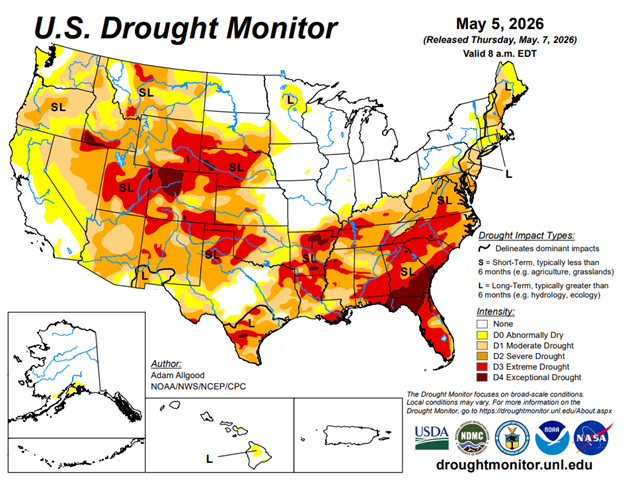
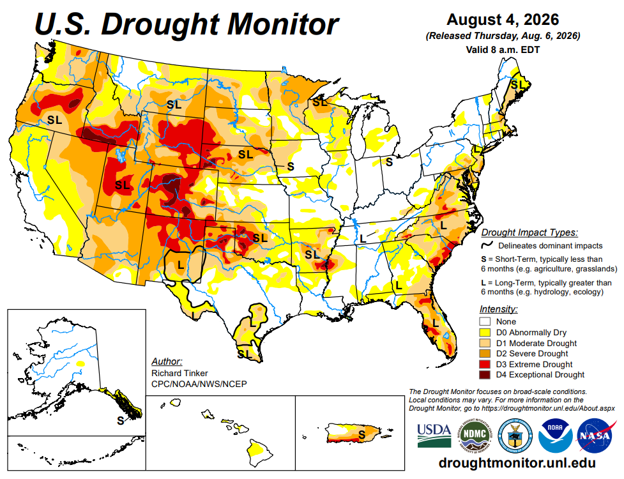
Drought Monitor

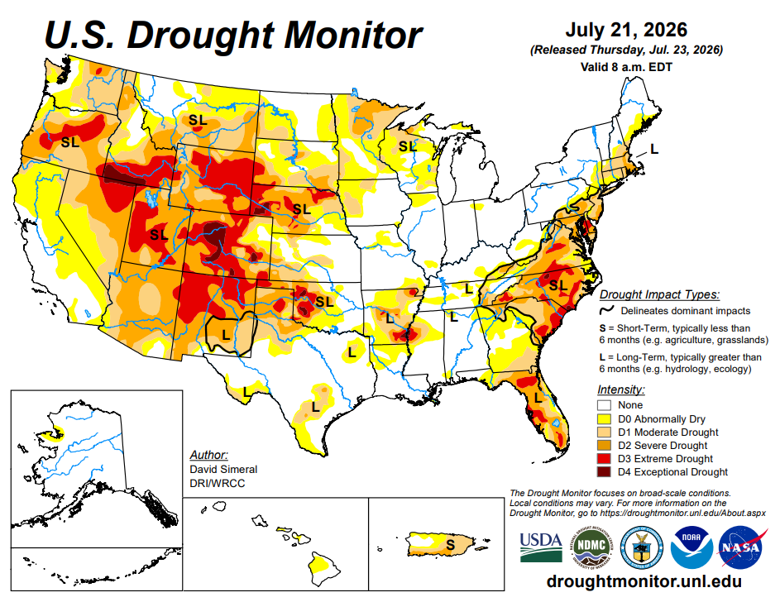
Here is the most recent drought monitor.
 

Contact an Ag Specialist Today+

Whether you’re a producer, end-user, commercial operator, RCM AG Services helps protect revenues and control costs through its suite of hedging tools and network of buyers/sellers — Contact Ag Specialist Brady Lawrence today at 312-858-4049 or blawrence@rcmam.com.


17 Apr 2026

AG MARKET UPDATE: APRIL 2 – 17

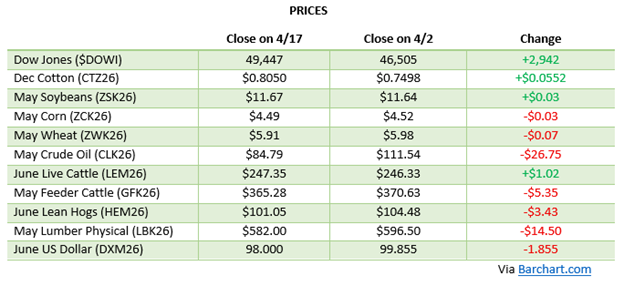
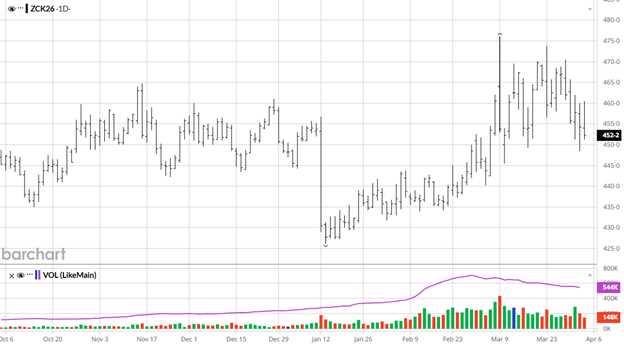
Corn spent the start of April grinding lower, posting a fourth consecutive weekly loss by April 10th as the April WASDE reinforced a burdensome supply narrative. The USDA left U.S. ending stocks essentially unchanged at 2.127 billion bushels, the highest in seven years, and global stocks came in above trade expectations at 294.81 million metric tons. A two week ceasefire between the U.S. and Iran, announced April 7th, removed much of the war premium that had propped up prices since March, as easing Strait of Hormuz concerns pulled crude oil sharply lower and dragged corn along with it. July futures slid to a fresh four-week low near $4.40, completing a nearly 62% retracement from the March 9th highs. The past week saw stabilization and a modest recovery. Faster than expected planting progress, U.S. corn planting reached 5% completion as of April 13th, slightly ahead of last year’s pace, combined with firming eastern Corn Belt basis and Mexico securing a large forward purchase of 12.4 million bushels helped steady sentiment. The old crop market remains locked in a congestion zone between $4.45 and $4.55 on May futures, with the 200-day moving average serving as key support. Speculators have been trimming their long positions aggressively, as shown in the latest CFTC Commitment of Traders reports, leaving the market less vulnerable to a large liquidation event but also with less upside fuel until a fresh catalyst emerges as money allocators reposition to the equity markets.

Via Barchart

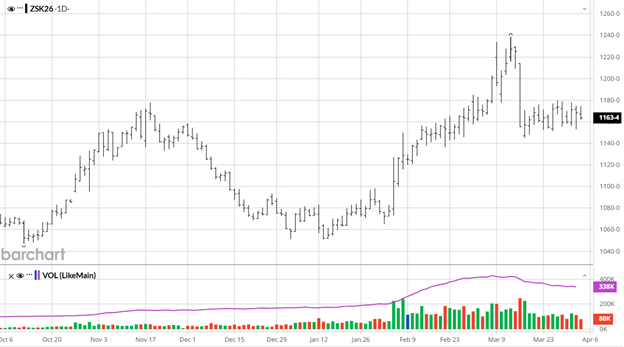
Soybeans have largely remained in a sideways grind, trading between $11.50 and $11.83 on July futures for most of the last 2 weeks. The April WASDE showed U.S. ending stocks unchanged at 350 million bushels with adjustments netting to zero, crush estimates raised while exports were trimmed by the same amount. The season-average price forecast was nudged 10 cents higher to $10.30 per bushel. Brazil’s CONAB raised its 2025/26 soybean production estimate again, this time to 6.582 billion bushels, keeping the global supply backdrop heavy and capping any sustained rallies. On the positive side, strong domestic crush margins, board crush pushing above $3 per bushel, have been the primary support story for the complex. NOPA March crush is expected to come in well above year-ago levels when reported. U.S. planting progress debuted at 6% complete as of April 13th, ahead of the 2% five-year average, with Mississippi and Tennessee leading at 39% and 36%, respectively. The market is waiting for a significant new headline to break out of the current range. Talks between President Trump and China’s President Xi, which were delayed amid the Iran conflict, remain a key watch item as any resumption of Chinese buying interest could quickly change the demand narrative for U.S. soybeans.

Via Barchart

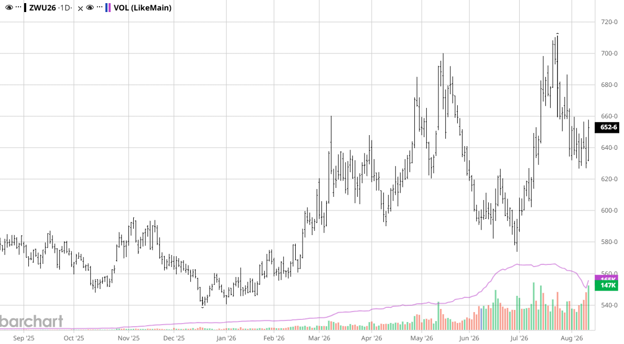
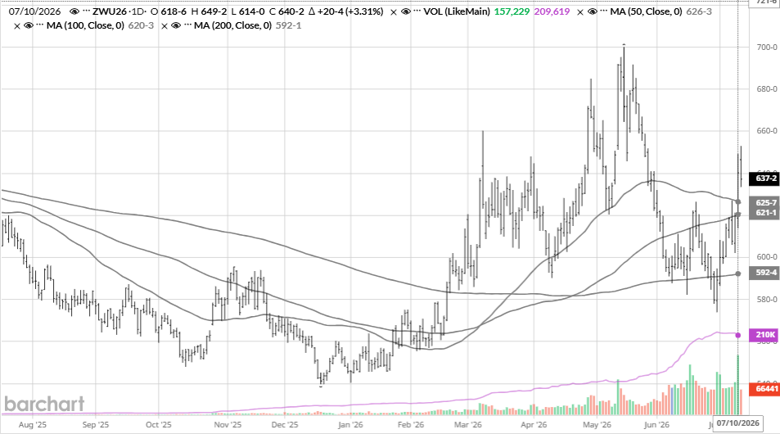
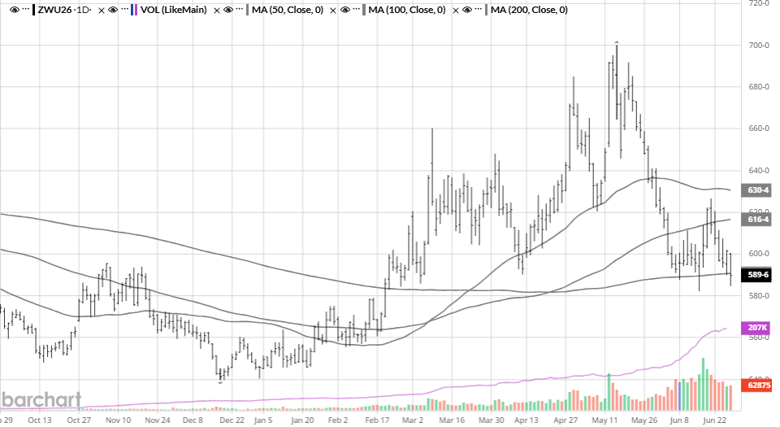
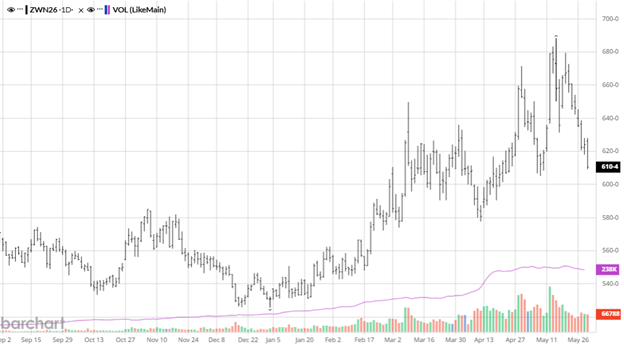
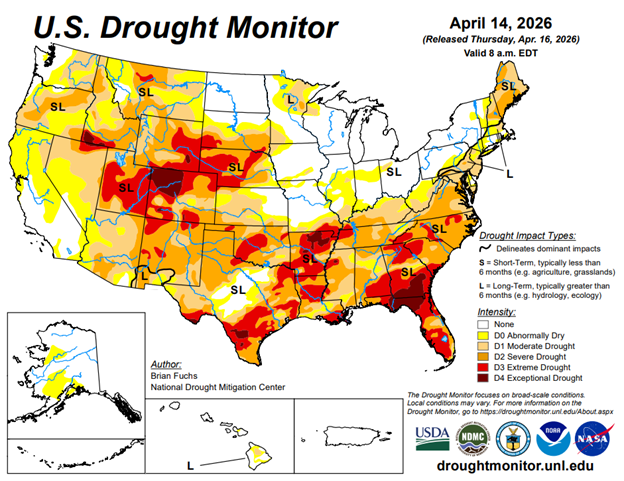
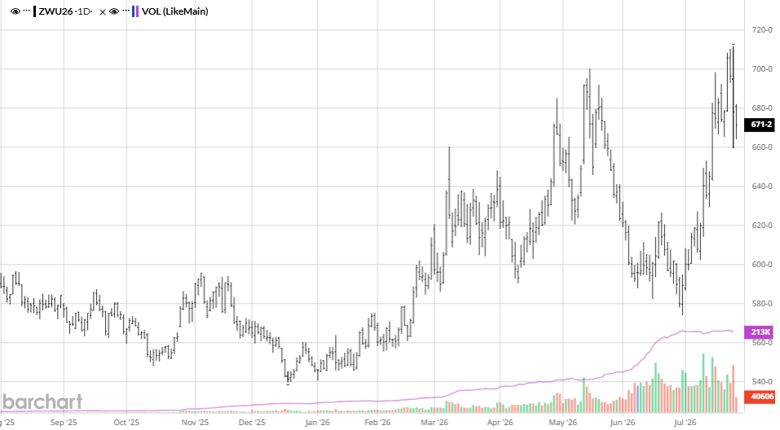
Wheat has done better the last couple of weeks, with Kansas City HRW futures rallying on the back of deteriorating U.S. crop conditions and persistent drought in the Southern Plains. USDA’s April 14th crop progress report showed just 34% of the winter wheat crop rated good-to-excellent, down a full 13 percentage points from a year ago, with 32% of the crop rated poor or very poor. Oklahoma and the Texas Panhandle remained in severe to extreme drought, and the recent widespread rain systems have largely missed the driest areas. Concerns about the long-term fertilizer supply disruptions caused by the Iran conflict have added a structural premium, with funds holding a record long position in spring wheat and a growing net long in Kansas City HRW. July HRW futures jumped nearly 20 cents on April 14th alone, reaching their highest settlement since March 31st at $6.36. Chicago SRW July futures also pushed above $6.00. The market sold off modestly to end the week but held the bulk of its gains. Longer-range forecasts suggest late April could bring more favorable moisture to parts of the Plains, which could temper upside. For now, weather, drought maps, and the weekly crop condition ratings are the primary price drivers.

Via Barchart

Equity Markets

Equity markets have moved from deep stress to new record highs over this two-week stretch, tracking the Iran ceasefire developments closely. When Trump announced the two-week pause in operations on April 7th, the Dow Jones Industrial Average surged 1,325 points, its best single session since April 2025, while the S&P 500 gained 2.5% to 6,782. Through the balance of the period, stocks continued recovering as investors grew increasingly optimistic about a lasting peace deal, with the S&P 500 recouping all losses accumulated since the start of the conflict. The run to new highs has been impressive with the NASDAQ having a positive day for 14 straight days.

Via Barchart

Energy Markets

Energy markets have continued to be volatile over the past couple of weeks but the news of ceasefire and opening of the Strait of Hormuz. While the cease-fire does not mean the conflict is over, if good news continues to come out of Washington oil prices will fall. The ceasefire dynamics have already meaningfully reduced fertilizer cost fears and energy-linked inflation expectations.

Via Barchart

Other News

  • Cotton has been one of the most compelling commodity stories of the period, with July futures pushing to a nearly two-year high and new crop cotton reaching $0.80 in the Dec contract. The move has been supported by a combination of bullish factors: elevated crude oil prices increasing polyester production costs and driving synthetic fiber substitution back toward natural cotton, a weaker U.S. dollar, and persistent drought in key U.S. growing regions stretching from the Texas Panhandle westward. The USDA April WASDE raised global production by 900,000 bales while also lifting consumption by 560,000 bales, leaving the net balance slightly tightened.
  • USDA’s April WASDE raised the season-average farm price for wheat 5 cents to $5.00/bu, corn 5 cents to $4.15/bu, and soybeans 10 cents to $10.30/bu.
  • The Trump administration called out fertilizer giant Mosaic for idling two Brazilian plants, with Deputy Agriculture Secretary Stephen Vaden publicly questioning the timing as global fertilizer supplies face war-related disruptions.
  • A new survey found that only 60% of U.S. corn farmers have secured their nitrogen needs for the 2026 crop year, a reflection of the input cost uncertainty created by the Iran conflict.
  • Brazil’s CONAB raised its 2025/26 total corn crop estimate to 139.6 MMT (5.5 billion bushels), maintaining a heavy Southern Hemisphere supply backdrop.


Drought Monitor

Here is the most recent drought monitor. With planting starting later this spring, we need rain in a lot of places in March.
Contact an Ag Specialist Today

Whether you’re a producer, end-user, commercial operator, RCM AG Services helps protect revenues and control costs through its suite of hedging tools and network of buyers/sellers — Contact Ag Specialist Brady Lawrence today at 312-858-4049 or blawrence@rcmam.com.

02 Apr 2026

AG MARKET UPDATE: MARCH 20 – APRIL 2

Corn has remained supported but volatile following the March 31st USDA Prospective Plantings and Quarterly Stocks reports, which reinforced a tighter-than-expected balance sheet narrative. The USDA came out with 95.338 million acres, near the lower end of trade expectations, confirming earlier concerns that higher input costs, particularly fertilizer due to war in Iran, would limit corn expansion, while stocks data did not show burdensome supplies. This has helped underpin prices despite sluggish export demand and limited Chinese participation, keeping the market more focused on supply risk than demand weakness. Combined with continued strength in energy markets and inflation-driven fund interest, corn remains in a supportive environment, though the large speculative long position leaves it vulnerable to sharp downside if macro sentiment shifts.

Via Barchart

Soybeans have struggled to find sustained strength even after the March 31st USDA reports, which confirmed expectations for increased U.S. acreage and relatively comfortable stocks levels. The larger planting outlook reinforces the idea of ample new crop supplies, especially when paired with ongoing pressure from South America’s record production. While periodic rallies have been driven by energy market spillover and inflation concerns, the lack of consistent export demand, particularly from China, and fading optimism around biofuel policy have kept the market defensive. Overall, the USDA data solidified a more bearish supply outlook, leaving soybeans reliant on external market strength rather than supportive fundamentals. Talks between president Trump and China’s president Xi will be watched under a microscope if they end up happening after already being delayed with the conflict in Iran continuing.

Via Barchart

Energy Markets

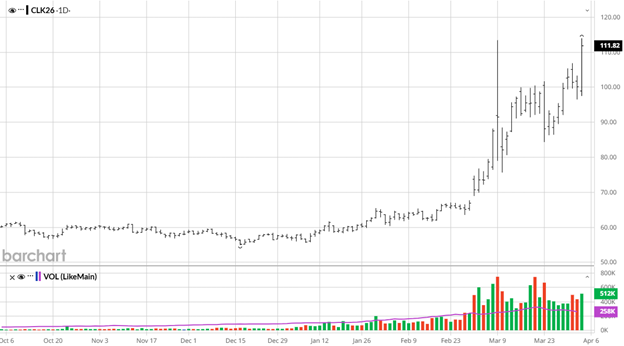
Energy markets have continued to dominate the macro landscape, with crude oil holding elevated and volatile levels as geopolitical tensions involving Iran persist and uncertainty around the Strait of Hormuz remains unresolved. The sustained strength in energy has amplified inflation concerns globally, driving investment flows into commodities and influencing planting decisions, input costs, and overall sentiment across agricultural markets.

Via Barchart

Equity Markets

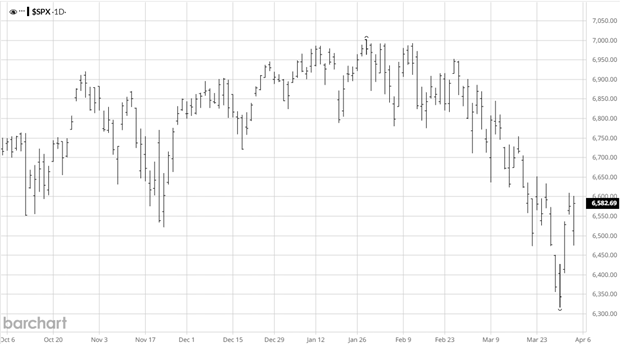
Equity markets have remained under pressure since late March, as the combination of higher energy prices and the inflationary implications highlighted in recent economic data have weighed heavily on investor sentiment. The indexes continues to reflect a risk-off environment, with concerns centered on slowing economic growth, tighter margins from rising input costs, and ongoing geopolitical uncertainty overshadowing otherwise stable underlying economic conditions.

Via Barchart

Other News

– Cotton acres in the prospective plantings report were 9.64 million for 2026, a 4% increase from last year.

– All wheat acres from the report were 43.8 million acres, down 3% from 2025.

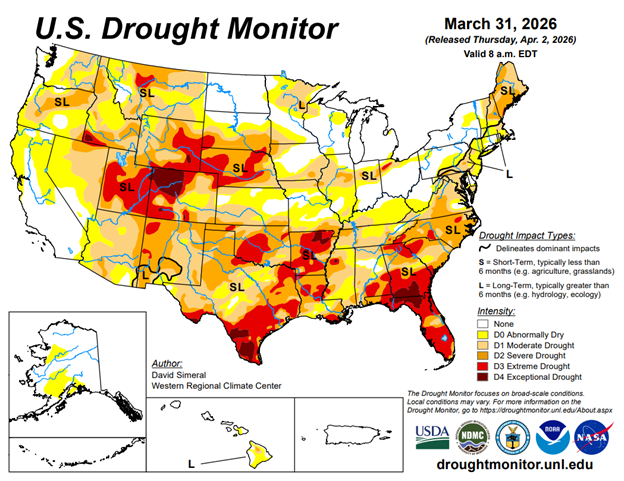
Drought Monitor

Here is the most recent drought monitor. With planting starting later this spring, we need rain in a lot of places in March.

Contact an Ag Specialist Today

Whether you’re a producer, end-user, commercial operator, RCM AG Services helps protect revenues and control costs through its suite of hedging tools and network of buyers/sellers — Contact Ag Specialist Brady Lawrence today at 312-858-4049 or blawrence@rcmam.com.


20 Mar 2026

AG MARKET UPDATE: MARCH 3 – 20

Corn has transitioned from early-week weakness into a volatile but constructive rally, driven far more by macro forces than traditional supply-and-demand fundamentals. Since the start of the Iran conflict, rising crude oil and diesel prices have injected inflation-driven buying into the grain complex, helping corn recover from Monday’s sharp losses and push higher into the end of the week. At the same time, the market is actively weighing the real impact of elevated input costs, particularly nitrogen, which could pull U.S. planted acreage below key thresholds near 94 million acres and provide longer-term support. However, that bullish narrative is being offset by softer export demand, limited Chinese participation, and concerns that high freight costs could further hinder competitiveness. With speculative funds now holding a large and increasingly crowded long position, corn remains technically supported but vulnerable to sharp corrections, especially if energy markets stabilize or geopolitical tensions ease.

Via Barchart

Soybeans have been the most volatile market of the complex, starting with a dramatic limit-down selloff early in the week tied to delayed U.S.-China trade talks and fading optimism around biofuel policy, before rebounding alongside strength in crude oil and the broader commodity space. Despite the recovery, the underlying fundamentals remain more bearish relative to corn, with record South American production, ongoing harvest pressure, and expectations for increased U.S. soybean acreage (potentially 85–86+ million acres) all weighing on the outlook. The earlier optimism around Chinese demand has cooled significantly, and with funds still holding a sizable position even after liquidation, rallies may continue to be sold. While inflation-driven money flow has provided temporary support, soybeans appear to be on more fragile footing, particularly if energy markets lose momentum or if acreage shifts materialize as expected this spring.

Via Barchart

Equity Markets

Over the past two weeks, equity markets have come under increasing pressure as investors grapple with the inflationary shock driven by surging energy prices and escalating geopolitical tensions surrounding Iran and the Strait of Hormuz. Early in the period, equities found brief support from a pullback in crude oil and optimism around global trade discussions, but that strength quickly faded as oil resumed its rally and inflation data came in hotter than expected. The Dow Jones Industrial Average has fallen sharply, shedding roughly 1,200+ points from recent highs and pushing to multi-month lows, as fears of a prolonged period of elevated fuel costs raise the risk of a global economic slowdown or recession.

Via Barchart

Other News

  • Energy markets had been volatile as the Straight of Hormuz remains closed with the war in Iran continuing.
  • Inflation is heating up a little but as energy prices surge, it causes ripples across the entire supply chain.


Drought Monitor

Here is the most recent drought monitor. With planting starting later this spring, we need rain in a lot of places in March.

Contact an Ag Specialist Today

Whether you’re a producer, end-user, commercial operator, RCM AG Services helps protect revenues and control costs through its suite of hedging tools and network of buyers/sellers — Contact Ag Specialist Brady Lawrence today at 312-858-4049 or blawrence@rcmam.com.


03 Mar 2026

AG MARKET UPDATE: JANUARY 12 – MARCH 3

Corn fundamentals remain quietly supportive. Domestic demand continues to provide a steady floor, with ethanol grind holding firm amid workable processing margins. Feed demand has also remained intact, supported by stable livestock numbers. Export business has been competitive but not aggressive, as global buyers weigh U.S. offers against South American supply. Overall, stocks are comfortable but not burdensome, keeping the downside limited while failing to create urgency on the upside. From a technical perspective, corn futures have respected both support and resistance levels throughout the month. The market continues to trade sideways, with carry in the futures structure signaling that end users are not pressed for immediate coverage. Until a weather premium develops or export demand accelerates meaningfully, rallies have tended to stall near the upper end of the range.

Via Barchart

Soybeans continue to be shaped by global supply clarity. South American production is largely known, which has limited the market’s ability to price in uncertainty. Domestic crush demand remains a supportive feature, particularly as renewable fuel feedstock demand underpins usage. However, export competition has kept shipments steady rather than explosive. The soybean market has struggled to sustain rallies, repeatedly testing higher levels before fading. Technically, the contract structure suggests hesitation from speculative buyers, with range-bound behavior dominating trade. Without a clear acreage shift or early-season weather concern, soybeans appear anchored between steady demand and comfortable global supply.

Via Barchart

Equity Markets

Equity markets traded with higher volatility over the past month as investors weighed solid economic data against persistent inflation concerns and firm energy prices. Major indexes moved within broad ranges rather than establishing sustained trends, with noticeable sector rotation throughout the month. Energy and defensive sectors generally outperformed, while rate-sensitive growth stocks faced intermittent pressure. Overall, the tone shifted toward cautious positioning, with investors quicker to trim risk on rallies while still supporting markets on pullbacks.

Via Barchart

Other News

  • Energy markets had been steadily moving higher heading into the weekend before the US bombed Iran which led to gains to start the week. How long the conflict lasts will be important to the global supply chain of oil.
  • Wheat is off recent lows but sold off from Monday’s high, the recent gains were needed but will need a little more help to get and stay above $6.

Drought Monitor

Here is the most recent drought monitor. With planting starting later this spring we need rain in a lot of places in March.

Contact an Ag Specialist Today

Whether you’re a producer, end-user, commercial operator, RCM AG Services helps protect revenues and control costs through its suite of hedging tools and network of buyers/sellers — Contact Ag Specialist Brady Lawrence today at 312-858-4049 or blawrence@rcmam.com.
 

12 Jan 2026

AG MARKET UPDATE: POST JANUARY 12 USDA REPORT

Corn took a dive on today’s USDA report with 1.3 million more harvested acres and larger yield than expected coming in at 186.5 bu/ac. With this comes more production leading to larger ending stocks, brutal two-sided hit for the corn bulls. Corn had done a great job of climbing higher since early December, but today’s report gives all the momentum back to the bears with South America’s growing season off to a great start. Corn’s big move lower sent it below all technical support and unless we see a quick turnaround this week what was a support level could turn into overhead resistance as we are now at levels last seen in August.

Via Barchart

While the USDA report was not as bad for beans, it did suffer double digit losses with a slightly higher than expected national yield of 53 bu/ac. One important item was that US exports were revised lower due to more world competition. This is important as we still need China to buy US beans as we do not have another major market catalyst as the Trump administration has not been friendly for the implementation of SAF (sustainable aviation fuel). The month and half of +$11 beans we saw will be a struggle to get back to as South America continues to roll on with another record crop expected.

Via Barchart

Equity Markets

Equity markets roll on despite some days of volatility with headlines from the White House and drama surrounding the Fed. As you can see in the chart below since last April’s tariff scare the markets have been steadily moving higher.

Via Barchart

Other News

  • The precious metals trade continued its strong 2025 into the start of 2026 with new highs in gold and silver.
  • Wheat had ending stocks rose modestly and the price was dragged lower with corn.

Drought Monitor

Here is the most recent drought monitor.

Contact an Ag Specialist Today

Whether you’re a producer, end-user, commercial operator, RCM AG Services helps protect revenues and control costs through its suite of hedging tools and network of buyers/sellers — Contact Ag Specialist Brady Lawrence today at 312-858-4049 or blawrence@rcmam.com.
 

09 Dec 2025

AG MARKET UPDATE: NOVEMBER 14 – DECEMBER 9

Corn has been trading sideways since the end of October and nothing from today’s USDA Report gives it reason to change course. The main news for corn has been the lack of news. Corn did dip 20 cents in late November but bounced back to the middle of the range it has been in around $4.45. In today’s USDA report they kept US production the same while raising the export forecast by 125 million bushels, lowering US ending stocks to 2.029 billion bushels. The global stocks number was also revised lower with production cuts to other countries, including Ukraine. While the report was modestly bullish corn will need some more news to leg up to the $4.60 range as South America is off to a great start.

Via Barchart

Beans have tumbled off their recent highs as the rocket higher ran out of fuel and has been giving back those gains. The USDA left US production the same with an overall neutral report with no major surprises. Global stocks were slightly raised as Brazil, India and Russia offset tighter supplies elsewhere. With no news to turn this recent downtrend around the market needs positive China trade news desperately as that was the initial “news” to drive markets higher.

Via Barchart

Equity Markets

Equity markets have rallied from the November dip and are within a couple % of new all time highs. The markets are expecting another rate cut this week and would be surprised if there is not.

Via Barchart

Other News

  • The wheat numbers were mostly unchanged and did not have any major news to change the direction of trade but could turn around on global trade news.

Drought Monitor

Here is the most recent drought monitor.

Contact an Ag Specialist Today

Whether you’re a producer, end-user, commercial operator, RCM AG Services helps protect revenues and control costs through its suite of hedging tools and network of buyers/sellers — Contact Ag Specialist Brady Lawrence today at 312-858-4049 or blawrence@rcmam.com.
 

14 Nov 2025

AG MARKET UPDATE: OCTOBER 27 – NOVEMBER 14

Corn’s Thursday rally was met with a post report Friday dip and gave up 10 cents back to $4.30. Despite the late season crop problems of drought and rust, the USDA did not find the corn yield loss that was expected and came in with a 186 bu/ac estimate, higher than the trade estimate. With higher production came higher US ending stocks, but those were not raised as much as yield as corn exports and domestic industrial demand has been exceptional this fall. The chart still looks constructive, but after a 30-cent rally in one month, the market will look to take a breather, especially after today’s report.

Via Barchart

Beans have been on a great run higher, albeit with some volatility, until Friday’s USDA report. Coming in that hot to a report can lead to a let down which we saw to some extent. The bean yield numbers were not as surprising as corn, coming in close to estimates, but the market still took a hit. The number to look at was the US held bean imports to China unchanged at 112 MMT for the 25/26 marketing year. A flash sale report did show sales of 1.1 mbu to China around the time the trade deal was in the works. The delayed data is hard to fit with all the other news out there but China buying anything is a good sign.

Via Barchart

Equity Markets

Equity markets have been volatile the last few weeks as worries of an AI bubble continue and several large companies such as Palantir, Meta and Oracle are well off their 52 week highs. Volatility will likely remain in the market for a bit as we will get caught up on economic data that was missing during the government shutdown.

Via Barchart

Other News

  • The wheat numbers were bearish as domestic and world stocks continue to climb on record world yields in all producing countries and exporters finding exports difficult to come by even at rock bottom prices. Wheat will remain an anchor on corn rallies.
  • Cotton adjustments show 900K more bales of US production, 200k more bales of US exports, and 700K more bales of US ending stocks compared to September.

Drought Monitor

Here is the most recent drought monitor as harvest rolls on.

Contact an Ag Specialist Today

Whether you’re a producer, end-user, commercial operator, RCM AG Services helps protect revenues and control costs through its suite of hedging tools and network of buyers/sellers — Contact Ag Specialist Brady Lawrence today at 312-858-4049 or blawrence@rcmam.com.
 

28 Oct 2025

AG MARKET UPDATE: SEPT 30 – OCT 27

Corn has continued to trade range-bound between $4.10 and $4.30 with a nice recent run to the top of the range. Follow through buying to push towards $4.50 will be needed as harvest heads toward a finish and the large supply coming out of the fields. All crops got a boost after positive news from Secretary Bessent over the weekend saying China will be buying US soybeans (and assume other commodities as well). The market still has downside risk with a large US crop and global economic issues that for now are not flashing major warning signals but the market has been recession warry since the tariffs went into place in April.

Via Barchart

Beans continued their recent rally with positive news on US and China trade relations from Secretary Bessent. We will need to see these soybean purchases from China come to fruition without any more escalations that could put this progress at risk. With the continued Government shutdown the lack of information to trade from the USDA will make private reports the main news.

Via Barchart

Equity Markets

Equity markets continue to move higher after a recent dip as Gold has fallen off its recent highs but equities, lead by AI and tech, continue to climb higher with 2 months left in the year.

Via Barchart

Other News

  • Cattle futures have fallen quickly off record highs as question marks around the USDA and white house about how they want to address high beef prices continue.
  • Cotton remains quiet with no major news to get it out of the mid 60 cent range.
  • The government shutdown continues.

Drought Monitor

Here is the most recent drought monitor as harvest rolls on.


Contact an Ag Specialist Today

Whether you’re a producer, end-user, commercial operator, RCM AG Services helps protect revenues and control costs through its suite of hedging tools and network of buyers/sellers — Contact Ag Specialist Brady Lawrence today at 312-858-4049 or blawrence@rcmam.com.
Check it Out:

Harvest, Hedging, and History: Navigating Agricultural Markets from Grain Elevators to Futures Contracts