

Tag: The Hedged Edge

23 Dec 2021

AG MARKET UPDATE: DECEMBER 9 – 22

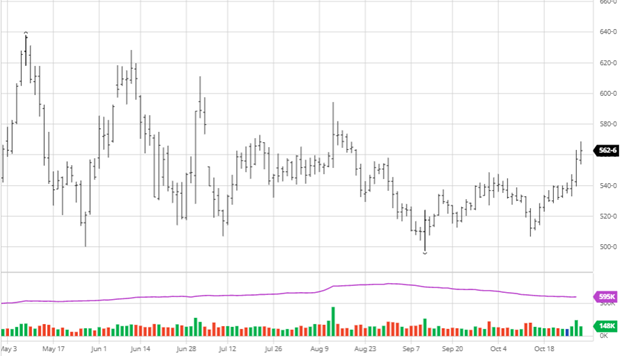
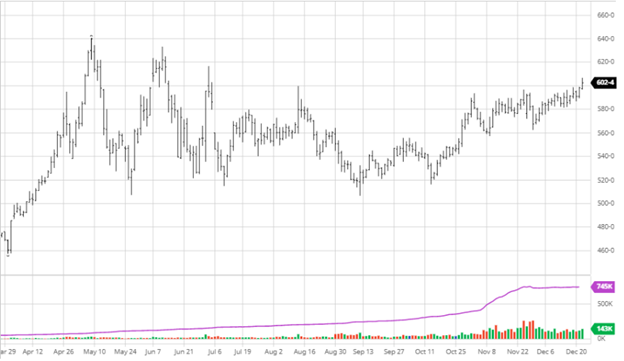
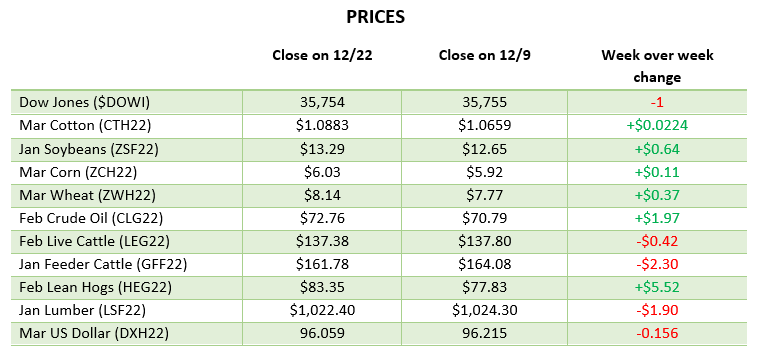
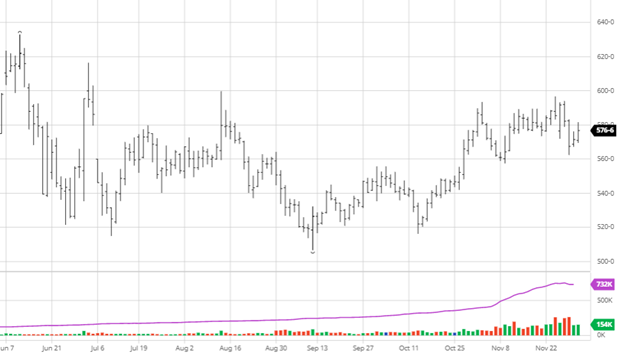
Since early December, corn has had a great run as South America’s dryness continues and delays planting in some areas. The corn crop is only about 60% planted in Argentina, which is the slowest pace on record for late December. Anything planted after January 10th will probably experience some yield drag. Their planting rate is on par with last year, but the weather has been far dryer and looks to continue going forward. As you can see in the chart below, March corn has rallied 90+ cents since early September. With continued strong basis and raises at prices, farmers have been given a gift but when the farmers choose to claim the gift and how long the gift stays available is another question. If Argentina and Brazil stay dry, this rally could continue, and we could retest the summer’s highs. Ethanol margins shrunk, and crude fell but remain at much higher than average levels, which will also support corn.

Via Barchart

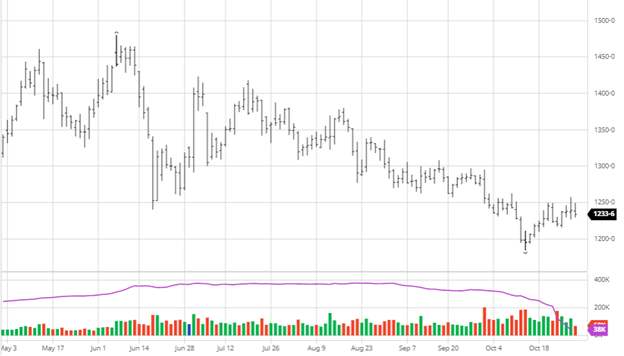
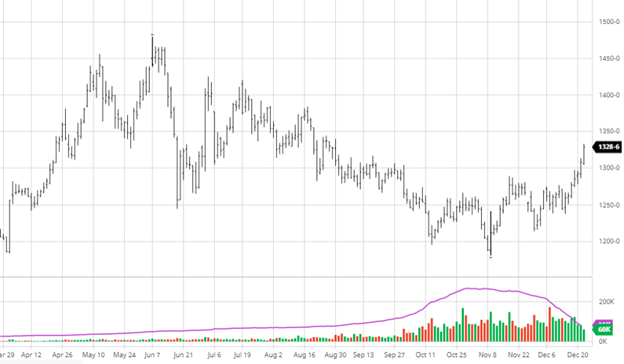
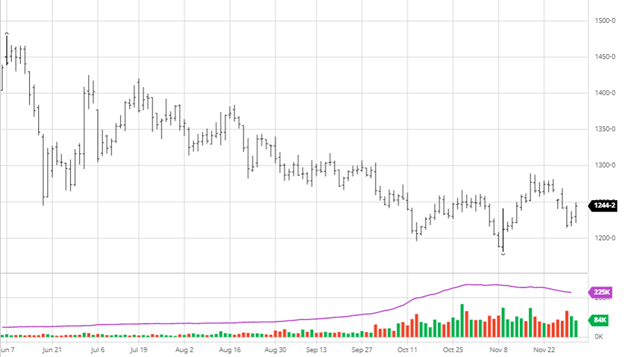
Soybeans, like corn, have enjoyed a nice rally as South American weather issues cause some worry.  This week, Brazil’s bean crop had its production estimate lowered by 3 million metric tons by Parana’s crop analysis firm, Deral. While Brazil is still on pace to produce a record crop, it is not expected to be as large. They increased planting this year, so a larger crop is expected in Brazil, even with some headwinds.  The basis is holding steady around the country for beans as we head into the new year. Beans and corn are likely to move together leading up to the January USDA report.

Via Barchart

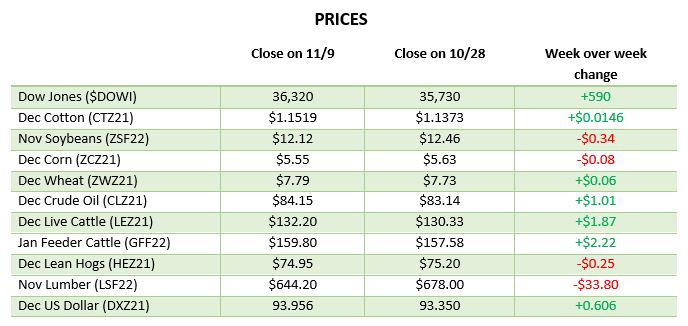
Dow Jones

The Dow had a flat week and a half with volatility due to the Omicron variant having it all over the place with several large down days followed by a good bounce. The Omicron variant’s spread has been worrisome as restrictions start to come back into play in major cities. It will be important to keep an eye on this around the holidays as we also hope to see the “Santa Clause rally.” Senator Manchin also stopped President Biden’s BBB plan as he will not vote to approve it in its current form.

Podcast

Commodity prices have perpetually soared for the past year and continue to trend higher. We’re diving into the fertilizer forecast with a unique guest, Billy Dale Strader, a branch manager for Helena Agri-Enterprises in Russellville, KY., who is truly at the epicenter of the rising fertilizer prices.

Billy Dale planted his agriculture roots on his family-owned farm and has managed regional seed and chemical sales at Helena for the past decade. In this week’s pod, we tackle the big question for farmers and ultimately end-users — is the impact of higher-priced inputs, like seeds, chemicals, and fertilizer, on the supply and demand for the major U.S. crops? Listen or watch to find out!


Via Barchart.com
03 Dec 2021

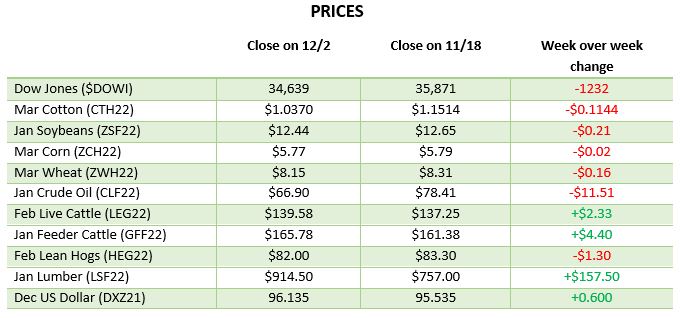
AG MARKET UPDATE: NOVEMBER 18 – DECEMBER 2

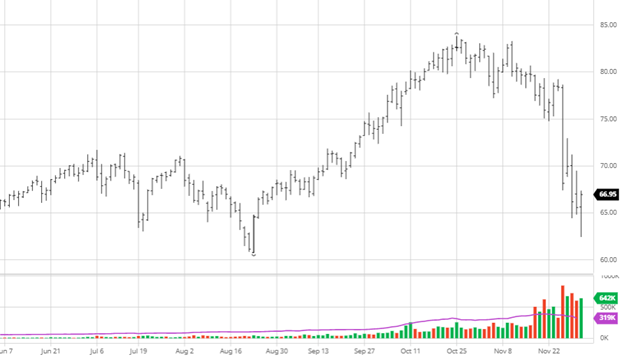
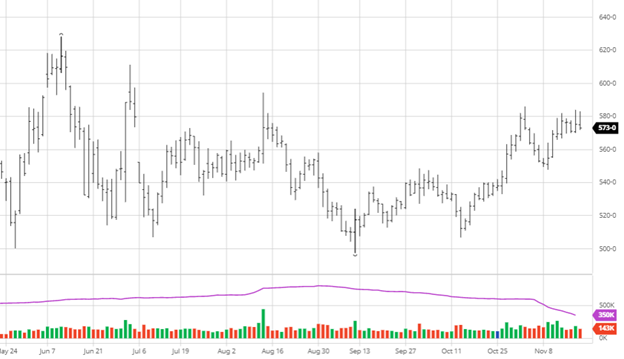
Volatility was the name of the game this week as every market experienced it from, grains to equities. Corn partook in the excitement, as you can see from the chart below. Important to note is following the small rally in the past couple of days to get back to the levels we saw before Thanksgiving. Wheat was a big winner Thursday and pulled corn with it on the intensifying issues with Russia and Ukraine. If wheat rallies, expect it to pull corn with it even on limited corn news. The La Nina pattern continues to form in South America as southern Brazil remains dry, and forecasts have that continuing. Another non-corn-specific factor to keep an eye on will be energy prices, as ethanol production will depend on how the omicron variant will/could affect US travel into the winter and holiday season.

Via Barchart

Soybeans, like corn, saw a bounce the last couple of days to get back to close to the range we were in pre-Thanksgiving. The bounce has brought us back in the range we were trading for most of October, which seems like a good place for the market to hang around when there is a lack of news. Exports continued but were on the lower end of expectations this week, while soybean meal and oil were as expected. If beans could close this week over the 20-day moving average, that would be supportive for bulls who are looking for good news. As harvest is wrapped up, all eyes turn to South American weather and their crops this year.

Via Barchart

Crude oil has sank following the Thanksgiving holiday as concern over the new Omicron variant, and its impact on demand hit the market. While these concerns are valid as much is still unknown, the largest problem that seems immediate to demand will be air travel and international travel causing, less jet fuel demand. As of right now, it does not appear to be worrying many Americans, but as more cases are found, we will see how it will affect demand. OPEC+ countries also announced they might cut output if demand falls due to the virus, leading prices back higher.

Natural Gas prices have also faltered this week as a warmer U.S. winter is expected to occur, requiring less NG for heating. Diesel prices have also fallen a lot this week following the Omicron variant news and presents farmers with an opportunity to hedge their fuel needs for next year.

Via Barchart

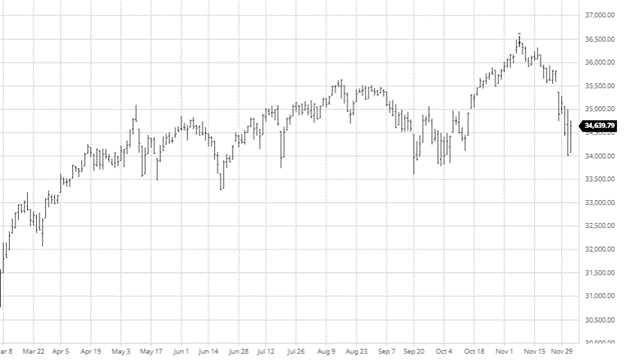
Dow Jones

The Dow experienced a lot of volatility this week as news of the Omicron variant in the U.S. and more places worldwide spooked some investors. The reports are that it only has caused mild symptoms, which is good, but the reaction was not of fear of the virus itself but how the governments will respond with potential lockdowns and travel bans soon. On Thursday, the strong bounce-back shows that investors are still eager to get in the market, so any large pullbacks will be met with buying if it is seen as a jerk reaction, but any longer lasting weakness could be seen as a correction. The down-trend of the last week has made some investors worried and moved some to the sidelines while we see what happens. Powell will stay as head of the Fed and said they might start tapering and raising interest rates sooner rather than later as inflation does not appear to be transitory.

Via Barchart

Podcast

For the past year, commodity prices have perpetually soared and continue to trend higher. We’re diving into the fertilizer forecast with a unique guest, Billy Dale Strader, a branch manager for Helena Agri-Enterprises in Russellville, KY., who is truly at the epicenter of the rising fertilizer prices.

Billy Dale planted his agriculture roots on his family-owned farm and has managed regional seed and chemical sales at Helena for the past decade. In this week’s pod, we tackle the big question for farmers and ultimately end-users — is the impact of higher-priced inputs, like seeds, chemicals, and fertilizer, on the supply and demand for the major U.S. crops? Listen or watch to find out!


Via Barchart.com
19 Nov 2021

AG MARKET UPDATE: NOVEMBER 9 – 18

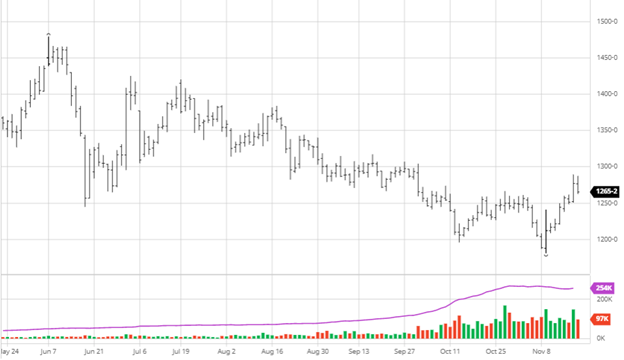
Corn has seen a good bounce since the Nov 9 USDA report and has traded relatively flat the past few days despite some intraday volatility. There was no specific market-moving news to  fuel this rally but tidbits here and there to help fuel  overall positive  sentiment. IHS Markit updated their acreage for 2022 planted acres estimate with corn coming in at 90.8 million acres, 2.5 million lower than 2020. Ethanol production stays hot as the weekly grind rose to 312 mbu, up 7 from the previous week and well ahead of the USDA estimate for the year. With increased input costs going into 2022, the decrease in acreage makes sense, as balance sheets will be tighter. As harvest nears the end, eyes turn to South American growing conditions for the months ahead.

Via Barchart

Soybeans, like corn, have seen a solid rally since the USDA report. Soybeans continued their rally on Thursday until the EPA announced they would release their renewable fuel mandates by the end of the week. As the Biden administration has not been much of an ally for the ag sector, the decline on the coming news makes sense. Soybeans had decent exports this week as buyers keep showing up in the market even as prices trek higher. Continued demand from exports will help support beans, and it will be interesting to see how many beans get stored and who took advantage of higher prices with forward pricing. We will see this play out in the cash & basis market come the spring, but we expect most farmers to store corn for now. IHS Markit estimated  the 2022 bean acreage to be 87.9 million acres, 700,000 acres less than 2020.

Via Barchart

Dow Jones

The Dow struggled this week as earnings continue to come in, but market volatility seems to be expected with the holiday season coming up. The Fed can still raise rates this year, and the Biden administration has not yet announced their nominee to head the Fed (either keeping Powell or someone new).

Cotton

Cotton has had life in the $1.10+ range for a while now as demand overseas is high for U.S. cotton. Growers have seen mixed yields across the country but nothing too surprising to the market. Cotton demand does not seem to be slowing down anytime soon as the world still is coming out of the pandemic, and some countries still have major restrictions.

Podcast

For the past year, commodity prices have perpetually soared and continue to trend higher. We’re diving into the fertilizer forecast with a unique guest, Billy Dale Strader, a branch manager for Helena Agri-Enterprises in Russellville, KY., who is truly at the epicenter of the rising fertilizer prices.

Billy Dale planted his agriculture roots on his family-owned farm and has managed regional seed and chemical sales at Helena for the past decade. In this week’s pod, we tackle the big question for farmers and ultimately end-users — is the impact of higher-priced inputs, like seeds, chemicals, and fertilizer, on the supply and demand for the major U.S. crops? Listen or watch to find out!


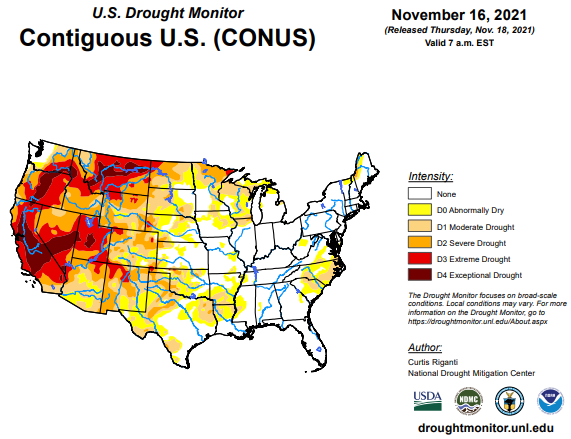
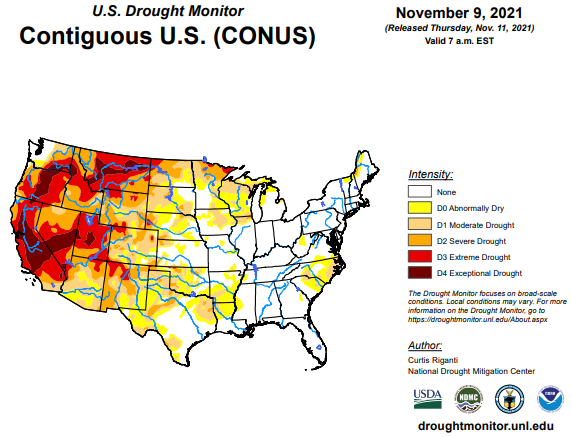
U.S. Drought Monitor

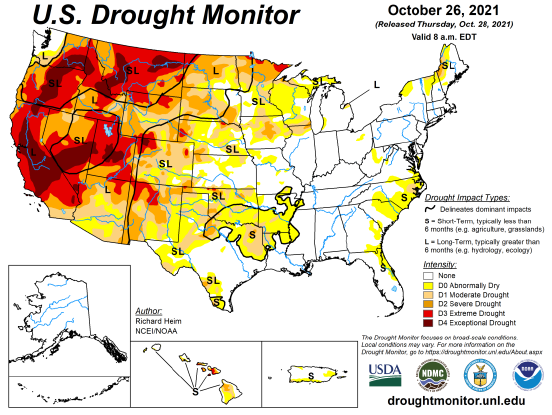
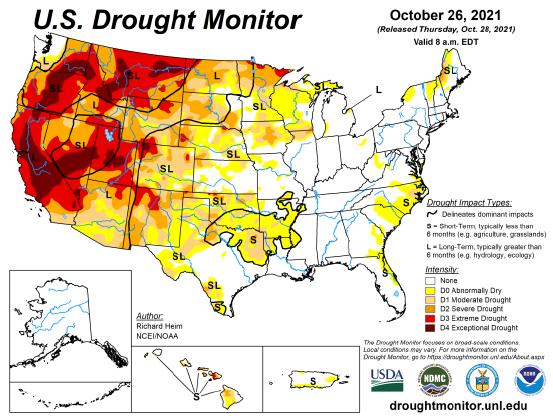
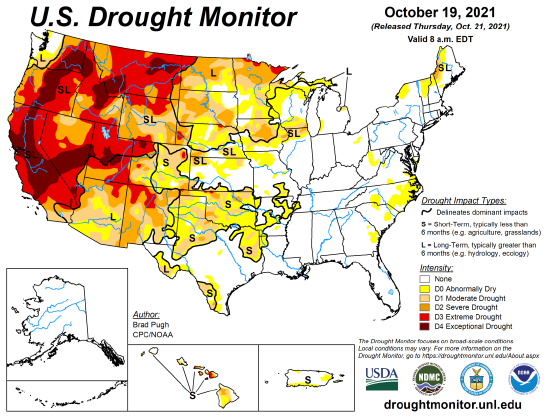
The maps below show the U.S. drought monitor and the comparison to it from a week ago. The outlined areas in black are areas that the drought will have a dominant impact.


Via Barchart.com
11 Nov 2021

AG MARKET UPDATE: OCTOBER 28 – NOVEMBER 9 USDA REPORT

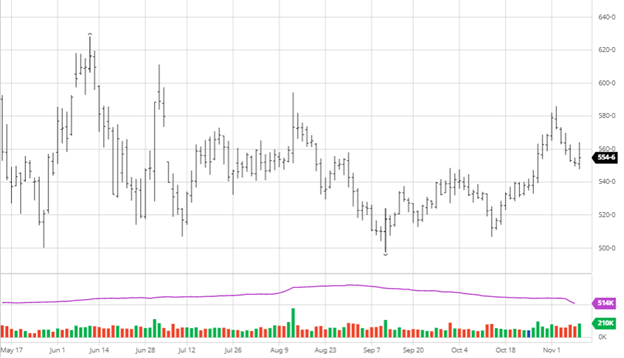
Corn was struggling this week heading into the Nov 9th USDA report, where it saw a good bounce after its release before falling back to only finish up slightly higher on the day. The corn numbers that came out of the report were fairly neutral, with a 177 bu/acre yield and 15.062-billion-bushel U.S. production. The yield was slightly raised from 176.5 the month before but was right in line with estimates, so there was no significant reaction on that number. Overall, there were not many surprises for corn as most bullish reactions came from soybeans pulling them higher with them. With ethanol margins very profitable and crude oil staying higher, the demand side will continue to keep basis levels high. As harvest was 84% complete at the start of the week, there is still time for any weather issues to create issues to finish up harvest, but this is always expected, so being this far along is helpful.

Via Barchart

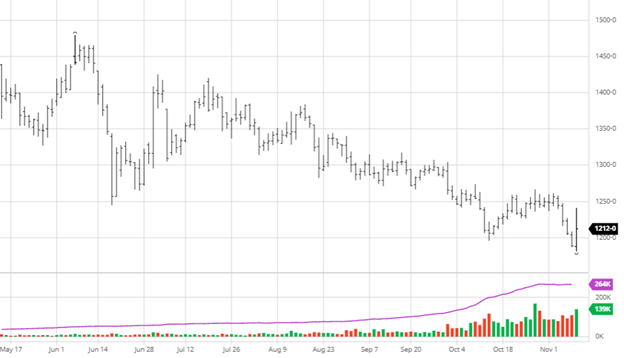
Soybeans had an excellent bounce post USDA report but finished well off the highs of the day. The yield came in at 51.2 bu/acre, down 0.3 from last month, along with lower world-ending stocks. As far as U.S. ending stocks. the USDA pegged it at a manageable 340 million bushels, slightly up from last month —these numbers are not outright bullish. South America’s weather is non-threatening right now; however, with solid world crush margins, there is not much reason for a bearish outlook heading into the winter. With funds currently flat, we may hang around this area trading until new news enters the market.

Via Barchart

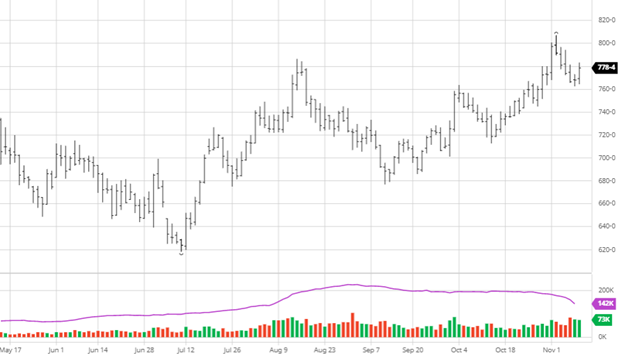
There were no surprises in the wheat report,, but it did follow beans higher after a down week leading into the report. US wheat stocks came in at 583 million bushels (pre-report estimates were 581 million) and world-ending stocks of 275.80 million metric tons (pre-report estimates 276.5 MMT). Despite the recent pullback, there is still a bullish sentiment in the market moving forward for the time being.

Via Barchart

Dow Jones

The Dow has continued to trend higher this week as it has put together an impressive month despite Tuesday’s pullback. Many markets have led it higher from tech to industrials, with the new infrastructure bill playing a role.

Side note: The crypto markets have also been on a tear the past couple of weeks. It will be interesting to watch heading into the end of the year after an impressive last year and a half.

Podcast

For the past year, commodity prices have perpetually soared and continue to trend higher. We’re diving into the fertilizer forecast with a unique guest, Billy Dale Strader, a branch manager for Helena Agri-Enterprises in Russellville, KY., who is truly at the epicenter of the rising fertilizer prices.

Billy Dale planted his agriculture roots on his family-owned farm and has managed regional seed and chemical sales at Helena for the past decade. In this week’s pod, we tackle the big question for farmers and ultimately end-users — is the impact of higher-priced inputs, like seeds, chemicals, and fertilizer, on the supply and demand for the major U.S. crops? Listen or watch to find out!


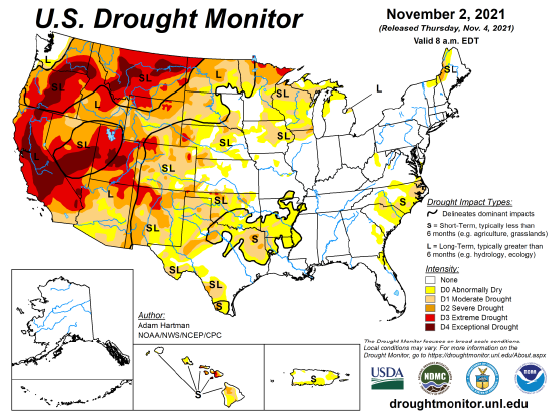
U.S. Drought Monitor

The maps below show the U.S. drought monitor and the comparison to it from a week ago. The outlined areas in black are areas that the drought will have a dominant impact.

Via Barchart.com
08 Nov 2021

The Fertilizer Forecast with Billy Dale Strader

For the past year, commodity prices have perpetually soared and continue to trend higher. We’re diving into the fertilizer forecast with a unique guest, Billy Dale Strader, a branch manager for Helena Agri-Enterprises in Russellville, KY., who is truly at the epicenter of the rising fertilizer prices.


Billy Dale planted his agriculture roots on his family-owned farm and has managed regional seed and chemical sales at Helena for the past decade. In this week’s pod, we tackle the big question for farmers and ultimately end-users — is the impact of higher-priced inputs, like seeds, chemicals, and fertilizer, on the supply and demand for the major U.S. crops? Listen or watch to find out!


Find the full episode links for The Hedged Edge below:

Apple
Spotify

29 Oct 2021

AG MARKET UPDATE: OCTOBER 21 – 28

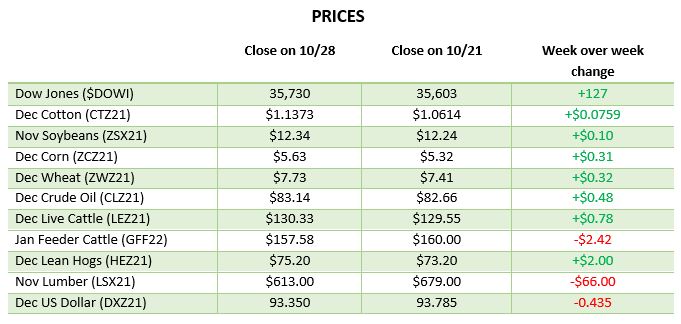
Corn has continued its rally as the bulls seem to have their mojo back following a time where they could have been uneasy. Despite the disappointing export report, corn was able to keep the momentum going Thursday. This week’s weather week will slow down harvest and could cause issues for what is remaining in the field. Higher basis has been seen across most of the country as a lack of available corn continues to put pressure on elevators while ethanol plants are running on great margins and can afford the basis. Going forward it will be interesting to watch how farmers manage the corn they store. Do they hold it until we see much higher prices? Will basis become so favorable it is hard to hold on to it while farmers are making payments for products for next year? These questions do not have any answers right now, and only time will tell, but one thing is for sure, input prices are going up and farmers know how valuable their crop is.

Via Barchart

Soybeans have had a good bounce from their low a couple of weeks ago, even if it is not as an inspiring rally as corn. Like corn, the weather will delay harvest and reduce yields in many areas that were off to a great first half. South American weather is generally good for the next week with Argentina receiving their best rains of the season so far. The weather over the coming weeks/next couple of months will be important to getting them off to a good start. Like corn, it will be interesting to see the number of beans stored vs. sold after harvest. As beans continue to struggle to find a pattern, we hope to see one develop in the coming weeks, hopefully, a good one.

Via Barchart

Dow Jones

The Dow had another good week with one big down day followed by a bounce-back on Thursday. As Q3 earnings continue to roll in, it has been a mixed bag with large companies like Amazon and Apple falling post reporting.

Oats

The Oats market has been on a tear the last two months as Canada’s and the upper plains crop had a multitude of issues due to drought conditions. This has created a supply problem on top of already higher grain prices across the board this year.

Podcast

The Hedged Edge is back, and we’re jumping into the thick of the commodity markets with RCM’s own King of Cotton – Ron Lawson. Cotton prices have exploded since the COVID crash, rising more than 236% from the March 2020 lows. While prices have backed off from the October 8th high, cotton is one of the purest supply + demand-driven markets around the world and has caught fire along with the global inflation bug currently running rampant across many commodity markets.


U.S. Drought Monitor

The maps below show the U.S. drought monitor and the comparison to it from a week ago. The outlined areas in black are areas that the drought will have a dominant impact.

Via Barchart.com
27 Oct 2021

Cracking The Cotton Commodities Code With Ron Lawson

The Hedged Edge is back, and we’re jumping into the thick of the commodity markets with RCM’s own King of Cotton – Ron Lawson. Cotton prices have exploded since the COVID crash, rising more than 236% from the March 2020 lows. While prices have backed off from the October 8th high, cotton is one of the purest supply + demand-driven markets around the world and has caught fire along with the global inflation bug currently running rampant across many commodity markets.

Will it be hedge fund influence in cotton that costs consumers more this Holiday season or will the continued logistical issues tie up cotton at ports send consumers scrambling to eBay for their “snuggies”? For cotton producers, merchants, spinning mills, and banks financing the backbone of the cotton supply, risk management must remain at the top of mind for the remainder of this year and into 2022 (as the current cycle is likely to continue to last for at least the next 12-18 months.) We’ll dive into the thick of it in this episode and more — Hold on to your hats and enjoy!

Follow CME Group on Twitter @CMEGroup  learn more about Agriculture Options and the new CVOL Index on their website here https://www.cmegroup.com/agoptions and here https://www.cmegroup.com/cvol. And last but not least, don’t forget to subscribe to The Hedged Edge on your preferred platform, and follow us on Twitter @ag_rcm, LinkedIn, and Facebook.

01 Oct 2021

AG MARKET UPDATE: SEPTEMBER 23 – 30

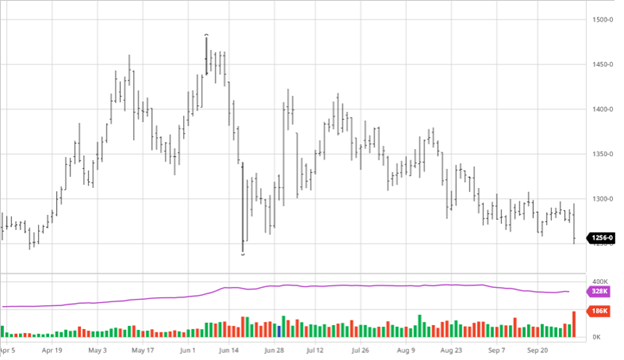
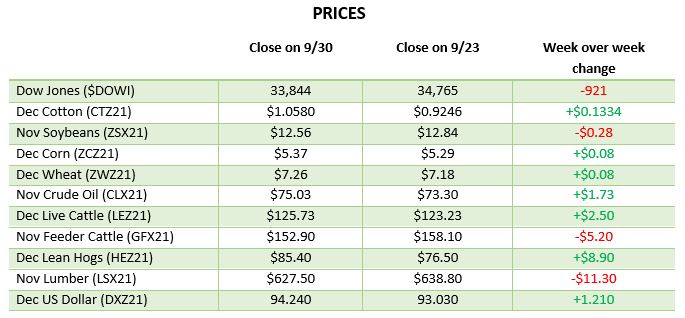
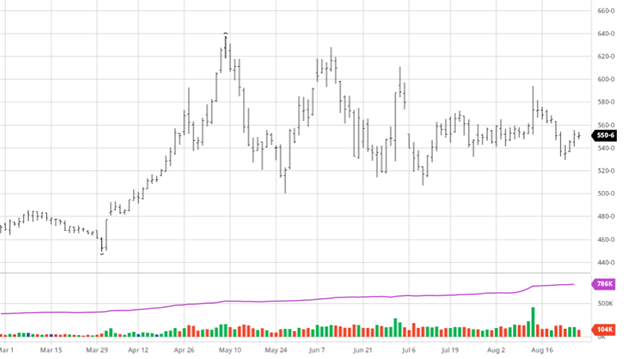
Corn took it on the chin upon the release of Thursday’s USDA report before bouncing back to finish only slightly lower on the day, but still up on the week. The report may have left more questions than answers hanging around as they raised ending stocks, but as we mentioned last week, the current basis and cash markets hint there may be less corn out there than the USDA believes. Corn stocks came in at 1.236 billion bushels, which was higher than the average estimate going in. Harvest was 18% done at the start of the week, and further progress will have been made with favorable harvest conditions. Exports this week were not great for corn, while beans were strong. The next major report for corn will be the October 12th yield update. With harvest getting off to a fast start, it will be interesting to see if the private estimates and USDA are closer to each other than usual this far in.

Via Barchart                         

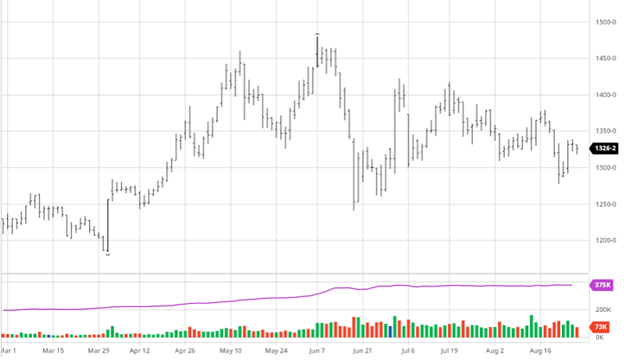
Soybeans fell post report as estimates were well lower than the USDA number of 256 million bushels. The average estimate was 174 million bushels which caused the immediate and lasting drop following the report. Obviously, nobody saw this number coming as it was well higher than the highest estimates. It is now time for the market to decide if they believe that number leading up to the October 12th yield report. Beans had great exports this week, but that was not enough to fend off the bears with the report. All the losses for beans on the week came from the report, as it had been pretty flat until Thursday. Soybeans harvested at 16% and will continue like corn this week. Like corn, the October 12th yield update will be critical as harvest has progressed further and we have a better idea of the crop.

Via Barchart

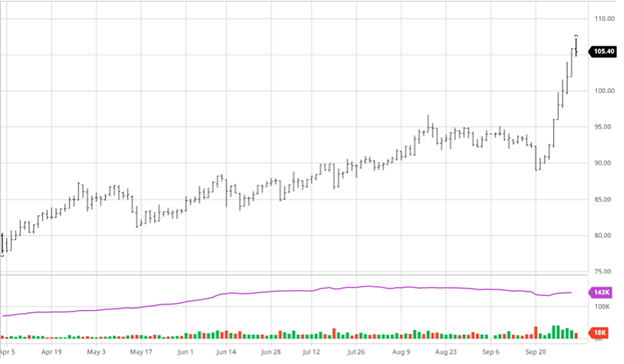
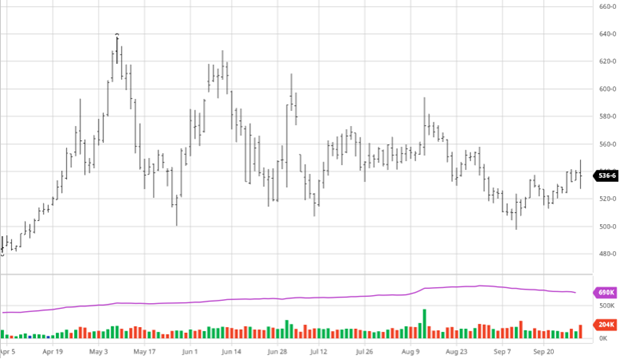
Cotton has been on a great run the last two weeks as you can see in the chart below. Cotton busted through several technical indicators in the 97 cent range while also clearing the 99.47 high from January of 2012. China has started to inquire about purchasing cotton as many companies look to import cotton and no longer use cotton from Xinjiang. Ultimately this is a supply/demand driven rally from strong global demand and uncertainty about the crop until it is out of the ground. Forecasts for rains in West Texas this weekend are not helpful for the crop and could cause issues depending on how much it does rain. Even with further upside potential to the cotton price this is a good opportunity to set floors to take advantage of this run up. As always look at your production and make the informed decision that applies specifically to your operation and not a cookie cutter plan.

Note: Since the writing above, Cotton has now topped 105 with December 2021 Cotton touching 107.28 on what seems to be a made rush of continued buying…. hold on to your hats!

Via Barchart

Wheat

Wheat saw a post-report rally as all wheat stocks came in at 1.780 billion bushels, which was below the pre-report estimates. Keep an eye on Russia as the export tax on Russian wheat will cut acres from their regular planting and could play out in the US wheat market as well.

Dow Jones

The Dow struggled again this week as September proved to be the worst month for stocks since March 2020, when Covid hit. Rising treasuries and interest rate hikes in the future had some to do with it, but September historically is not a great month for performance. One bad month in the span of a year and a half should not ring the alarm, but it will remind everyone that stocks can go down.

Podcast

Check out our recent podcast where we’ve brought on one of our real-life firefighters from RCM Ag – Jody Lawrence, along with Tim Andriesen from the CME Group to provide us with some inside baseball knowledge of the current state of agriculture markets. They discuss the real-world application of short-dated options to potentially fight the recent blaze of volatility surrounding agriculture markets.

https://rcmagservices.com/the-hedged-edge/

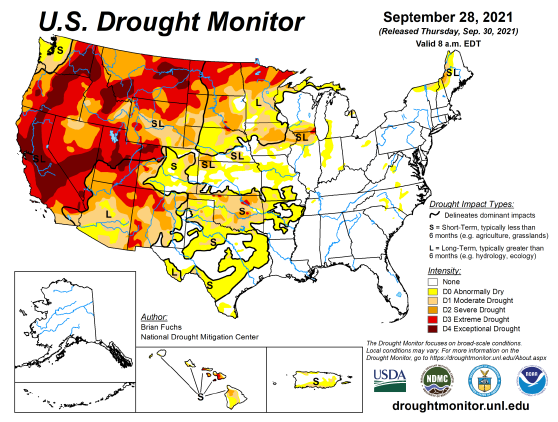
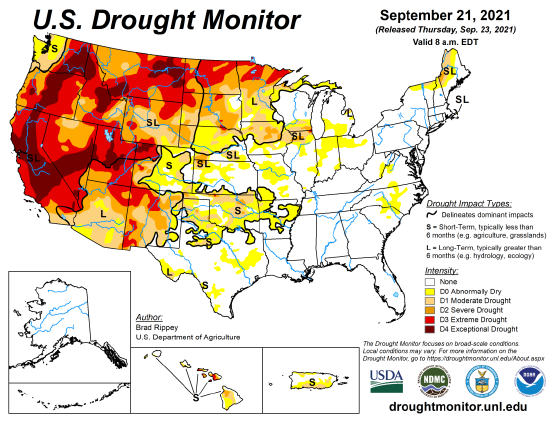
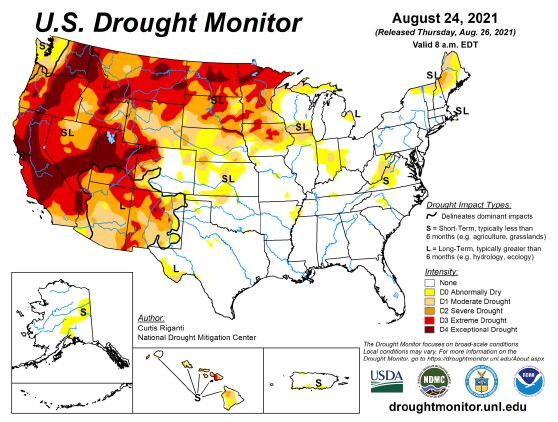
US Drought Monitor

The maps below show the US drought monitor and the comparison to it from a week ago. The outlined areas in black are areas that the drought will have a dominant impact.

Via Barchart.com



27 Aug 2021

AG MARKET UPDATE: AUGUST 19-26

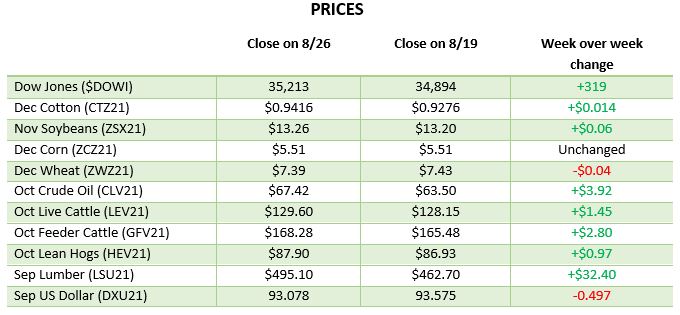
Corn was unchanged on the week as slow news, a lack of major export announcements, and no major rain events crossed the area’s most in need. Additionally, most of the corn belt has seen above average temperatures this week keeping a bid under the market. The late season heat and hot nights are taking their toll on the crop but hopefully the heat will end soon according to some forecasts. This time of year, markets begin to look at multiple yield reports coming in from various independent groups – i.e the Pro Farmer Tour (results HERE). At first glance many in the industry feel the tour results are a bit high, but only time will tell.  Any big surprise exports or continued weather problems will be the bulls news while rain and yield reports will be the bears.

Via Barchart

Soybeans made small gains on the week as the same news moved beans that moved corn. China continues to be a buyer going on 2 weeks now which is supportive after their long silence. The market is reacting to these purchases as if they were expected and normal purchases. Regular and consistent purchases will need to continue for the market to remain supportive.  Any abrupt could see another slide heading into harvest before we have a better idea on yield. The rains that some think will help corn will also help beans as we head into September.

Via Barchart

Dow Jones

The Dow gained on the week as what seemed to be investor weariness last week turned into buying opportunities. The events in Afghanistan weighed on the market Thursday with uncertainty about the US foreign relations going forward.  As of this morning, Friday 8/27/2021, the S&P and Nasdaq are making fresh all-time highs following the latest comments from the Federal Reserve where NO NEW policy changes were announced and supportive monetary measures will remain in place.

Afghanistan

The suicide bombing by an ISIS-K member Thursday in Kabul, that claimed the lives of dozens of Afghan citizens, along with a dozen US Service members, while injuring countless others, shook the world. The swiftness of the fall of Afghanistan’s army and government to the Taliban has put the US at the center of one of the biggest international situations in recent memory. Going forward the countries around Afghanistan will be important to keep an eye on for exporters to the middle east.

Podcast

Check out our recent podcast where we’ve brought on one of our real-life firefighters from RCM Ag – Jody Lawrence along with Tim Andriesen from the CME Group to provide us with some inside baseball knowledge of the current state of the agriculture markets and to discuss the real-world application of the use of short-dated options to potentially fight the current blaze of volatility surrounding agriculture markets.

https://rcmagservices.com/the-hedged-edge/

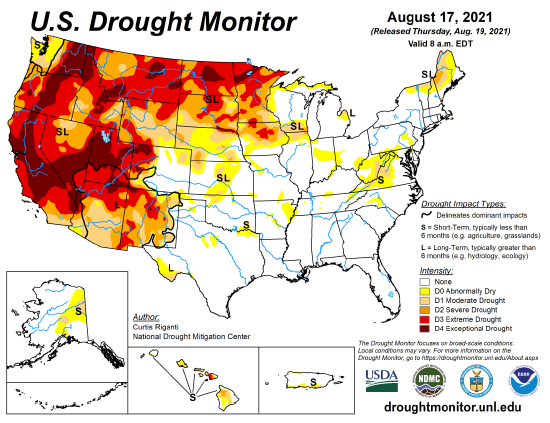
US Drought Monitor

The maps below show there was not much change over the week despite weekend rains in some areas that needed it and some drying in Indiana.

Via Barchart.com
27 Jul 2021

Managing Today’s Market Risks through Short Dated Options with CME Group

It is no secret that commodity markets have been on fire over the past 12 months.   On today’s podcast we’ve brought on one of our real-life firefighters from RCM Ag – Jody Lawrence along with Tim Andriesen from the CME Group to provide us with some inside baseball knowledge of the current state of the agriculture markets and to discuss the real world application of the use of short dated options to potentially fight the current blaze of volatility surrounding agriculture markets.

As the director of Research for RCM Jody is no stranger to the podcast.  Tim, is the Managing Director of Agriculture products for the CME Group and is responsible for management of the company’s global agriculture commodities business – including grain, oilseed, livestock and dairy risk management products.


Find the full episode links for The Hedged Edge below: