
MARKET UPDATE: JULY 24 – AUGUST 12

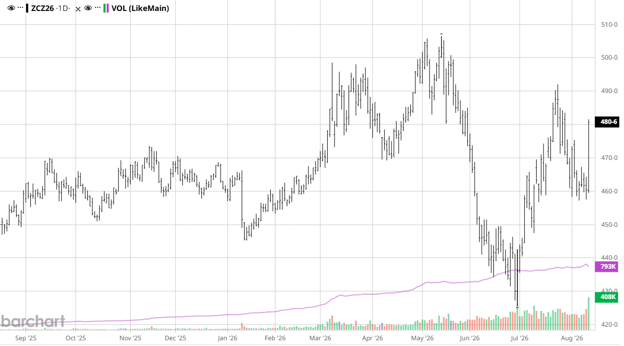
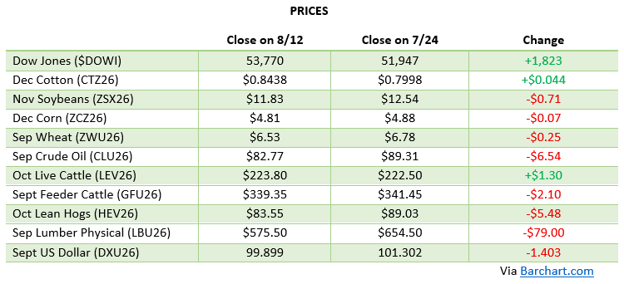
Corn caught a bid on today’s August USDA Crop Production and WASDE report, the first survey-based, field-sampled yield estimate of the season, and the market did not get the bearish surprise many were bracing for. USDA cut the national corn yield to 180.7 bushels per acre, down 5.8 bushels from last year’s record 186.5 bpa, while also finding an extra 1.4 million planted acres, pushing total planted area to 96.7 million and harvested area to 88.6 million. Total production still landed at 16.013 billion bushels, which would be the second-highest crop on record if realized. The bullish twist was on the demand side of the balance sheet: with higher exports and lower beginning stocks, USDA trimmed 2025/26 ending stocks to 1.945 billion bushels and 2026/27 ending stocks to 1.653 billion bushels, both below trade estimates, pulling the stocks-to-use ratio down to roughly 10.1%. The report comes after a rough June for corn bulls, when Managed Money liquidated long positions aggressively into the Memorial Day-to-mid-June stretch and left December corn defending the $4.40 area. The crop still has a ways to go before it is made, and weather remains the swing factor: national good-to-excellent ratings stood at 61% as of August 10, a steep 12-point drop from a year ago, with the western Corn Belt states from North Dakota down through Texas carrying notably lower expected yields than 2025.
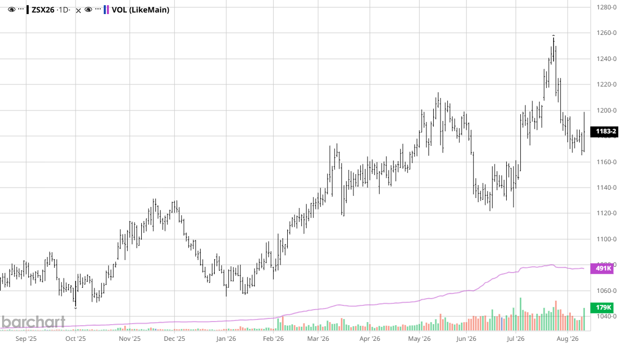
 Soybeans had a positive report reaction even though the headline numbers were less bullish than corns. USDA pegged the 2026 bean yield at 52.7 bushels per acre, just a touch below the average trade estimate of 52.9 and down slightly from last year’s final 53.0, but a 1.4-million-acre increase in planted area pushed total production to a record 4.519 billion bushels, up 6% from 2025. Ending stocks were actually raised across the board versus trade guesses, both old-crop (325 million bushels) and new-crop (320 million bushels), which would normally read as bearish, but the broader complex strength and a genuinely encouraging demand backdrop carried beans higher. That demand backdrop has real teeth behind it: China has stepped back into the market with five separate flash-sale announcements since August 3, totaling roughly 1.12 million metric tons in the past week alone, and outstanding 2026/27 sales to China stood at 3.11 million metric tons (114.3 million bushels) as of July 30, about 12% of a rumored 25-million-metric-ton full-year purchase target. The crop is far from finished, with 62% of the nation’s beans setting pods as of August 2 and good-to-excellent ratings at 63%, down 6 points from a year ago, so timely August rain during pod fill remains the key variable to watch.
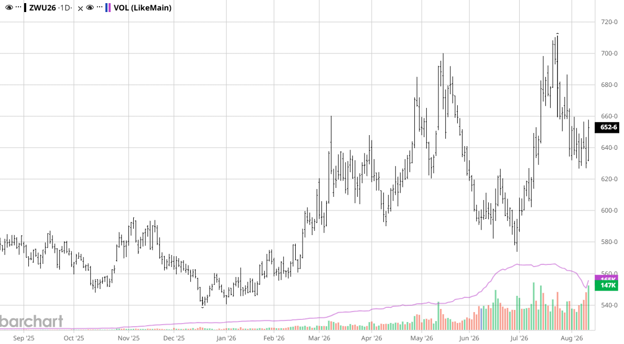
 Wheat was another big mover on report day, up 20 to 13 cents across contracts with September futures trading near $6.34. The USDA numbers themselves were fairly neutral to modestly bullish, with all-wheat production pegged at 1.531 billion bushels versus a 1.525 trade estimate and 2026/27 ending stocks trimmed to 717 million bushels from 722 million in July, while world stocks were nudged higher to 273.25 million metric tons. The bigger story for wheat over the past two weeks has been the Black Sea, where intensified Russian and Ukrainian drone and vessel attacks on grain terminals, including a strike that halted operations at Novorossiysk. Ukraine has trimmed its 2026/27 grain export forecast by as much as 12%, and Russian wheat exports are now expected to fall to their lowest level in nearly a decade, with IKAR cutting its export forecast by 500,000 tonnes to 44.5 million tonnes. Weak international demand and ample supply on paper have kept a lid on the rally so far, but the shipping-risk premium is a real and growing factor heading into the peak Black Sea export season.

Equity Markets
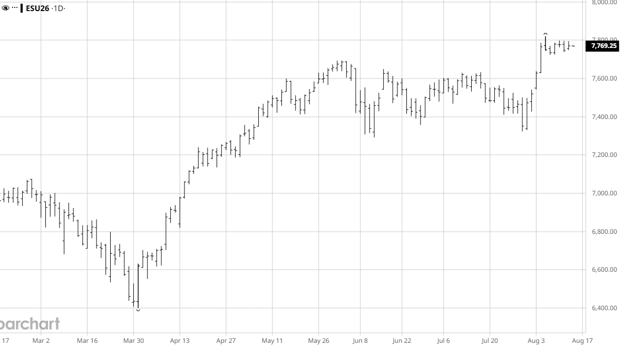
Equity markets have continued to grind to fresh records since our last update, with the S&P 500 closing at an all-time high of 7,757.64 on August 7, capping its best week since April on a 3.6% weekly gain, while the Dow closed above 54,000 for the first time and the Nasdaq rode a sharp rebound in AI and chip names back toward its early-June highs. With 86% of S&P 500 companies beating earnings estimates this season, the fundamental backdrop has given investors cover to keep buying dips. This week’s CPI, PPI, and retail sales data will be the next real test of whether the rally has room to keep running or whether hotter inflation data forces the rate conversation back the other way.
Energy Markets
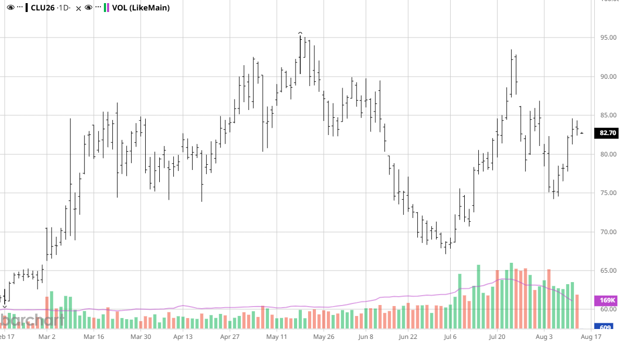
Crude oil has reversed sharply higher after bottoming in the upper $60s to low $70s in late June, with WTI grinding higher for five straight sessions into today’s close near the mid-$80s and Brent trading close to $89. The renewed strength is tied back to Middle East uncertainty: Iran has been pushing for war-compensation demands from the US and Israel as a condition for any lasting deal, and while Pakistan’s defense minister has said the US and Iran are close to an arrangement on reopening the Strait of Hormuz, President Trump’s more combative rhetoric this week has kept traders guessing on timing. Attacks on vessels in the Red Sea and Gulf of Oman have added a fresh layer of shipping-risk premium on top of the Hormuz uncertainty.
Other News
– Black Sea shipping risk is back in focus for wheat, with Ukraine and Russia increasingly targeting each other’s port and vessel infrastructure. Turkey has temporarily suspended some Black Sea transit operations amid the escalating security concerns, and both countries have cut their near-term export forecasts even as underlying production is running slightly ahead of the five-year average.
– China’s return to the soybean market with repeated flash-sale purchases since early August is the most constructive demand headline the bean market has had in months, though at roughly 12% of a rumored 25-million-metric-ton target, there is a long way to go before it fully offsets the shortfall from earlier in the marketing year.
– Cotton continues to take its cues from the broader energy and commodity complex; the recent bounce in crude could put a firmer floor back under natural fiber pricing versus petroleum-based synthetics after a quiet summer.
Drought Monitor
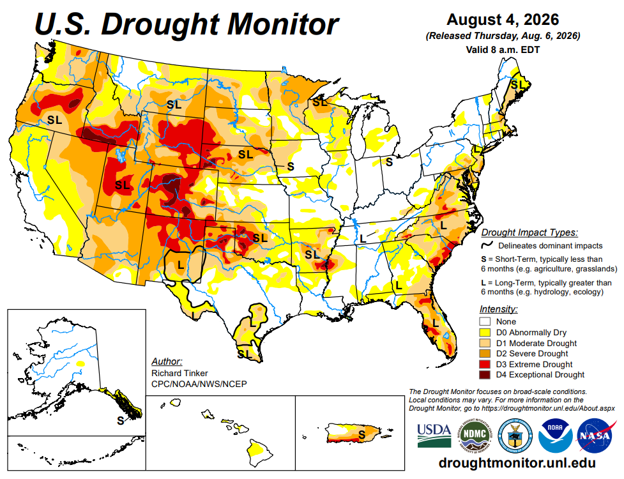
Here is the most recent drought monitor.
Contact an Ag Specialist Today
Whether you’re a producer, end-user, commercial operator, RCM AG Services helps protect revenues and control costs through its suite of hedging tools and network of buyers/sellers — Contact Ag Specialist Brady Lawrence today at 312-858-4049 or blawrence@rcmam.com.